Foreign Influence in Sudan’s War Through CNN’s Lens
Sudan Events – Agencies
CNN reported that the war in Sudan has gone far beyond an internal struggle between General Abdel Fattah al-Burhan and Mohamed Hamdan Dagalo (known as Hemedti). It has become a stage for international rivalry over influence and resources, driven by Sudan’s strategic position on the Red Sea and its wealth of gold, farmland, and gum arabic.
According to the network, countries such as the United Arab Emirates, Saudi Arabia, Egypt, and Russia—despite taking part in mediation efforts—have been accused of deep involvement through the supply of weapons, funding, and diplomatic backing for the warring sides, making the conflict increasingly complex and bloody. CNN added that no external power remains neutral, leaving an exhausted Sudan vulnerable to exploitation while civilians bear the greatest cost.
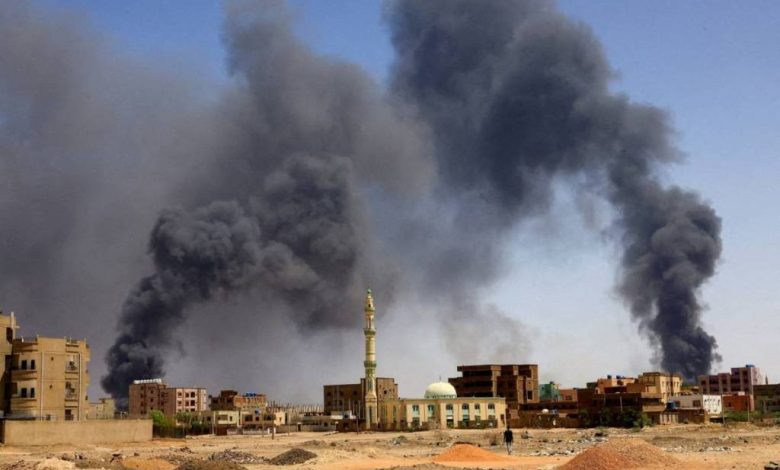
Horrific reports of a massacre of hundreds of Sudanese civilians following the Rapid Support Forces’ (RSF) takeover of El Fasher in Darfur last week marked the latest chapter in a brutal conflict that has claimed over 150,000 lives in the past two and a half years. Although the war is often portrayed as an internal struggle between two rival generals, the shadowy involvement of multiple foreign powers has added dangerous layers of complexity.
Sudan is widely viewed as a country of immense strategic importance—a bridge between the Middle East and Africa that controls roughly 500 miles of Red Sea coastline along a vital global shipping lane. It also possesses vast agricultural land, large gold deposits, and is the world’s leading producer of gum arabic, an ingredient essential to the food, pharmaceutical, and cosmetics industries. The country also plays a key role in regional water diplomacy, as about 400 miles of the Blue Nile flow through its territory.
On Thursday, amid mounting international pressure over the alleged massacre in Darfur, the RSF announced its acceptance of a humanitarian truce proposed by a “Quad” of nations—the United States, the UAE, Egypt, and Saudi Arabia. A U.S. State Department spokesperson said Washington continues direct engagement with both the RSF and Sudan’s Armed Forces “to facilitate a humanitarian ceasefire,” urging both sides to join the initiative “given the urgent need to de-escalate the violence and end the suffering of the Sudanese people.”
However, three of the same countries involved in brokering the proposed truce—the UAE, Saudi Arabia, and Egypt—alongside Russia, have been accused by experts, human rights monitors, and several Western governments of trying to shape the conflict through various means, including supplying arms, financial and logistical aid, and diplomatic cover.
Initially, all four countries supported Sudan’s military when it ousted longtime dictator Omar al-Bashir in 2019 and later consolidated power through the 2021 coup. But when the two generals behind the coup—Hemedti, head of the RSF, and al-Burhan, commander of the national army—turned on each other, foreign powers were forced to choose sides, deepening their entanglement.
“Whoever controls Sudan wields influence over the wider region, the Horn of Africa, and sub-Saharan Africa,” said Charles Ray, a retired U.S. diplomat who served as ambassador to Cambodia and Zimbabwe and now heads the Africa program at the Foreign Policy Research Institute.
United Arab Emirates
The UAE has been repeatedly accused of supplying weapons to Hemedti’s RSF. Human rights experts traced arms found in Darfur back to the Emirates, and under the Biden administration, the U.S.—a close ally of the UAE—identified links between RSF rebels and several companies based there. Abu Dhabi has firmly denied the allegations, though a UN panel of experts described them last year as “credible.”
Several U.S. lawmakers have pushed to block arms sales to the UAE over these reports, and last week the Senate Foreign Relations Committee urged the designation of the RSF as a terrorist organization, saying that “foreign backers, including the UAE, have fueled and profited from the conflict.”
Khalil al-Anani, a political scientist and visiting scholar at Georgetown University’s Center for Contemporary Arab Studies, told CNN that the UAE’s involvement is “primarily driven by economic interests—controlling Sudan’s natural wealth, including agriculture and gold,” but also by a desire to prevent “a successful democratic transition” in Sudan.
He said this fits into the UAE’s long-standing campaign against the Arab Spring movements: “For more than a decade, the UAE has been a key sponsor of counterrevolutionary forces across the Arab world.”
The RSF’s ties to the UAE predate the war. Hemedti enjoys strong relations in Abu Dhabi through family members who, according to U.S. officials, run a network of companies in the Emirates. The U.S. Treasury’s Office of Foreign Assets Control (OFAC) has sanctioned several of these firms, citing their role in supplying weapons and financing RSF operations through gold sales in Dubai.
UAE officials have dismissed the reports as “fake news.” Senior diplomatic adviser Anwar Gargash told CNN that the Emirates seeks negotiations and a civilian transition, emphasizing the need for a ceasefire. The UAE Embassy in Washington also rejected allegations of any support for either side, reiterating its commitment to ceasefire efforts and civilian protection.
However, a source familiar with UN findings told CNN that experts uncovered what they considered credible evidence that weapons supplied by the UAE—including ammunition traced back to Bulgaria—had reached Darfur, though this evidence was not included in the April report. Amnesty International has also documented Chinese-made artillery found in the region, with the UAE being the only confirmed importer of such weapons from China.
In a rare admission of diplomatic failure, Gargash stated during a Bahrain event on November 2 that the international community made a “mistake” by not intervening when Sudan’s generals ousted the civilian government in 2021—an event the UAE, Russia, Saudi Arabia, Egypt, and China all refrained from condemning.
Independent researcher Salma al-Obeid told CNN that Emirati involvement with the RSF goes beyond weapons, highlighting its interest in using the militia as a proxy force elsewhere. Sudanese fighters, including RSF members, previously fought in Yemen under the Saudi-led coalition.
Egypt
Cairo initially backed both Burhan and Hemedti during their coup against Bashir, even conducting joint military exercises in 2021 and 2022. President Abdel Fattah el-Sisi—a former general who seized power through a military coup in 2013—has long feared the implications of a democratic Sudan on Egypt’s own stability.
Analysts told CNN that Egypt views Burhan and the national army as the legitimate authority, offering them diplomatic backing. In contrast, Hemedti has accused Cairo of arming Sudan’s military—a claim Egypt denies.
Egypt’s main motivations, experts say, are national security and the protection of its interests in the Nile waters. With millions of Sudanese refugees crossing the border, the humanitarian strain has added to Cairo’s concerns. Sudan’s stance is also vital in Egypt’s ongoing water dispute with Ethiopia over the Grand Ethiopian Renaissance Dam.
Saudi Arabia
While Riyadh maintains an official position of neutrality and co-leads mediation efforts with Washington, analysts believe it discreetly supports Burhan and the Sudanese Armed Forces through diplomatic channels. Saudi Arabia played a key role in evacuating thousands of civilians and foreigners during the early weeks of fighting, prioritizing Red Sea stability as part of its Vision 2030 economic ambitions.
Russia
Even as it wages war in Ukraine, Moscow has sought to expand its reach in Africa, including Sudan. The U.S. has accused Russia of “playing both sides” of the Sudanese conflict for self-serving ends.
CNN previously reported that the Wagner Group supplied the RSF with missiles via Syria, Libya, and the Central African Republic, in exchange for access to Sudan’s gold mines. After Wagner’s failed mutiny and the death of its leader Yevgeny Prigozhin, the Kremlin moved to absorb its operations into the Russian military, tightening its control.
While Wagner openly supported Hemedti, Moscow simultaneously courted Burhan in pursuit of a naval base on Sudan’s Red Sea coast at Port Sudan.
Ripe for Exploitation
“There is no neutral party in Sudan’s war,” al-Anani told CNN. “Every power has its own agenda and intervenes for its own gain. Controlling Sudan means holding influence over the entire sub-Saharan region.”
Years of violence have devastated Sudan, collapsing its institutions and impoverishing its people—conditions that, as al-Anani warned, make the country ripe for foreign exploitation.