Message to General Al-Burhan: When Time Stops at the Gate of Command — A Message from a Nation That Refuses to Be Buried Twice
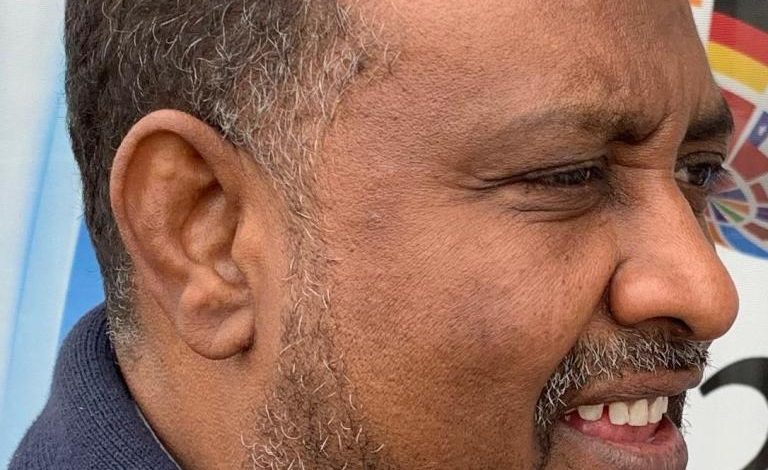
By Abdelaziz Yaqoub
War is not a picnic, nor is it a heroic spectacle as imagined by merchants of blood. It is not a stage for slogans or grandstanding.
War is abhorrent to the human soul — an open wound in the conscience of a nation, a calamity that strips away more of one’s humanity than it takes from the enemy.
The war ravaging our homeland today has transcended its traditional form; it now carries within it every conceivable evil — war crimes, genocide, rape of women, execution of prisoners, the terrorizing and killing of children in cold blood. From among the half-men and the morally bankrupt, some now boast of the number of prisoners slain, women violated, and children terrorized. That alone is enough to prove that what is happening is not war — it is unrestrained barbarism.
Yet among us rise those who chant “No to war,” just as they once cried “Fall, that’s all,” as if nations are governed by slogans rather than institutions and decisions. These people do not measure gain and loss in the context of national interest, nor can they read the future, history, or the map of realpolitik. Slogans, when not translated into a national project, become the shortest road to ruin.
Mr. President,
The people know — as do you — that the Armed Forces are fighting in the name of Sudan, bearing the honor of its people, and confronting the militia while outmatched in resources and funding. Many hold you responsible for the expansion of the Rapid Support Forces’ rebellion, yet we also know that the turbulent aftermath of the revolution offered no stable ground for confrontation. The political parties oscillated between childish inexperience, noisy adolescence, and senile confusion that could not grasp the realities of the moment.
Despite all the criticism of state institutions, the army remains the backbone of the nation — the last wall before the abyss of division and collapse.
And since the Sudanese people, at home and abroad, have rallied behind their army as though history had returned to grant them the right to vote — casting that vote with their blood, their longing, and their allegiance to the homeland — this moment demands from the leadership decisions that allow for no shades of gray, no half-measures.
For the sake of the state’s survival, decisive steps must be taken:
First: Declare a state of emergency and martial law across the country, for a nation in peril cannot be governed by peacetime laws.
Second: Issue an urgent presidential decree to form a temporary legislative council composed of the cabinet, the Sovereignty Council, and representatives from each state — elders, tribal and local leaders, along with representatives of youth, professionals, and women — to serve as the collective voice of all regions and sectors of society.
Third: No representative shall be approved without security clearance confirming a clean record, free from criminal charges or ties to foreign powers or the rebel militia, and each must submit a sworn financial disclosure.
Fourth: Combat corruption with no immunity or political protection. Cleansing must begin at the top, for a state that fears its corrupt cannot claim the right to rule its people.
Fifth: Work immediately with leaders of the joint forces, mobilized volunteers, and supporting units to implement legal and internationally recognized programs for demobilization and reintegration. Establish post-war projects in agriculture, livestock, and industry to absorb personnel and prevent the emergence of future militias. The monopoly on arms and force must rest solely with the state and its armed forces, as dictated by law and international norms.
Sixth: Complete the formation of the judicial and legal institutions at both federal and state levels, for when justice disappears, the language of rule becomes the gun.
Seventh: The Ministry of Interior should remain a federal body, while police and prisons operate under state administrations, with training and armament unified federally to preserve consistent standards and priorities nationwide.
Eighth: The legislative council must immediately call for a Sudanese–Sudanese dialogue — without mediators, without external tutelage, without foreign “peace” initiatives that conceal beneath their promises the seeds of partition.
Ninth: Establish a Sudanese Commission for Transitional Justice and Reconciliation, modeled on the experiences of Rwanda, South Africa, and Morocco, to restore rights, close the door to vengeance, and heal the wound before it festers.
Tenth: Unify the state’s political and media discourse, for confused messages bewilder the international community and open the door to biased initiatives that neither restore Sudan’s rights nor protect its sovereignty or dignity.
Finally, Mr. Commander-in-Chief,
Honor is not in defeating an armed enemy alone, but in refusing to be defeated before history.
Glory lies not in the number of liberated positions, but in the number of lives saved, homes restored, and children who sleep without fear.
This homeland — despite blood and betrayal — still loves its sons more than they love themselves.
A people who do not hate their army, an army that does not betray its people, and a nation that, if it falls, leaves its children no other land to call by their name.
Therefore, hesitation is an unintentional betrayal, and delay a defeat without battle.
Make the decision now — before the pulse of cities fades, before maps turn into graveyards, before history writes that it was not a nation that fell in war, but one that perished in waiting.
Sudan does not wish to be buried again.
Let us grant this country what it deserves — justice, dignity, and a state that does not tremble in the wind — so that its people may know their blood was not spilled for nothing.
And when history writes this moment,
let its final line read:
“Here stood Sudan… and here, ruin was defeated.”