How the UAE Is Entangled in Sudan’s Civil War
Sudan Events – Agencies
Despite denials, mounting evidence points to gold and arms deals fueling Sudan’s bloody conflict
The first clues surfaced at a remote checkpoint in North Darfur last April, when Sudanese army troops stopped a convoy and began unloading boxes of ammunition. One of the crates bore Cyrillic letters—an unusual sight in a region where few can read them.
Inside were mortar shells with serial numbers that would later lead UN investigators to a Bulgarian arms factory—and then to the United Arab Emirates, which had purchased the munitions five years earlier.
It was the clearest sign yet of what had long been suspected: Sudan’s civil war—the struggle between the national army and the Rapid Support Forces (RSF)—has become a proxy battlefield for competing regional powers.
Hemedti’s Empire: Gold, Guns, and Foreign Patrons
The RSF evolved from the notorious Janjaweed militias, responsible for atrocities against African civilians in Darfur two decades ago. Today it stands as one of Africa’s most powerful irregular forces, sustained by a steady flow of weapons from abroad.
Its commander, Mohamed Hamdan Dagalo—better known as Hemedti—has turned this force into a personal empire built on gold, arms, and foreign alliances. Increasingly, evidence links his military might to Gulf states—particularly the UAE.
Emerging Evidence, Persistent Denials
“U.S. intelligence and UN investigators have gathered strong evidence implicating the UAE in weapons transfers to Sudan,” said Michael Jones, a researcher at the U.K.-based Royal United Services Institute (RUSI).
According to him, a web of intermediaries operating through Libya, Uganda, the Central African Republic, and Chad has helped channel everything from drones and heavy artillery to ammunition into RSF hands.
The UAE, however, consistently denies any involvement. Presidential adviser Anwar Gargash recently called for a ceasefire, insisting that his country supports a civilian-led transition in Sudan.
But UN investigators describe a recurring pattern: shipping documents that don’t match cargo contents, ammunition with serial numbers tracing back to Emirati stockpiles, and RSF commanders boasting of foreign support.
A leaked UN report documented “several cargo flights” from the UAE that disguised their destinations to reach airfields in Chad—a key gateway into western Sudan. The UAE maintains that these flights were purely humanitarian.
Darfur’s Gold: The Hidden Fuel of War
Sudan is Africa’s third-largest gold producer, and the RSF controls most of Darfur’s mines. The gold is smuggled through Chad and the Central African Republic into Dubai, where it enters Emirati markets and vanishes from sight.
This gold finances arms purchases and fighter salaries—offering Hemedti’s backers both influence and profit.
A Multi-Layered Proxy War
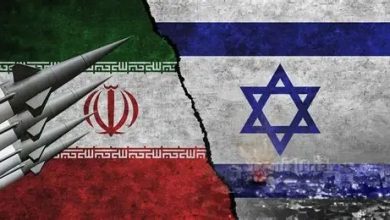
The UAE is not the only actor in this deadly network. Egypt and Saudi Arabia support the Sudanese army. Iran provides drones and missiles. Turkey sells military equipment to both sides. Libyan warlord Khalifa Haftar offers the RSF safe passage and rear bases in eastern Libya.
As the war drags on, civilians remain trapped under siege, and hunger spreads across Darfur and Kordofan.
El-Fasher: A Massacre Before the World’s Eyes
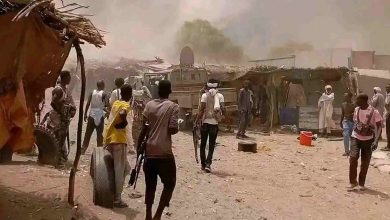
The fall of El-Fasher on October 27, after an 18-month siege, exposed the scale of foreign weaponry sustaining the conflict. Survivors recounted stories of mass rape, abductions, and massacres so extensive that satellite images showed the bloodstained earth.
Global Pressure—Muted but Real
Western diplomats acknowledge that private messages have been sent to the UAE, while human rights groups call for a formal investigation. Even in Washington—one of Abu Dhabi’s closest allies—officials admit that the evidence is becoming too difficult to dismiss.
Conclusion
“The RSF can sustain its fight for a long time thanks to its current backing,” notes Chatham House. Sudan’s war is no longer an internal struggle—it is a conflict powered by regional interests, gold money, and a silence that deepens civilian suffering.
For the sake of those civilians, the paper concludes, the flow of gold and weapons must stop—long before the shooting does.