Media Between Witness and Forger: How Do We Prevent Others from Writing Sudan’s History?
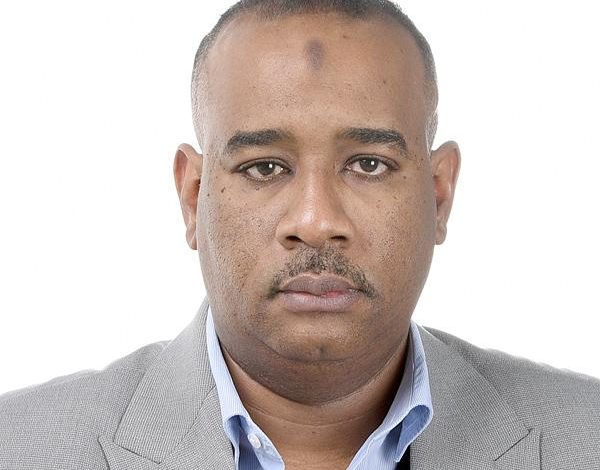
By: Muhannad Awad Mahmoud
Amid the tragedy unfolding in Sudan today—particularly in Darfur and its northern regions, where the Rapid Support Forces (RSF) militia is committing horrific crimes against civilians including murder, rape, looting, and forced displacement—the urgent need arises for Sudanese media, along with all state institutions, to form a unified front in the battle for truth. The catastrophe has transcended politics and partisanship; it has become a struggle of consciousness, conscience, and national dignity.
The recent events in the city of Al-Fashir, followed by the mass exodus to Al-Dabba in the Northern State, reveal the scale of the humanitarian disaster Sudanese citizens are enduring. Hundreds of thousands of women, children, and elderly people fled death, carrying with them testimonies of atrocities captured on camera—often filmed and broadcast by the perpetrators themselves. These recordings alone should have been enough to awaken the world’s conscience, yet they remain incomplete without organized institutional documentation grounded in methodology and national responsibility.
Field documentation marks the dividing line between a disputable narrative and an irrefutable truth. The witnesses of Al-Fashir now sheltering in Al-Dabba are living evidence that cannot easily be falsified—provided their testimonies are gathered under professional standards ensuring the integrity and chain of custody of evidence. It is therefore imperative to establish a comprehensive national mechanism that unites the ministries of Justice, Foreign Affairs, Interior, and Information with human rights organizations, academic institutions, and civil society. This mechanism should form a professional committee of journalists, investigators, photographers, and lawyers tasked with collecting evidence and recording testimonies—both audio and visual—in a manner that allows their use before international legal forums.
Modern history has shown that when media are managed intelligently and resourced adequately, they can shift the balance of power in the arena of public perception. One striking example is actor George Clooney’s campaign to document what he called the “genocide in Darfur,” during which he spent millions of dollars gathering refugee testimonies across twelve camps in eastern Chad—focusing on four key sites. Despite accusations that his campaign manipulated narratives and coached witnesses to indict the Sudanese government at the time, it nevertheless demonstrated the immense political power of media when strategically deployed. Those funded recordings shaped global public opinion and were even presented before the International Criminal Court, contributing to the portrayal of Sudan as a perpetrator of genocide. The lesson is not about Clooney’s integrity—he had his own agenda—but about the media’s formidable capacity to mobilize the world when wielded with intelligence, professionalism, and planning.
This underscores the necessity for our own documented narrative—the authentic testimonies of the people of Al-Fashir and Al-Dabba—rather than leaving space for fabricated or coached accounts that distort Sudan’s image. I recall, during a visit to Norway years ago, meeting several young Sudanese who had arrived through irregular migration routes. They recounted dramatic tales of killings, arson, and rape in Darfur. When I asked one of them—who was actually from Shendi and didn’t even know where Darfur was on a map—how he learned such details, he laughed and said he had learned the stories from others because “they make it easier to get asylum.” Then, jokingly, he added: “When I reached the part about rape, I threw in a few tears.” He later admitted candidly, “We know they know we’re lying.”
This small anecdote captures the danger of leaving narratives unchecked: how personal fabrications can evolve into “international documents” used to indict an entire nation. Such lies—unintentionally or otherwise—have contributed to the suffering of Sudanese people for over two decades, manifesting in economic sanctions, restrictions, and deprivation from education, technology, and progress.
What is needed now is a comprehensive national effort—one that transcends emotion and adopts a methodical approach. Trained teams must document evidence with verified timestamps and locations, preserve the chain of custody, adhere to witness protection protocols, and involve international legal experts to ensure admissibility before independent judicial bodies. At the same time, a coordinated media strategy is essential to present the verified evidence to the world with professionalism and transparency—clarifying what has been proven and what remains under investigation. Exaggeration undermines credibility, and credibility is the cornerstone of strength in this battle.
The national media must evolve from a mere news transmitter into an evidence producer and a professional shaper of public opinion—working in synergy with state institutions. The presence of trusted media teams in Al-Dabba and the refugee camps, documenting eyewitness accounts, mapping destruction, tracking armed group movements, and naming perpetrators—all linked to legal reports by independent experts—will create an irrefutable dossier before international organizations.
The strength of Sudan’s narrative lies in its honesty and precision. The difference between a fleeting tragedy and a case that achieves international justice rests on professionalism and integrity in documentation. The living witness from Al-Fashir now sheltering in Al-Dabba is not merely a survivor of horror; they are a living archive—a national trust that must be preserved as testimony to truth, not as a weapon in the hands of conspirators.
Unifying the efforts of media and state institutions in a national project to document the crimes of the terrorist Rapid Support Forces is not a luxury—it is a moral and historical duty. History does not forgive silence in the face of atrocity, and justice favors those who document, not merely those who describe. Sudan stands today at a decisive crossroads: either it owns its narrative and defends itself with truth, or it lets others write its history in voices that are not its own.