El-Fasher, Abu Zakariya — My Heart and Mind Are With You, and All My Efforts Are Devoted to Defending You
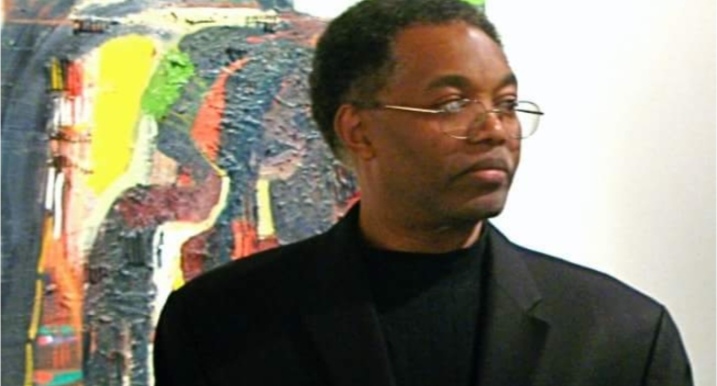
By Dr. Siddig Kaballo
The takeover of El-Fasher by the Janjaweed forces is, for me, not only a political and humanitarian issue—it is a deeply personal one. I have loved this city since the morning in July 1963 when the lorry from Al-Nuhud dropped me off, newly admitted to El-Fasher Secondary School. I made my way to the home of my late uncle, Ahmed Tashin, my father’s close friend, who warmly welcomed me and hosted me for a week until I moved to the school dormitories.
During that week, I visited relatives—among them the late Ali Ahmed Hamid and Khalifa Omar Mohammed Hamid—and frequented Al-Jamahir Bookshop, owned by the late Siddig Ahmed Al-Bashir. That bookshop played a pivotal role in my intellectual growth. From it, I acquired many of the books that shaped my youth—from Sayyid Qutb to Salama Moussa; from Nazik Al-Malaika, Fadwa Tuqan, Abdul-Wahab Al-Bayati, and Salah Abd al-Sabour to Salah Ahmed Ibrahim, Kajerai, and others. I read Egyptian and Lebanese periodicals, the translations of Suhail Idris and George Tarabishi, and works by Sartre and Simone de Beauvoir. I was introduced to the literature of Naguib Mahfouz, Yusuf Idris, Mustafa Mahmoud, Abdel Rahman Al-Sharqawi, and many more.
At school, my classmate the late Sheikh Ahmed Al-Sheikh introduced me to the Communist Party. I joined the student branch and came to know wonderful colleagues from across Sudan—Communists, democrats, democratic socialists, Muslim Brothers, and many who had no political affiliation—students from Darfur, Kordofan, and Sennar, which at the time shared some classes with our school. I also met distinguished teachers, whom I mentioned in a previous post. But my greatest astonishment was discovering the two libraries—Arabic and English—rich with classical and modern literature. Alongside heritage texts, I read Taha Hussein, Abbas Al-Aqqad (whose poetry I loved), and many of the great Arab writers. The English library was equally rich—with Shakespeare, Bernard Shaw, and modern English literature.
El-Fasher taught me, nurtured me, and embraced me with the tenderness of its people. I remember vividly the first and last time I ran in a cross-country race—despite having previously fractured my knee. My knee swelled and became severely inflamed, and I had to be carried to the hospital, where I was admitted overnight. When people in El-Fasher heard that a student was hospitalized, they flocked to visit me. Elderly women brought soup, food, lupin beans, and dates. After being discharged, I returned for follow-up visits wearing the school khaki uniform, my knee wrapped, walking with a limp. Elderly women would stop me on the road between the hospital and Mamakos shop—where the school vehicle waited—and say, “My son, may you recover soon. May God restore your health.” In their voices, I felt the kindness of a mother and the warmth of a cradle. I still thank God to this day for sending me to such a compassionate city.
I loved El-Fasher—its people, my school, and my classmates. This is why I am heartbroken and outraged by what has befallen it during this war, and by the atrocities committed against its people by the Janjaweed militia. These are not crimes of individuals; they reflect the very nature of the Janjaweed since their creation by the criminal regime of Omar al-Bashir. What is happening now follows the same logic. Their deputy commander, as several members told me during their occupation of Bahri, instructed them that they have no salaries and must live off what they seize as spoils. He even declared, like Ahmed Haroun before him, that he did not want prisoners.
What happened in El-Fasher is a war crime for which the Rapid Support Forces (RSF) and the “Ta’sis Government” bear responsibility. During the battle, this government adopted the RSF and rebranded them as “Ta’sis Forces,” making the entire government—its president, its defense minister, the RSF commander, and his deputy—criminally liable for ordering or permitting these acts. They are as responsible as those who executed the killings, unless it can be proven without doubt that explicit orders forbidding the execution of prisoners were issued by the government, prime minister, defense minister, commander-in-chief, or field commander (RSF deputy commander Abdel Rahim Daglo).
We have long warned those who chose to ally with the Janjaweed that they were partnering with a force that violates human rights and has committed—and continues to commit—war crimes and crimes against humanity. Its record in Khartoum, Al-Jazira, Darfur, and the Nuba Mountains during al-Bashir’s rule speaks for itself. A violator of human rights cannot become their protector.
I call specifically on brother Abdelaziz Al-Hilu to save himself and his movement from the trap into which they have fallen, and to distance himself from any human rights violations in El-Fasher, Bara, or anywhere in Sudan—regardless of who commits them.
I call on all my colleagues and friends working in human rights movements to firmly oppose the violations in El-Fasher and Bara, as well as all abuses committed previously in Geneina, Khartoum, Al-Jazira, and elsewhere. We must build a broad front against human rights violations, war crimes, and crimes against humanity in Sudan.
I urge the creation of innovative ways to deliver humanitarian support to displaced people in Tawila, Mellit, Al-Dabba, and other towns and villages—as well as those still in El-Fasher.
I call for an immediate end to this war. Enough death, torture, displacement, and destruction of our country.