A new report by international researcher Joshua Craze has revealed the emergence of a vast “war economy” in Sudan, linking the RSF and the Sudanese army to Gulf states that directly profit from the ongoing conflict—even as Sudan suffers the world’s worst displacement crisis and millions face starvation and disease.
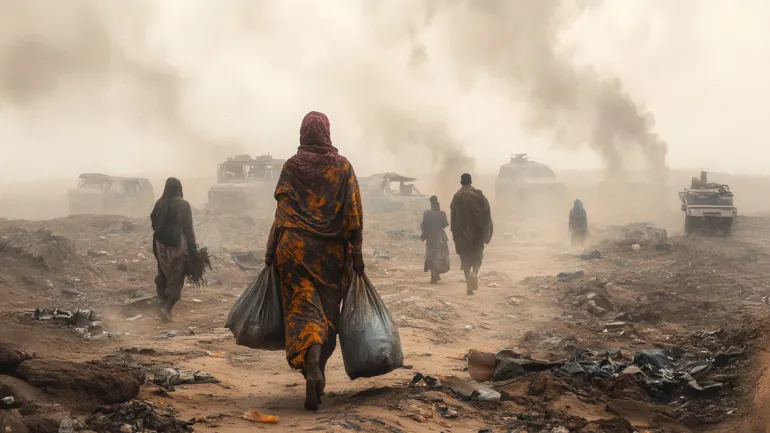
According to the report, the fall of El Fasher after an 18-month siege was not just a military turning point but a demonstration of a pattern in which chaos is exploited for financial gain. In the final days before the city fell, RSF forces detained fleeing civilians and demanded ransom for their release, imposed heavy exit fees, and sold looted goods from homes and shops in Nyala markets within days.
The report notes that the war has driven Sudan’s gold exports to the UAE to unprecedented levels, while livestock exports to Gulf states have also increased—even as the country’s economic infrastructure has collapsed. The paradox, Craze argues, is clear: while the army and RSF fight brutal battles, both profit economically from gold and livestock flows. The RSF controls mines and smuggling routes in Darfur and Kordofan, while the army ensures exports pass through the Port Sudan terminal it controls.
The report also details the military supply chains that fed the war over the past two years. According to Craze, the UAE supplied the RSF with Chinese artillery, air-defense systems, drones, British-made engines, and Colombian mercenaries arriving through Chad and the port of Bosaso in Puntland.
This interplay, the report argues, created an “artificial balance of power” that prevents either side from achieving victory and ensures the war’s continuation—turning Sudanese territory into a hub for armed groups and regional actors seeking profit from gold, livestock, and geopolitical influence.
The report highlights a striking example of international failure: Guni Hamdan Dagalo—brother of RSF commander Hemedti and under U.S. sanctions—was seen inside the Waldorf Astoria Hotel in Washington during talks in late October, while El Fasher was under heavy bombardment. Craze argues this contradiction illustrates Washington’s limited ability to shape the trajectory of the war or restrain its key players.
The report concludes that portraying the conflict as a “war between two generals” is dangerously simplistic. The war has evolved into an economic system from which militias and their foreign backers profit, while Sudan collapses politically, economically, and socially. This structure gives the conflict a self-sustaining capacity, as its beneficiaries thrive not on military outcomes but on the chaos it generates.