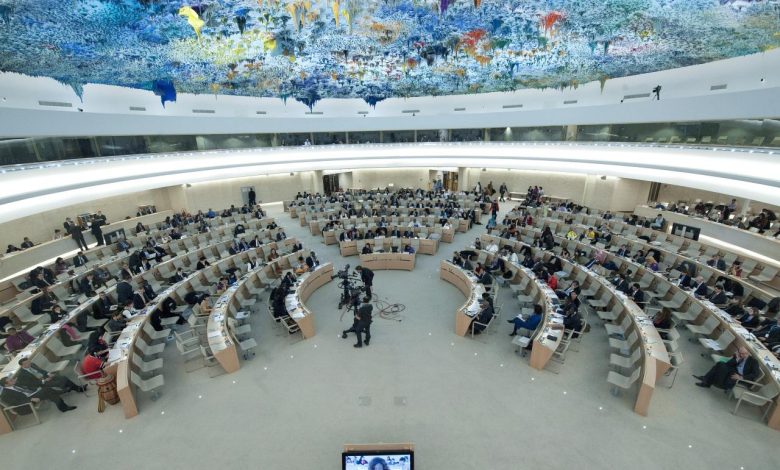
The UN Human Rights Council on Friday adopted a resolution establishing a fact-finding mission to investigate violations and crimes committed against civilians in El Fasher, the capital of North Darfur.
The request for a special session was submitted by the UK, Germany, Ireland, the Netherlands, and Norway, and was supported by more than 50 countries—including one-third of the Council’s voting members.
The Council unanimously endorsed the draft resolution during its emergency session.
The RSF seized El Fasher on 26 October after more than a year of fierce fighting with the Sudanese army and allied armed movements.
Following its takeover of the historic Darfur capital, the RSF committed widespread abuses affecting thousands of civilians, including killings, looting, arbitrary detention, and forced displacement—atrocities that triggered broad domestic, regional, and international condemnation.
The resolution authorizes the international fact-finding mission to launch an urgent investigation into recent violations of international human rights and humanitarian law in and around El Fasher, with particular focus on identifying those responsible, as documented in multiple reports.
It also calls on the UN High Commissioner for Human Rights, Volker Türk, to urge the UN Security Council to refer the situation in Sudan to the International Criminal Court without delay.
The resolution strongly condemns the escalation of violence in El Fasher, including ethnically-motivated killings, summary executions, and the use of rape as a weapon of war by the RSF and allied forces.
It further denounces repeated attacks on civilians and civilian infrastructure—especially hospitals and humanitarian and medical personnel.
The Council urged all parties to implement an immediate and comprehensive ceasefire in El Fasher and guarantee safe, unimpeded humanitarian access to trapped civilians facing increasing signs of famine, while calling for an independent mechanism to monitor ceasefire compliance.
It also pressed for action against individuals and companies profiting from the war in what it described as a “proxy battle for natural resources.”