Abdel-Aati and the Motives Behind His Visit to Port Sudan
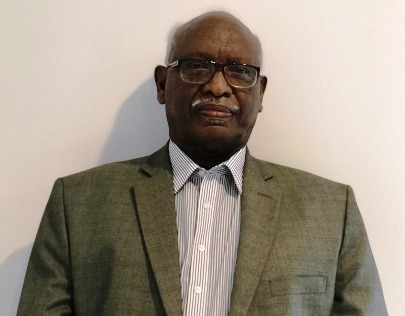
By Zain Al-Abidin Saleh Abdelrahman
Egyptian Foreign Minister Badr Abdel-Aati has paid a visit to Port Sudan — his fourth since assuming leadership of Egypt’s diplomacy. During the visit, he met with Chairman of the Sovereignty Council, General Abdel Fattah Al-Burhan. Following the meeting, Abdel-Aati outlined the purpose of his trip, delivering an extensively diplomatic statement about the deep ties between the two countries and stressing Egypt’s supportive position toward the unity of Sudan and its national institutions, foremost among them the armed forces.
However, two key points warrant special attention: Abdel-Aati stated that his visit reflected President Sisi’s keenness to “monitor the situation in Sudan,” and later added that the Sovereignty Council’s chairman briefed him on the field and humanitarian situation on the ground. Although this remark came as an early part of Abdel-Aati’s statement, it was clearly a response to Sisi’s concern over the current developments in Sudan, especially on the battlefronts.
Abdel-Aati’s emphasis on Egypt’s support for Sudan’s “Government of Hope,” and his remark that Cairo is working to strengthen regional stability in coordination with international partners, indicates a firm alignment with the government in Port Sudan and a rejection of alternative political formations such as “caretaker” arrangements or similar initiatives. It also alludes to President Sisi’s recent European tour, during which he held discussions with several leaders on issues of mutual interest — discussions that undoubtedly touched on the Sudanese conflict, its regional implications, and avenues for ending it. Talks also addressed the role of certain states that have become part of the conflict by allowing their territories to be used for providing reinforcements and logistical support to the militias.
Abdel-Aati made no notable reference to the Quad, and following a meeting that included Sudanese Foreign Minister Muhi Al-Din Salem, the Egyptian foreign minister, and UN Under-Secretary-General for Humanitarian Affairs Tom Fletcher, the Sudanese diplomat delivered an explicit message. Salem stated that “the Sudanese government is dealing bilaterally with our brothers in Saudi Arabia and Egypt, and with our friends in the United States, and we are receiving full cooperation from them.” He added that the Quad — comprising Saudi Arabia, the United States, the UAE, and Egypt — is “an entity that exists only in the media and has no direct relation to the Government of Sudan.” He went on: “If the international community wants to address the Sudan conflict, it must acknowledge that what is happening in Sudan is an outright invasion — for someone with no connection to this country to come, kill, loot, then withdraw — and the world must be told exactly what is taking place.”
Here, the Sudanese foreign minister clarified his government’s stance toward the Quad without ambiguity — and in the presence of Egypt’s foreign minister.
In an interview conducted by journalist Hassan Ismail with General Al-Burhan, the army chief stated that “Mussaad Boulos told us he wanted to succeed in the mediation file, and we told him that with this approach he would fail miserably. The only way to achieve a positive breakthrough in this file is to adopt the roadmap we presented to you.” Al-Burhan added, addressing Boulos: “You are mistaken if you think that the fall of Al-Fashir will weaken us and push us to accept a ceasefire. We will fight to retake Al-Fashir — you will see. We told the Americans to arrange a meeting between us and Abu Dhabi’s leadership. Indeed, they brought Shakhbout, and in the presence of the Americans we presented 21 flash drives containing detailed evidence of the UAE’s role in the war. Shakhbout could not respond or deny; he left the meeting silently.”
These remarks confirm that the Quad’s formation was little more than an American initiative aimed at fulfilling former President Trump’s aspiration for a Nobel Peace Prize — a matter irrelevant to the Sudanese people. If Washington wishes to pursue peace, it should focus on ending the war in Ukraine.
Statements by U.S. Secretary of State Marco Rubio, given in Canada during the G7 foreign ministers’ meetings, reflect a shift in Washington’s stance. Rubio said, “We are now exerting pressure on the countries supporting the militia to halt their arms supplies — continued support only complicates the crisis. The militia is implicated in systematic war crimes against civilians, not merely isolated incidents. If designating the militia a terrorist organization helps resolve the conflict, then so be it.”
This marks a departure from U.S. policy since 2019, which sought to impose a political outcome on the Sudanese people. If the militia is officially designated as a terrorist organization, half the effort required to stop the war would already be achieved.
The Egyptian foreign minister’s visit aimed to gain a clearer understanding of the realities of the war in Sudan — its progress, consequences, and the necessary steps to preserve Sudan’s unity and safeguard state institutions that have been devastated by the militia, which enjoys support from the UAE and assistance from neighboring countries serving as channels for logistical support and mercenaries.
If the U.S., which leads the Quad, were serious about ending the war, it would have demanded that the UAE halt its military support to the militia rather than insisting on its involvement — sometimes as an observer, other times as a mediator. Those who cheer for the Quad, expecting its armies to intervene, are the same actors who once encouraged the militia’s coup attempt.
Egypt, for its part, does not impose its will on Sudan; rather, it listens to Khartoum’s perspective. Cairo was already aware of Washington’s shifting position and sought to brief the Sudanese government in Port Sudan accordingly.
Thus, Sudan’s national priorities must be logically ordered in accordance with unfolding events: ending the war first; removing the militia from both the military and political arenas; then moving to the political stage by preventing foreign interference in Sudan’s affairs; followed by a national dialogue that includes political forces approved by the public, alongside the implementation of justice. These are all points for discussion — and we ask God for wisdom and clarity.