What Is Behind the RSF’s Shelling of Oil Facilities Serving Juba?
Sudan Events – Agencies
The Rapid Support Forces (RSF) have expanded their targeting of oil facilities in Sudan, particularly those used to process South Sudan’s crude before it is exported through its northern neighbor. Observers view this escalation as an attempt by the RSF leadership to drag Juba into Sudan’s conflict and to further strangle the Sudanese economy.
Before the war erupted in mid-April 2023, Sudan produced around 60,000 barrels of oil per day—a figure that has since dropped to less than 40,000. With the war reaching oil fields in the west of the country, current production has fallen to 21,000 barrels per day, with expectations of further decline if the Heglig field is shut down following the earlier closure of ten other fields in West Kordofan.
The Heglig field, located in West Kordofan—where fighting between the Sudanese army and the RSF is intensifying—contains 75 oil wells and hosts a central processing facility for 130,000 barrels of South Sudanese crude. This oil is produced in Unity State and exported through Sudan.
A shutdown of these processing facilities would deprive South Sudan of the majority of its foreign-currency revenues—oil makes up 90% of its income—and would cost Sudan roughly 21,000 barrels of crude daily, in addition to over one million dollars in transit and export fees.
Juba Under Pressure
Amir Hassan, an expert in international relations and security affairs, argues that the RSF’s continued targeting of facilities processing South Sudan’s oil forms part of a domestic and external agenda aimed at drawing Juba into the conflict and blackmailing it by threatening its only economic lifeline.
Speaking to Al Jazeera Net, Hassan says foreign actors have planted proxies within South Sudan’s decision-making centers, recruiting and financing mercenaries on behalf of the RSF and establishing channels for military supplies and medical evacuation.
He warns that unless Sudan’s government moves quickly to recalibrate its relationship with South Sudanese President Salva Kiir—who is undertaking sweeping changes within his political, executive, and military circles—the two states could return to the tension and hostility that marked relations 13 years ago, when South Sudan’s army joined rebel groups in attacking the Heglig field in 2012, resulting in casualties on both sides and the destruction of oil infrastructure.
According to Hassan, the broader plan aims to secure military control over Blue Nile and South Kordofan in order to strengthen the RSF’s alliance with the SPLM-North led by Abdelaziz al-Hilu, and to pressure Sudan and its people to abandon resistance to what he calls an assault on the state.
Political researcher Mustafa Abdel Hafiz, an expert on South Sudanese affairs, believes the RSF seeks to undermine Sudan’s economy by halting production and cutting off transit fees from South Sudan’s oil, while also threatening Juba’s own economic stability. He argues the tactic is meant to deter Kiir from limiting the RSF’s access to South Sudanese territory.
He adds that the return of the “old guard” to South Sudan’s decision-making circle, following Kiir’s recent reshuffles, has unsettled the RSF—especially after reports circulated that South Sudanese authorities instructed hospitals to stop receiving RSF wounded evacuated from Darfur and Kordofan, and expelled foreign mercenaries from hotels in Juba.
Destruction of Vital Assets
South Sudan resumed exporting oil through Sudanese territory last May after nearly a year of suspension due to insecurity and fighting in Kordofan and Darfur.
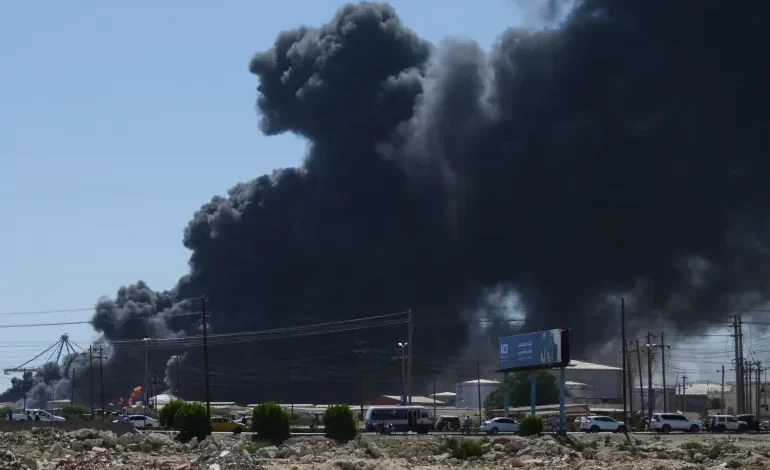
Following a period of relative calm, the RSF last Thursday attacked Heglig’s oil processing facilities with a “kamikaze” drone strike, killing one engineer and injuring several workers.
The following day, RSF drones targeted a refinery in Al-Jabalayn, White Nile State, where crude from South Sudan’s Faluj and Adaril fields is processed before export.
Sudan’s Oil Sector Workers Union condemned the attacks, saying in a statement on Monday that they reveal a clear plan to destroy the nation’s strategic capabilities.
The union reported that the assault resulted in multiple worker fatalities and forced the declaration of “force majeure,” along with an emergency shutdown of South Sudan’s oil pumping operations from Heglig to Port Bashayer on the Red Sea.
Juba’s Response
The attacks came amid sweeping political, security, and military reshuffles ordered by South Sudanese President Salva Kiir Mayardit. Kiir dismissed figures who had expanded their influence and formed power centers acting independently of him.
He reinstated several members of the “old guard,” many of whom maintain strong ties with Sudan from before the separation and believe Juba’s interests lie in deeper cooperation with Khartoum.
Among those dismissed was Vice President for Economic Affairs Benjamin Bol Mel, who was stripped of his rank in the National Security Service and placed under house arrest just eight months after his promotion. Kiir also restored James Wani to his long-held political and presidential role.
Political circles in Juba have long suggested that Kiir had been grooming Bol—his daughter’s husband—as a potential successor, particularly after First Vice President Riek Machar faced treason charges and is now on trial.
Kiir also reinstated his former national security adviser, General Tut Gatluak, months after dismissing him. Gatluak is known for his experience in Khartoum before the secession and for his ability to manage the complex bilateral files between the two countries, especially those involving intertwined security and economic interests.
Kiir also replaced the army chief, returning his predecessor to the post just three months after dismissing him. The reshuffle extended to the intelligence director and several ministers and senior officials.
Activists in Juba described Kiir’s “revolution” as more than a political overhaul—rather, a bid to reassert control, enforce discipline within the ruling party, and dismantle entrenched “state-linked power networks.”
Ter Manyang Gatwech, executive director of the Peace and Advocacy Center in Juba, wrote on Facebook that Kiir’s changes aim to dismantle the “state mafia” that had undermined centralized authority and weakened presidential power.
Source: Al Jazeera