IAEA Issues Resolution on Iran’s Nuclear Program, and Tehran Responds
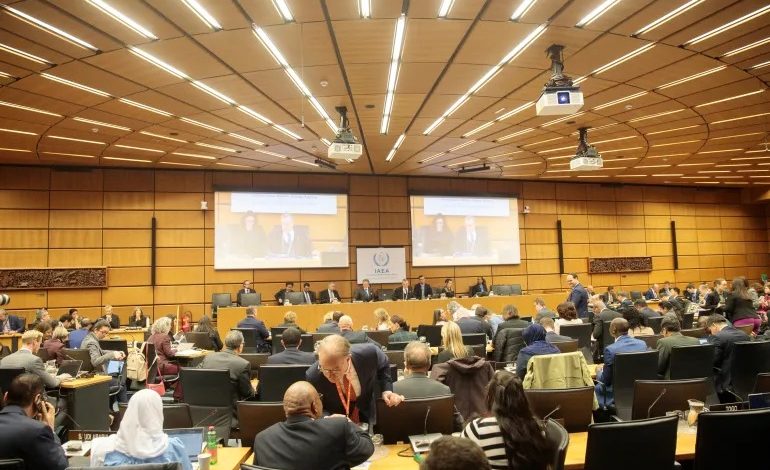
The Board of Governors of the International Atomic Energy Agency (IAEA) on Thursday adopted a resolution demanding that Iran immediately cooperate regarding its nuclear facilities and stockpile of enriched uranium. The decision angered Tehran, which responded by suspending an agreement reached with the agency two months ago.
The resolution—submitted by the United States and the European troika (France, Britain, and Germany)—was adopted during a Board of Governors meeting in Vienna with 19 votes in favor, 3 against (Russia, China, and Niger), and 12 abstentions.
The resolution calls on Iran to provide full and immediate cooperation with the agency concerning nuclear sites that were struck in June, as well as its stockpile of enriched uranium, which the agency has not been able to verify for months.
Several Iranian nuclear facilities, including Natanz and Fordow, were hit by Israeli and American airstrikes as part of an operation aimed at halting Tehran’s nuclear program.
U.S. President Donald Trump said the American strikes had completely destroyed Iran’s nuclear program, but intelligence leaks from Washington cast doubt on that claim.
According to the IAEA, Iran had, before the Israeli-American strikes, around 441 kilograms of uranium enriched up to 60% purity—close to the 90% needed to produce nuclear weapons.
Based on the agency’s measurements, such a quantity of uranium could theoretically be used to make 10 nuclear bombs if enriched further.
Following the Israeli and American strikes in June, Iran suspended cooperation with the IAEA and barred its inspectors from entering nuclear facilities. However, in September, Iran and the agency signed a cooperation agreement in Cairo.
Iran’s representative to the IAEA, Reza Najafi, condemned the Western-backed resolution on his country’s nuclear program, saying it aims to exert “illegitimate pressure” on Iran.
Najafi stated that the resolution is based on what he described as a “false and misleading narrative” about Iran’s program, noting that the European troika and the United States assume Iran must continue cooperating with the IAEA even when its facilities are being bombed—something he said is unrealistic.
Meanwhile, Iranian Foreign Minister Abbas Araghchi announced that Iran had informed IAEA Director General Rafael Grossi that the Cairo agreement is no longer valid in response to the Board’s resolution.
Araghchi said in a statement that the Cairo agreement had effectively lost its role as the framework governing Iran–IAEA relations in the area of safeguards.
He added that the European troika and the United States ignored Iran’s goodwill by submitting their draft resolution to the Board of Governors, thereby undermining the credibility and independence of the IAEA and disrupting Iran’s cooperation with the agency.
The foreign minister stressed that Iran will not allow the IAEA to enter the nuclear facilities that were bombed during the recent war with Israel until a concrete agreement is reached.
Meanwhile, a spokesperson for the French Foreign Ministry said France, Britain, and Germany want to reopen the door to diplomacy with Iran regarding its nuclear program.