Rapid Support Forces and the Strategy of Brutalization (2–2)

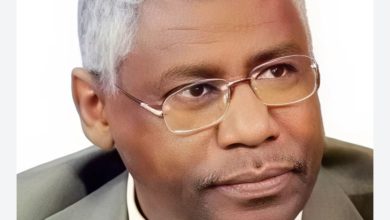
BY Lt. Gen. Dr. Adel Hassan
In 2013, the need arose to establish a military force to support the army and adopt the same tactics and methods used by the rebel armed movements in Darfur, South Kordofan, and Blue Nile. Consequently, the National Intelligence and Security Service restructured the “Border Guard Forces” under the name Rapid Support Forces (RSF). The new force underwent retraining and rearmament in coordination with the Sudanese Armed Forces.
The RSF began its first operations in South Kordofan and later in Darfur, achieving significant victories over the Sudan Revolutionary Front due to the military expertise of its fighters. This shifted the military balance clearly in favor of the government in Darfur. However, the force’s unruly behavior and the ambitions of its leadership created complications for the intelligence service. As a result, the RSF was transferred institutionally to the Presidency, and in 2017 a special law was issued granting it the status of an independent security force.
In April 2019, the RSF participated in ousting former President Omar al-Bashir as part of the “Security Committee,” which included the army, police, intelligence service, and the RSF. Its commander, Mohamed Hamdan Dagalo (Hemedti), became Deputy Chairman of the Sovereign Council formed in August of that year, and the RSF was tasked with securing the capital and strategic sites. After the dissolution of the Operations Authority of the intelligence service, its headquarters, weapons, and logistical assets were taken over by the RSF by force.
The RSF also participated in Saudi Arabia’s “Operation Decisive Storm” in Yemen, which enabled it to build strong networks of foreign relations, especially with the United Arab Emirates. In Sudan, it was assigned to secure the western borders against illegal migration, terrorism, and drug trafficking—strengthening its ties with the European Union. Through the Khartoum Process, the RSF received significant EU support.
Amid the conflict between Hemedti and the leader of the Revolutionary Awakening Council, Musa Hilal, the RSF managed to seize one of the most important gold mining areas in Darfur. This provided its leadership with enormous wealth, in addition to the financial and logistical support it continuously received from the UAE.
As the RSF accumulated military and economic power, its commander developed political ambitions—eventually seeking to rule all of Sudan. He began forging alliances to gain loyalty across different social groups (tribal leaders, Sufi orders), political parties, armed movements, and even figures within regular forces. With his financial leverage, he co-opted many community, political, and military leaders. His ambitions to govern Sudan intensified, creating fierce competition with the military leadership and leading him to attempt rebellion by allying with the “Framework Agreement” group (FFC) to keep the RSF independent of the army for ten years.
This competition escalated into violent conflict with the outbreak of war on April 15, 2023, after Hemedti redeployed over 100,000 RSF fighters and attempted to seize the Merowe airport.
Brutalization by the RSF and Violations of International Humanitarian Law
UN experts expressed deep concern over the catastrophic humanitarian situation in Sudan. Thousands of civilians have been killed, and millions have been forcibly displaced from their homes. Nearly 3 million people fled to neighboring countries, while over 11 million remain internally displaced.
In a press statement, UN experts voiced alarm over reports of widespread violations committed by the RSF, including enforced disappearance and sexual exploitation of women and girls. Hundreds of women have been detained by the RSF in degrading and inhumane conditions. According to the statement, RSF members used rape and sexual violence as tools of punishment and intimidation, in some cases driven by ethnic or racial motives. The experts also highlighted severe restrictions on humanitarian access for organizations seeking to support survivors and provide health care, protection, and shelter.
The U.S. Department of the Treasury imposed sanctions on RSF deputy commander Abdelrahim Dagalo for widespread abuses in Darfur, especially West Darfur, which witnessed ethnic cleansing and genocide. The governor of West Darfur was killed and his body mutilated. The Treasury stated that Abdelrahim was sanctioned because he led an entity responsible for atrocities, massacres, gruesome killings, and sexual violence.
A report by the Sudanese Prosecutor General revealed more than 500 cases of missing persons linked to enforced disappearance. The Sudanese Unit for Combating Violence Against Women and Children noted an increase in cases of enforced disappearance of women in Nyala. Eyewitnesses reported that women and girls were held in warehouses and hotels in Nyala and Khartoum.
Sudanese authorities are pursuing RSF leaders over a wide range of violations since the war began, including occupying and burning civilian homes, looting vehicles, taking over hospitals and health facilities, destroying state institutions, ministries, diplomatic missions, infrastructure, electricity and water stations, banks, commercial stores, factories, and companies—along with indiscriminate shelling to terrorize residents and force them from their homes.
The Sudanese Group for Victims of Enforced Disappearance documented 430 cases of missing persons during the conflict. Police in Wad Madani, which received thousands fleeing Khartoum, recorded numerous missing persons, including men, women, and children.
Additionally, Sudanese police recorded over 32,000 complaints against the RSF between June 1 and October 20, 2023 (113 missing persons, 40 bodily harm cases, 7,721 theft cases, and 23,761 stolen vehicles).
The UN Human Rights Office reported receiving verified information indicating that at least 87 people from the Masalit and other tribes were buried in a mass grave outside El Geneina by RSF and allied militias. UN interviews with refugees who fled El Geneina to Adré in Chad revealed horrifying accounts of militias supported by the RSF killing civilians fleeing on foot.
There is also information suggesting that fighters from Boko Haram and ISIS in West Africa and Libya have joined the RSF to gain safe haven, money, weapons, training, and to form sleeper cells.
Conclusion
As outlined in the book Management of Savagery… Destroying the Post-Colonial State, the RSF proposed dismantling the post-1956 Sudanese state.
Just as ISIS began its operations in Iraq by targeting security forces in Mosul and northern Iraq, the RSF sought to destroy key Sudanese military and security institutions—including the General Command, Central Reserve Police, Signal Corps, Armored Corps, Military Industry Corporation, intelligence headquarters, forensic units, and police academies.
ISIS adopted extreme violence such as beheadings and burning victims; the RSF similarly killed people who resisted—especially civilians defending their homes or refusing to hand over property and vehicles. Entire families were killed in indiscriminate shelling in El Geneina.
ISIS looted the Central Bank in Mosul; the RSF seized the Central Bank branch in Khartoum and commercial banks, stealing cash, gold, and savings.
The RSF burned and destroyed major buildings including Al-Tadamun and Al-Fayhaa towers, Afra Mall, the National Bank, six water stations, 93% of electricity offices, 9,000 electricity poles, 158 markets, and over 640 factories in Khartoum and Bahri. More than 220 pharmacies were destroyed, 200 health institutions ceased operations, and over 90% of homes were damaged or looted. About 23,000 vehicles were stolen, and several bridges were damaged.
RSF forces tortured prisoners, mutilated bodies, carried out field executions, trafficked weapons, recruited children, attacked diplomatic missions, and prevented the burial of the dead—mirroring ISIS’s tactics.
Cultural institutions and the national museum were burned and looted.
Final Statement
The phenomenon of RSF terrorism is likely to spread across the wider West African region, threatening national and regional security, increasing illegal migration and terrorism, and endangering global security and the strategic interests of major powers.
Therefore, a comprehensive international strategy and coalition must be formed to eliminate this emerging terrorist threat, strengthen Sudan’s national capabilities, designate the RSF as a global terrorist organization, and confront it firmly—far from selective standards and double policies.