From Congo to Sudan… Time Is Running Out for Trump’s Africa Deal-Maker, Massad Boulos
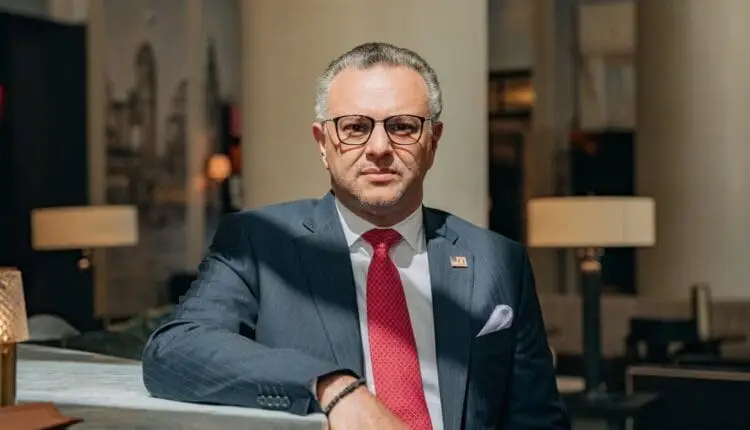
Africa Report – Julian Pickett
Moment of Truth
Donald Trump’s Africa advisor, Massad Boulos, has faced months of controversy and criticism.
At the White House, some staff considered his African engagements a waste of the president’s time. In Congress, he was criticized for rarely briefing lawmakers on his actions. Veteran experts complained that he seldom sought their advice. Meanwhile, accusations of conflicts of interest related to his family’s business activities accumulated.
Most dangerously for a personal envoy of a president who often prematurely boasts of diplomatic successes, Boulos’ rushed efforts to resolve complex crises—from the Democratic Republic of Congo to Sudan—have hit a dead end.
Aides to Congolese President Félix Tshisekedi noted:
“He went from being very popular… to unpopular. The Congolese may be with you at breakfast… and by lunch, they abandon you if results are not delivered.”
Yet, Boulos was present, with his signature sunglasses, calm smile, and grey beard, walking directly behind the U.S. president during a victory moment in Sharm El Sheikh.
Upon Trump’s arrival from the presidential plane on October 13 to receive Egyptian President Abdel Fattah el-Sisi, it was clear that Boulos’ position within the president’s inner circle remained intact.
He then joined a small group of U.S. officials to witness Trump sign a historic ceasefire agreement in Gaza, alongside the leaders of Egypt, Qatar, and Turkey.
Boulos told Africa Report:
“Progress in one region creates momentum in another… The administration is taking decisive action to address the conflict and humanitarian crisis in Sudan.”
“Diplomatic Forrest Gump”
Two days later, Boulos met in Cairo with President Sisi and Sudanese Army Chief Abdel Fattah al-Burhan. He then traveled to Rome to meet the presidents of Chad, Togo, and Nigeria, discussing issues from Sudan to Libya and eastern Congo.
Former U.S. official Cameron Hudson describes him as:
“Like a diplomatic Forrest Gump… appearing suddenly among presidents, and you don’t know how he got there.”
Nonstop Tours Across Africa
In just six months, Boulos visited 12 African countries, making him one of the administration’s most prominent representatives on the continent.
While some see him as a “freelance agent,” the State Department insists his role is part of the official process. Opinions about him are mixed:
Is he:
-
A cultural bridge capable of drawing Washington’s attention to Africa?
Or -
An inexperienced amateur lacking institutional support to make U.S. policy effective?
Cameroonian lawyer NJ Ayuk says:
“I like him because he represents a different style of diplomacy… but it carries risk too.”
From Lagos Truck Seller to Trump’s Man in Africa
Boulos was born in Lebanon in 1971 and studied in Texas. He married the daughter of Lebanese billionaire Zohir Fadl, one of West Africa’s major businessmen. The Fadl family owns over 100 companies across Africa, Europe, and the Middle East.
Boulos splits his time between Nigeria and Florida and became part of the Trump family after his son Michael married Tiffany Trump in 2022.
Ayuk notes:
“He is fully American… but being Lebanese and African gives him a significant advantage.”
African leaders—frustrated with Western “lectures”—prefer his direct, businesslike approach over traditional moralistic discourse.
Fierce Defender of Trump
When Trump sparked controversy over a Liberian president’s English skills, Boulos rushed to defend him. At the UN, when a Congolese journalist called Boulos the “face of hope,” he replied:
“Credit goes to President Trump… we are just implementing his vision. He wants peace.”
Yet voices within the “Trump world” have tried to sideline him.
Embarrassment, Accusations… and a Comeback
Boulos has faced criticism for:
-
Inflating his qualifications
-
Conflicts of interest
-
Acting beyond his mandate
-
Family business ties
-
Private deals in Libya and Congo
Defenders argue he has:
-
Built rapid relationships
-
Opened closed doors
-
Brought Africa back to the White House agenda
Former U.S. official Tibor Nagy says:
“Anyone who succeeds in business in Nigeria… has a lot of practical intelligence.”
Sudan: His Toughest Test
Boulos’ efforts are most questioned in Sudan. He secretly met in Geneva with al-Burhan and Hemeti in August, raising concerns among observers that he tends to take military promises at face value.
Critical miscalculations:
-
Early statement that Rapid Support Forces (RSF) would allow humanitarian aid into El Fasher, only for the last hospital massacre to occur after the siege.
Sudanese analyst Khalood Khair says:
“He seems to believe what the generals tell him… and that is dangerous.”
Congressional Pressure and UAE Involvement
Boulos faces increasing difficulty. The U.S. is under domestic and international pressure over accusations that the UAE supported RSF in what has been described as a “genocide.”
Influential Congress members stated on October 30:
“This is not a war… but a systematic genocide.”
They demanded:
-
Holding RSF leaders accountable
-
Designating the militia as a terrorist organization
-
Questioning UAE military support
Boulos responded on platform X (formerly Twitter) on October 29:
“Statements are not enough… promises must be translated into action to save lives.”
He now frames Trump’s role as facilitating a humanitarian truce between the army and RSF.
Analysts, however, see the agreements he brokers as:
-
Superficial
-
Short-term
-
Not addressing root causes
-
Lacking implementation mechanisms
Conclusion: Sudan Will Define Boulos’ Fate
Boulos acknowledges:
“Long-term economic growth requires first peace and stability.”
Yet his ability to achieve a breakthrough in Sudan is highly uncertain, especially given:
-
Chaotic diplomatic processes
-
Lack of serious pressure on parties
-
Complex regional dynamics
-
Deep UAE involvement
-
Expanding influence of Iran, Russia, and China
Failure in Sudan could topple his image as a “deal-maker,” while even partial success could solidify his position as a key player in Trump’s African diplomacy.