The Militia in Kordofan Is Surrounded, Exhausted, and Fighting With Bare Hands
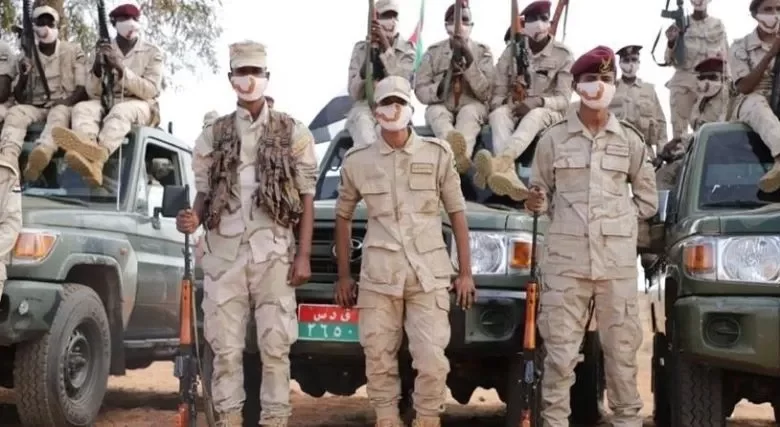
It has become evident from current operations in Darfur that the pattern of military action has changed, along with the methods used. Commanders now recognize that the battlefield is vast, allowing the enemy to move quickly from one area to another. Some groups aligned with the militia also work to track army movements, positions, and deployments.
Therefore, operations have shifted toward planned, swift strikes that leave deep impact on enemy forces, inflicting heavy losses in personnel and equipment. These strikes include pre‑emptive attacks that disrupt the enemy before it can act—such as the strike the militia received on Friday morning while it was mobilizing fighters to attack the 22nd Division in Babonousa, or the attacks on supply lines before fuel convoys arrived, which emptied fuel tanks and halted the militia’s vehicles.
The militia had redeployed some of its forces southward toward the western Omdurman–Al‑Obeid axis, an area that witnessed fierce battles in which the army and supporting forces managed to clear Abu Qaoud, Al‑Nimir, Western Al‑Tina, and Khor Abu Haraz. The militia suffered heavy casualties there, with many wounded fighters left out of the battle due to lack of evacuation capability. Even those evacuated receive no real treatment, and are usually handed over to their families—except for some leaders who are sent to the UAE, South Sudan, Chad, or Kenya for medical care.
Sources said the militia deployed armed men in Wadi Al‑Waz, Al‑Bayt, Al‑Qutayrat, and Al‑Magad to prevent civilians from heading north after the appearance of the Al‑Dabba camp on Arab and international TV channels, where civilians testified to the militia’s crimes and massacres against unarmed residents.
The presence of the army and supporting forces in Jebel Abu Sunoon became strategically important, as the mountain overlooks the entire area. From there, the militia had infiltrated Al‑Khuwei, Umm Sumaymah, Bara, and other locations.
Expert Testimony
Major General (ret.) Salah Mohamed Khalid, who served in these areas for many years, explains:
“The current strategy is actually the army’s standard approach in most operations, so it cannot be said that the leadership changed its strategy.
For example, when we talked about operations in Bahri, and the shift toward breaking the siege on the General Command and liberating the Palace and surrounding areas, we always said that the goal wasn’t to liberate areas—those fall automatically once the army advances.
What matters is inflicting continuous, hourly losses on the enemy. Over time—and time is not in their favor—they cannot sustain long battles that require supply, logistics, and the establishment of defensive positions. They are an assault force; they do not understand defensive warfare, which exhausts them.”
He adds:
“What’s happening now is that they are losing fighters and equipment daily. Their supply routes are cut and dangerous, making evacuation itself risky or impossible. This destroys morale and breeds doubt, leading many to flee or surrender.”
He points to what happened in Al‑Nuhud, where eyewitnesses saw militia fighters return from Kordofan in one truck hauling six or seven immobilized vehicles that had run out of fuel, with dozens of wounded piled inside and no hope of treatment. Fighters themselves were exhausted and demoralized.
Major General (Security) M. Madani Al‑Harith also notes:
“What is happening in Kordofan now is an operation aimed at dismantling the militia’s operational structure by denying it safe presence anywhere, cutting its supply lines, and eliminating any sense of reinforcement.
This will have a major impact on the Darfur battle, because the militia’s trained core is collapsing.
They are now forced to fight with untrained recruits—men fighting essentially with bare hands, who neither know nor master combat. Even experienced fighters find themselves in unfamiliar terrain where one small mistake can be fatal.
The army’s strategy of constant attrition makes the militia feel permanently surrounded by warplanes and drones, turning every attempt to fight into a major risk—not only from ground forces but from air power that is present at all times.”