As battles intensify in Kordofan… the militia’s supply lines stretch between the desert, mountain routes, and forests
Report – Amir Abdelmajed
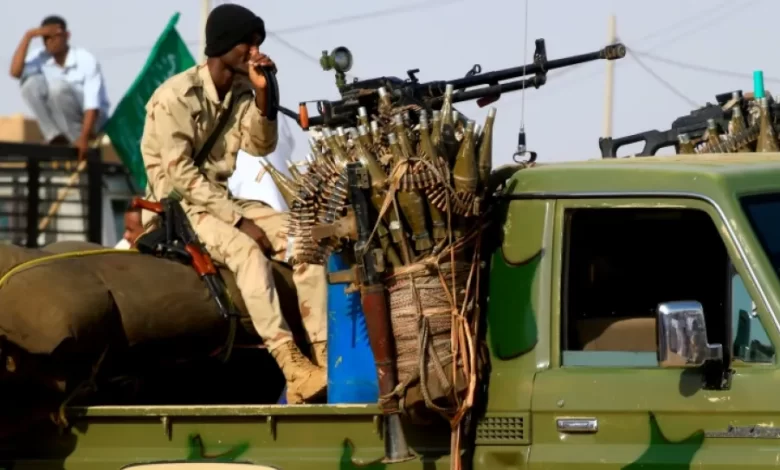
With the escalation of fighting in Kordofan and the disruption of supply lines from the triangle region and the traditional smuggling routes coming from southern Libya—routes long used throughout the war—alongside the Adré route and others used to bring weapons and fighters from Chad, as well as routes from South Sudan, all of these supply lines have become increasingly relied upon by the militia to transport military equipment into Sudan.
These routes are now under the fire of the Sudanese Air Force, making the arrival of supplies to fighters in Nyala, Kordofan, and other areas extremely difficult. The air force now targets fuel shipments in addition to weapons convoys. Fuel supplies, particularly those coming from Libya, have become harder to deliver since most convoys must travel long distances across exposed desert terrain, making them easy targets for airstrikes. Establishing camps in these areas and transporting foreign fighters in tractor convoys has also become costly due to frequent air attacks.
As a result, the UAE has turned to alternative supply lines away from the old routes. This time, supplies are being delivered directly to Asosa Airport, the capital of Ethiopia’s Benishangul-Gumuz Region, before moving through a network of rural villages such as Abu Ramou, a small village that has become a crossing point into Sudan. From there, shipments enter wooded areas within Sudan and travel through rugged paths deeper inland. Additionally, flights are operating from Ethiopia to Yabus, a mountainous area where forces loyal to SPLA commander Joseph Tuka are stationed. It is believed that the UAE is attempting to turn the area into a major supply hub—similar to what it previously did in Um Jaras.
Abdelnabi Yassin, who is familiar with the area, says this scenario is entirely plausible given the open borders and the widespread presence of shifta gangs, who could assist anyone willing to pay. He adds:
“Smuggling weapons and equipment through the east is not new—the new development is that locals are now talking about large trucks. That is alarming because if weapons reach Joseph Tuka, they will effectively become accessible to the militia and to Al-Hilu’s forces as well. These areas are sparsely populated, and some have no population at all due to their harsh terrain. Based on the information available, I believe support will pass through these routes with Ethiopia providing safe passage across its territory.”
However, military expert Lt. Gen. (Rtd) Yasser Saad Al-Din downplays the likelihood of the UAE shifting its supply routes to the east, citing the extremely high cost and the considerable risks—both human and environmental. The presence of criminal gangs familiar with the terrain poses notable danger, while the difficult topography and unpredictable weather often block or damage roads. “I don’t believe the UAE will carve out or pave new routes through forests and mountains just to move weapons that could still be targeted by the army’s aircraft given the long distances involved,” he says.
He adds:
“Joseph Tuka’s forces are small, lightly armed, and incapable of conducting military operations to protect such shipments. The UAE might slip a few shipments through the area, but strategically, it will not abandon its usual routes that deliver weapons directly to its fighters and mercenaries on the ground.”
He continues:
“It seems more like tactical maneuvering by the militia and the UAE. The reality is clear: they are trying to open multiple routes from South Sudan—this is obvious given the volume of weapons and the arrival of South Sudanese fighters into Babanusa and surrounding areas. It is also clear that Al-Hilu’s territories have become an entry point, and there are other entryways along the borders with South Sudan, the Central African Republic, Chad, and southern Libya.”
He concludes:
“Supplies may no longer come through the usual Libyan routes, but they will enter via Chad or the Central African Republic through areas like Um Dafuq. The financial and human cost will rise, but they will not stop. Therefore, we must study, monitor, and analyze these developments—as we are doing now—and strike these supply lines while working to dry up sources of weapons and fuel as much as possible.”