The Saudi Government Moves West… Leaps Inside the Sudanese Scene
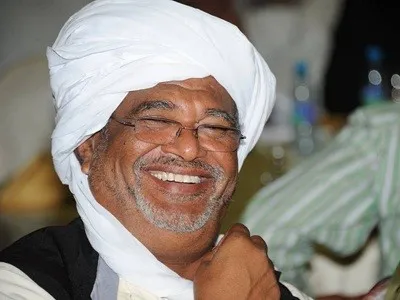
Dr. Abdel Latif Al-Bouni
Whether we like it or not, we are living in an era of American global dominance — Pax Americana — modeled after Pax Romana, when the Roman Empire ruled the world.
The difference, however, is that Roman control was direct, while American control today is exercised through regional partners.
After the end of the Cold War in 1990 and the collapse of the Soviet Union — and thus the end of bipolarity — the world was expected to return to multipolarity, the state of global affairs before World War II. Many hoped NATO would voluntarily dissolve, just as the Warsaw Pact collapsed under pressure.
The world longed for an end to the arms race, the end of wars, and a new era in which economic strength — not military might — would prevail, leading to the rise of new powers such as Germany and Japan.
But the United States said no. Saddam’s invasion of Kuwait helped Washington rally the world behind it, restore the glory of the gun, and cement the unipolar moment.
Realizing it could not rule the world alone, the U.S. turned to partnerships — or regional “agencies,” if you will.
In the Middle East, competition for regional leadership took place among Israel, the Arab world, Iran, and Turkey.
Let us skip ahead and arrive at the present: the Gulf states have established themselves as unavoidable regional powers — for two reasons.
First, the current Gulf leadership, the third generation of ruling families, abandoned conservative diplomacy and entered the arena of international influence.
This is a natural political and diplomatic evolution: no state today can survive without seeking influence beyond its borders. Pursuing influence does not always mean hegemony; it can mean mutual interest and political coordination — even if the partners are unequal.
Now let us leap again to Prince Mohammed bin Salman, who entered leadership with a carefully crafted plan — Saudi Vision 2030 — to position Saudi Arabia prominently in the global contest for influence.
This plan began with unprecedented domestic reforms — a social revolution of sorts — drawing in the youth and women, arming himself with popular support in addition to traditional legitimacy.
This allowed him to advance carefully and insightfully in foreign policy, scoring a major victory in Syria — and now turning toward Sudan.
Let us leap once more to our beloved Sudan — with a broken heart.
The war raging there is no ordinary conflict. Its core is an unprecedented assault on unarmed, innocent civilians, which has drawn global attention and concern from neighboring states — including Saudi Arabia, whose connection to Sudan through the Red Sea makes the crisis impossible to ignore.
In today’s world, seas are bridges, not barriers.
Saudi Arabia has been at the heart of the Sudanese crisis from the very beginning — indeed before the beginning.
The first attempt to stop the war was in Jeddah, and the Jeddah Agreement remains the most reasonable reference point for ending the conflict — or, more accurately, the aggression against Sudan.
Saudi Arabia is also a key member of the Quad, which Trump’s adviser, Massad Boulos, referenced when discussing the Sudan file.
Prince Mohammed bin Salman, with all the political weight outlined above, placed the Sudan issue at the top of his agenda during his visit to the United States last week — a visit that dominated global media as a meeting between a global superpower and a major regional power.
Let us leap one more time beyond procedural formalities and the theatrics performed by President Trump — who, since returning to office, has adopted a new style of diplomacy.
If I may name it, I would call it “the diplomacy of brazenness.”
Between us, it is a kind of entertaining brazenness that forces you to follow along.
Returning to our topic — though we never truly left it — all Sudanese welcomed Prince Mohammed bin Salman’s involvement in the Sudan war file.
Even more remarkable was the political consensus:
The Sudanese government welcomed it immediately, and all political parties — including the Islamic Movement and “Sumood” — also welcomed it.
This is the first genuine political consensus Sudan has seen not just since the war began, but in decades.
It should be embraced, though surely some will try to fracture it — even from within the ranks of those who support it — for the sake of securing a piece of the expected “cake.”
(“People no longer fear God when it comes to this suffering nation,” as we say.)
In my view, Prince Mohammed bin Salman could begin resolving the Sudan crisis by building on this fragile consensus — perhaps it may become an entry point toward ending the military conflict.
As for the Saudi project — endorsed by the United States — its features are not yet clear, let alone its components.
Is it still in the stage of intentions?
Has it advanced to outlining its main contours?
Or is it already complete and simply awaiting implementation?
These are questions we cannot answer.
But what we can say is that the patient Sudanese people — burdened by their deep and bleeding wounds — have received the developments with hope.
May it, O God, be a hope fulfilled.