G20 Summit in Johannesburg Concludes Without U.S. Handover Ceremony
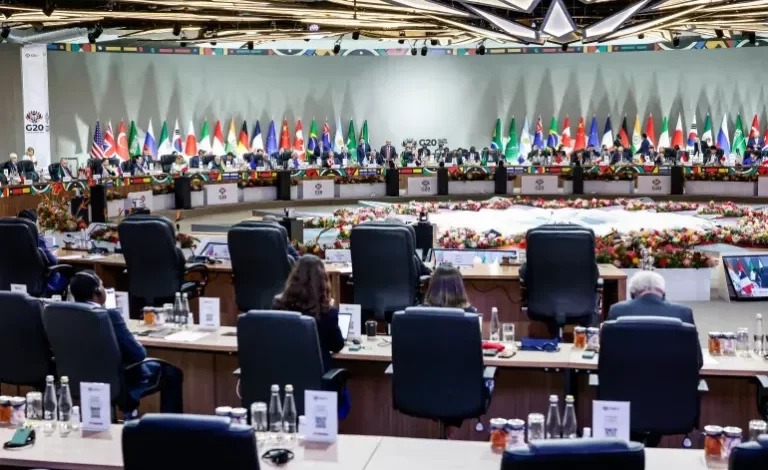
The G20 leaders’ summit, held in Johannesburg, South Africa, over Saturday and Sunday, concluded without the customary handover ceremony of the rotating presidency to the United States, amid a sharp diplomatic dispute between the two countries over the level of U.S. representation at the summit.
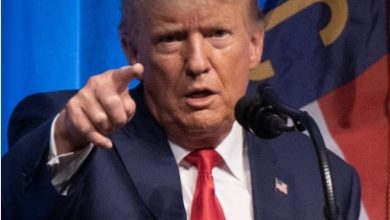
The United States boycotted the two-day meeting of leaders from advanced and emerging economies in Johannesburg, citing claims by President Donald Trump’s administration that South Africa was violently persecuting the white Afrikaner minority—a claim strongly denied by Pretoria. Washington sent only its chargé d’affaires, Mark Dillard, to attend the closing session and receive the G20 presidency.
South Africa, however, described the U.S. sending only its chargé d’affaires to receive the rotating presidency as an insult to President Cyril Ramaphosa.
South Africa’s Minister of International Relations and Cooperation, Ronald Lamola, said in a statement on Sunday: “The United States is a member of the G20. If it wanted a representative, it could have sent anyone at the appropriate level. This is a leaders’ summit; the appropriate level could be a head of state, a special representative appointed by the president, or a minister.”
Lamola confirmed that the absence of high-level U.S. participation prevented the traditional handover ceremony. He said President Ramaphosa would not hand the presidency to the U.S. chargé d’affaires but would instead formally hand it over to the United States at any location or government office in South Africa.
President Ramaphosa, the summit host, tried to downplay Trump’s absence, emphasizing that the G20 remains a key platform for international cooperation. He said, “The G20 highlights the importance of multilateralism… the challenges we face can only be addressed through collaboration and partnership.”
The summit was also affected by other absences: China was represented by Li Xiang instead of President Xi Jinping, Russia by Kremlin official Maxim Oreshkin instead of President Vladimir Putin, and Argentina by Foreign Minister Pablo Cerna instead of President Javier Milei.
This was the first G20 summit held in Africa and the first with the African Union participating as a permanent member. Leaders warned of geopolitical divisions threatening the group’s ability to address global economic crises.
French President Emmanuel Macron stated that “the G20 may be on the verge of losing its relevance,” while U.K. Prime Minister Keir Starmer stressed the need to find “constructive ways to address global challenges.”
Despite the absence of Washington, leaders adopted the summit declaration, covering climate, energy, debt, and strategic minerals, and calling for “just” peace in Ukraine, Sudan, the Democratic Republic of the Congo, and the occupied Palestinian territories.
However, the U.S.-Africa dispute overshadowed the event, especially after Trump announced that the next G20 summit in 2026 would be hosted by the United States at his Florida golf club.