“We Are at War”: Details of Abdulrahim Dagalo’s Call to the Umma Party Leadership Hours Before the Outbreak in Khartoum
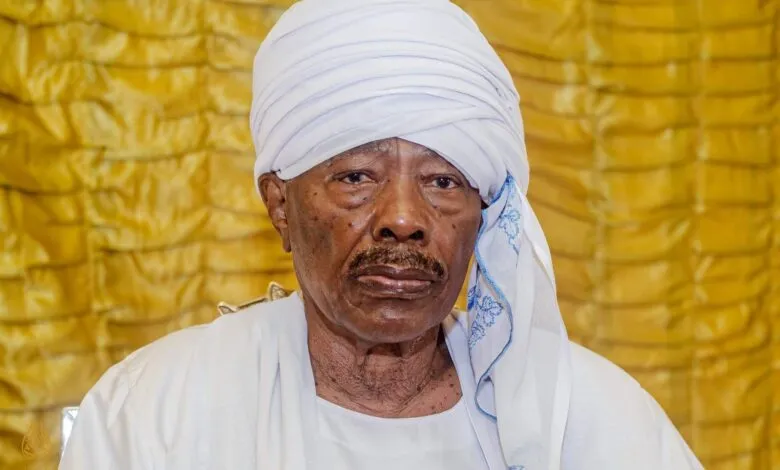
Statements made by Major General Mudafallah Barma Nasser, acting head of the Umma Party, have reopened the discussion on the party’s stance regarding the war that erupted in Sudan, particularly since the party chose to side with forces supporting the militia. This position has directly undermined its presence among the public and condemned leaders who aligned with the side responsible for killing and abducting Sudanese citizens.
Barma Nasser reportedly went to militia-controlled areas in Darfur and supported a parallel government in the country. In a televised interview on Al Jazeera Mubasher, he openly expressed a tribal and regionalist stance, stating that his rifle is with his tribe and their bases, fully siding with his tribe, which is fighting alongside the militia. He also claimed that all tribes in western Sudan are fighting with the militia.
These statements coincided with posts by Umma Party leader Abdelmajid Al-Kont on Facebook, in which he said that Deputy Commander of the Rapid Support Forces (RSF), Abdulrahim Dagalo, informed Umma Party leaders on April 14, 2023, of the outbreak of war. Al-Kont stated that he was present when Dagalo called the party leaders, who were meeting at the home of Barma Nasser in the presence of Al-Wathiq Al-Burair. Dagalo reportedly rejected the party leaders’ attempts to meet the RSF commander, saying:
“No commander will meet you, and we have no dialogue—we are at war.”
Dr. Osama Hanafi, a political science professor at the University of Sudan, commented that Barma Nasser’s stance aligns with his tribal loyalty over national interest, as he joined the “Foundation Government,” which is unsurprising. What is striking, however, is the Umma Party’s position, which sacrificed its membership and followed the illusion of the militia. Hanafi noted that leaders such as Maryam and Al-Wathiq Al-Burair, along with many party members, defended the narrative of the Islamists who fired the first shot and ignited the war, even though all evidence—including Dagalo’s phone call—confirms that the militia triggered the conflict. These pro-militia politicians were fully aware of the events around them. Dagalo himself later supervised the evacuation of these leaders and their families from Khartoum under the protection of RSF rifles, so expecting them to defend Sudanese lives or condemn the militia is unrealistic.
Hanafi added that Barma Nasser’s statements expose the Umma Party’s leadership, revealing that some party leaders share his view. Their loyalty lies with their tribal rifles, seeing the predominance of northern Sudanese in high military, civil, or public positions as a problem to be countered politically or militarily. They do not regard the militia’s crimes as offenses. They also perceive the militia’s strongholds as their party’s political base and believe they must support them out of tribal and political loyalty. Some think that condemning these communities or rejecting attacks on other communities is outside their remit, a stance that will cost the party in the future. This position has been repeatedly expressed by Barma Nasser and reinforced by leadership from the party’s executive cabinet, particularly because they are northern and not from the party’s or militia’s tribal bases.
This perspective is rejected by party activist Mohamed Mojtaba, who believes that Barma Nasser’s view represents only himself and not the party. He added that Nasser’s role as party head was temporary before he and certain leaders effectively hijacked the party. Mojtaba said:
“Al-Kont’s account of Dagalo calling party leaders to inform them of the outbreak does not necessarily mean they were aware or participating in the actions. The party may not have agreed with what happened. We have concerns about the party’s stance during the war, and a corrective movement is currently being led by party youth to resolve this deadlock and return the party to its correct positions, consistent with the aspirations of the Sudanese people, reflecting the people and their issues. We all suffered from the militia’s violations, and it pains us to see a politician in the party support such actions or avoid condemning them.”
He concluded:
“The party’s corrective path is now underway, and the Sudanese people will soon witness significant changes in its direction and leadership.”