The “Humanitarian Ceasefire”: The Militias’ Favorite Banner
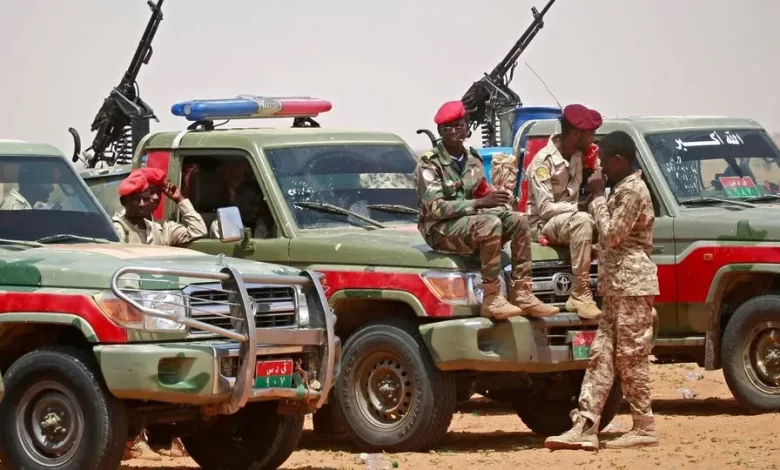
In Sudan’s war, it has become customary that whenever militias find themselves in a difficult position on the battlefield, an external party intervenes to push for a “humanitarian ceasefire.” This allows the militias to redeploy, thwart any army attempts to stop them, and temporarily neutralizes the military advantage of warplanes and drones. During a ceasefire, the militias gain freedom of movement, expand their reach, regroup, recruit, and bring in weapons.
The first ceasefire, according to the Jeddah Agreement, came when the militias were probing routes into Omdurman from two directions: from Bahri via the bridge and from Um Bada via Souq Libya and Wad Al-Bashir. During the ceasefire, the militias expanded their control until they reached Magic Land Park in the First District of Al-Thawra, effectively occupying Old Omdurman. The roads from western Omdurman became open for large transport vehicles carrying fighters, equipment, and weapons, which were moved along the asphalt into the city. The militias set up offices in Al-Dayyat Hospital and the National Radio and Television Corporation headquarters, from there extending into Bahri and reaching the east bank of the Nile.
All this expansion, at least in Omdurman, occurred during the ceasefire, which coincided with intensive military activity. Once a ceasefire was announced in Jeddah, the militias began spreading, expanding, and shelling targets.
Regarding aid reaching besieged civilians: Ramzi Al-Sayeh, who remained in the Al-Sahafa area of Khartoum throughout the conflict until seeking treatment at Al-Nu Hospital in Al-Thawra and then at Al-Jakeeka Hospital in the Nile State, said: “Initially, we monitored the ceasefire, believing it would stop the constant gunfire above us and allow aid vehicles to reach our areas. Some believed neither the militias nor the army could block aid convoys. But nothing happened. No one reached us, no aid arrived until the fighting ceased and the thugs fled the city.”
He added: “Even after the militias left Khartoum, we expected aid to reach us. We were a small group, mostly without families as they had been evacuated. Nothing arrived, despite promises. I believe the issue of aid is political and media-driven. In Khartoum, where the war raged—and I speak from personal experience—no humanitarian ceasefire brought even a kilo of flour. During any temporary halt in fighting, we had to walk long distances to obtain food, relying on money sent via family or banking apps.”
Most residents in militia-held areas of Khartoum never received aid, despite multiple “humanitarian” ceasefires. What about areas held by the army, such as Al-Thawra? Imad Al-Din Al-Mahjoub, an employee at the Water Authority, said he remained in Karari since the war began. He reported that aid never arrived in the way portrayed in media reports suggesting the international community deployed planes and trucks to help civilians. “If it weren’t for charitable associations supervised by some well-wishers and supported by expatriates from their own pockets, the besieged in Omdurman would not have had even a piece of bread. These groups provided meals and helped people endure the horrors of gunfire and rocket attacks,” he said.
After the militias left, some aid finally arrived in the form of small amounts of flour, allegedly from the King Salman Center. But the quantities were far too little to sustain the population. This experience shows that so-called humanitarian aid is largely illusory, used primarily to justify a ceasefire that benefits the militias rather than the civilians.
This pattern mirrors what happened in El-Fashir, where international calls to lift the siege only came after the city was emptied of residents. Locals relied on their own community networks and charitable associations for survival, as the so-called humanitarian efforts were more about optics than actual relief.