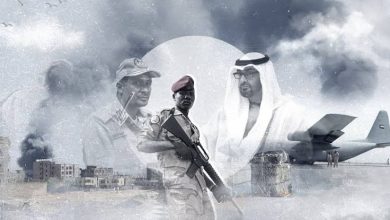
Violated Within Hours: Hemeti’s Three-Month Ceasefire – Military Concerns or Political Extortion?
Report – Amir Abdelmajid
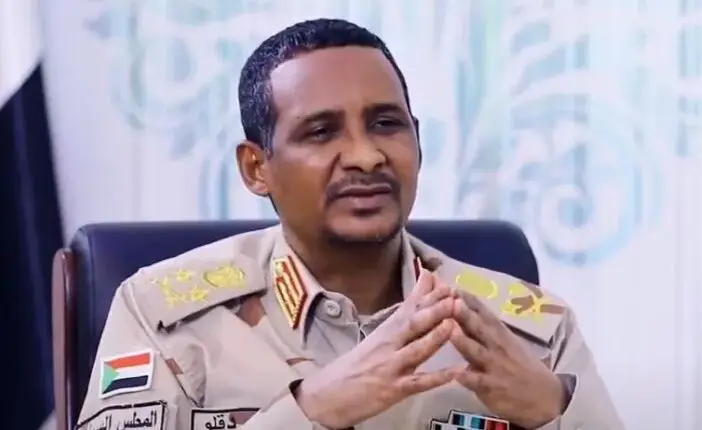
Amid intense debate over ceasefires and negotiations and while fighting raged in Kordofan, militia leader Hemeti announced a humanitarian ceasefire for three months, in response to the Quad. He welcomed a political process involving all parties except the Islamic Movement and the National Congress, and called on the Quad to pressure the other side into accepting the ceasefire.
Hemeti’s announcement received no response from the Sudanese government, which treated it as if nothing had happened, nor were there any regional or international reactions. Within hours, the militia violated the ceasefire, attacking Babnusa, the headquarters of the 22nd Division, and, along with Halou’s forces, the Abassiya Taqli mine, abducting around 100 young men and children for recruitment or ransom.
Was the ceasefire merely a maneuver aimed at capturing the 22nd Division in Babnusa, as some suggested? Or did local, regional, and international silence toward the announcement encourage the militias to abandon it?
Elyas Muhammad Nour, political researcher and director of the Nour Center for Strategic Studies, links the ceasefire announcement to three factors:
-
Posturing against the army – portraying the militias as compliant with international and Quad initiatives and aligned with halting the war.
-
Operational respite – allowing the militias time to regroup after heavy losses in Kordofan.
-
Reducing pressure on the UAE – announcing the ceasefire shortly after U.S. representative in the Quad, Masud Bolus, visited Abu Dhabi and met Shakhbout Al Nahyan, Minister of State for African Affairs.
Nour added that the militia attempted to present itself as “responsible,” ignoring the realities on the ground and U.S. experience dealing with such groups, particularly their inability or unwillingness to fulfill commitments, as noted by U.S. Secretary of State Rubio.
He explained that within hours of declaring a unilateral three-month ceasefire, the militias attacked Babnusa and Abassiya Taqli, demonstrating their inability to honor any ceasefire or political agreement. The militias are fragmented, comprising tribal groups and mercenaries with differing priorities—some driven by looting, personal vendettas, or sheer survival—unconnected to political directives or the UAE’s influence.
The UAE, aware of the militias’ fragmentation, relied on mercenaries to fight and train their forces, but discipline is difficult to impose. Combat groups are mainly tribal factions or foreign mercenaries, including Nuer groups from South Sudan, Salka, Chadians, Libyans, Ethiopians, Yemenis, and others.
Nour concluded that the UAE sought to portray the militias as having agreed to the ceasefire promoted by Masud Bolus, which the army and Rapid Support Forces initially rejected—but the militias, as usual, violated it.
Is this situation merely political, aimed at portraying the army as obstructing peace, with its leadership rejecting international initiatives?
Major General Yasser Saad Al-Din noted that the militias in Kordofan were exhausted, with supply lines cut, making a ceasefire necessary to regroup, resupply, and refuel vehicles.
Brigadier General Jamal Al-Shaheed added that the army’s multiple operational fronts in northern, western, and southern Kordofan disrupted the militia’s ability to maintain a tight siege on Babnusa. The army’s strikes on supply lines further strained the militias, reducing their operational mobility and making a temporary halt to regroup almost inevitable.