How the Forces of Freedom and Change Lost the Revolution — While Pretending to Look Good
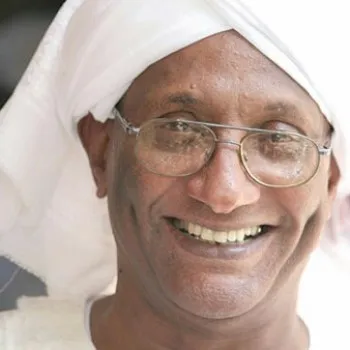
Abdallah Ali Ibrahim
I once said to someone affiliated with the FFC and its factions that “you lost the revolution,” and he replied: “We didn’t lose it; we were simply the weaker partner, with no weapons in our hands.” This is a disgraceful excuse they use to avoid accounting for their failure at the expense of the nation. Guarding the revolution did not depend on weapons. It depended on the awareness that you were dealing with a counter-revolution disguised in the clothing of “support”—a counter-revolution that would sit in every seat you vacated, weaken you, humiliate you, and cut off your influence until it disposed of you at its chosen moment: 25 October 2021.
What was required most was vigilance—being on your toes, refusing any compromise in your revolution, instead of naively believing that the military were trustworthy partners in carrying out a transitional period unlike anything Africa had seen before.
I was not among those who believed that salvation from the Islamist regime would come through revolution—not out of sympathy for the regime, but because I saw no one among its opposition leadership who filled me with confidence to competently manage the post-revolution period with resolve. They knew my view and attacked me viciously for it. But when the revolution did occur, I said, “It came from God,” as the saying goes. My mission then became twofold: to protect the revolution from its own leaders and from its enemies.
Here, I publish two articles in which I warned early—before the formation of the transitional government—about the military playing games and taking unilateral decisions as they were accustomed to doing under their previous dictatorships, as if the revolution were merely a “commercial break.” They dismissed the Acting Foreign Minister and then the Acting Attorney General, arbitrarily and without justification. Not a single thing stopped them from continuing this behavior, as you will read below. This remained their habit: the military repeatedly trivialized the deepest meanings of the revolution while the FFC pretended everything was fine—until they reached the edge of collapse. And fell.
Times have changed. Some of these same military men I criticized are now my allies in the current war, and I commend their bravery. But we will not win this war against the Rapid Support Forces if the FFC continues to cling to the myth that their government fell simply because their partner had weapons while they did not.
You fell because you did not guard the revolution—guardianship that required no weapons. You toppled the entrenched Islamist regime with “peaceful, peaceful” chants; why then would curbing the military’s interference in the revolution require arms?
The FFC must take a long, honest look in the mirror at its failure in governance. Without that, they will keep bothering us with the tired, evasive phrase: “We failed and became addicted to failure,” that infamous “Fenoltek” line.
On the Removal of Acting Foreign Minister Badr al-Din Abdullah Mohammed Ahmed: A Bad Omen
I was disturbed by the Military Council’s decision to dismiss Ambassador Badr al-Din Abdullah Mohammed Ahmed, the Acting Foreign Minister, from his position as Undersecretary of the Ministry of Foreign Affairs. It struck me as the first abrupt removal of a civil servant performing a duty assigned to him by the Council—an act typical of the authoritarian regimes that ruled and exhausted this country. It felt like a “bad omen” of what awaited us if civil servants were not protected from sudden dismissal.
I had hoped for a clearer statement from the Council explaining the circumstances surrounding the Ministry’s preparation for the Qatari delegation’s visit to Sudan—a preparation that allegedly led to the ambassador’s dismissal. For example:
-
At what stage was the preparation? Early planning or final coordination?
-
What are the customary protocols for informing the sovereign authority of such a visit request?
-
Did the Ministry delay notification beyond the accepted timeframe?
-
Or did it fail entirely to meet that timeframe?
I wanted such clarification from the Council because Ambassador Badr al-Din might not be in a position—given the difficult circumstances in the country—to state his side of the story. And the priority now is the nation. I wished the Council had issued a detailed explanation, because its brief statement was vague. It said not only that the Acting Minister arranged the visit without authorization, but also that the Ministry’s statement on the visit did not reflect the “official position of the Transitional Council.” While we can easily understand the Ministry’s procedural lapse, it is much harder to understand how its preparations failed to reflect the Council’s official stance.
The arbitrary hiring and firing of civil servants is a sound we have heard for more than half a century under successive dictatorial regimes—sixty-two years of our independence. We had hoped that the revolution ushered in an era where no one would be wronged.
Wouldn’t it have been enough to reprimand Ambassador Badr al-Din and request that he correct the situation—as any competent diplomat in his position could do without difficulty? I hope the Council will restore our optimism, abandon the habit of sudden dismissal, and trust in the professionalism, patriotism, and good faith of its civil servants.
The next article will be about the Military Council’s removal of Judge al-Walid Sid Ahmed, the Acting Attorney General—an incident that I’m not sure anyone even remembers.