A New Player in an Old Field… That Company… This Forum
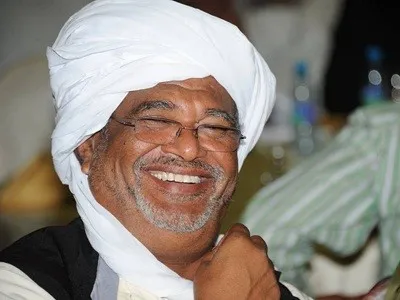
Abdel Latif Al-Bouni
As for the company, it is… the Egyptian–Sudanese (take a breath) Company for Development and Investment (take another breath) of Multiple Purposes (did you breathe?).
You may rightly ask, dear reader: Why don’t economists economize on language?
It seems they wanted to express the vastness of their field of work—and to show that in the name—so they sacrificed elegance for clarity of purpose. And Allah knows best…
Let’s get straight to the point:
Based on its mandate, this company held the first Egyptian–Sudanese Businessmen Forum last year.
They decided to keep going… so they planned the second forum, with the same name, for December 2025 (good and blessed).
To pave the way for the upcoming forum, they held three preparatory workshops:
-
One on the food and pharmaceutical industries in both countries
-
Another on transport and border crossings
-
A third on the banking sector
(As the Sudanese song says: “Where are the two tonight… we used to be close like grapes and figs.” I think the singer has ties to Egypt—mentioning grapes and figs—or maybe he took it straight from the Qur’an… In any case, all is good.)
Each workshop was preceded by preparatory meetings.
(See how these people play the ball from afar?)
This is what you might call gradual playbuilding.
The remarkable thing is that each of the three sectoral workshops was practically a full conference of its own.
In every workshop, there was brainstorming by experts, specialists, academics, and statesmen.
The outputs of these workshops are now ready for the December forum.
This step-by-step effort is basically setting up the ball for the promised forum.
No need to rush—let’s wait and see how the forum will shoot that ball… for those who live to see it, God willing.
If there is a comment—or if you prefer, an analysis—of the above, it is that this company has introduced a new player into an old field:
the field of Egyptian–Sudanese relations.
This new player is the economy.
Yes—the economy, a player that knows only mutual benefit: “You scratch my back, I’ll scratch yours.”
It doesn’t do tricks or political maneuvering.
They benefit, we benefit.
Or in Sudanese idiom: “Blessed be the one who benefits and gives benefit.”
Even in economics, the capitalist class preferred the cute name “businessmen.”
All that governments in both countries must do is open the way, remove the barricades, and let capital move freely between the two.
Frankly, the state in both countries is more of a barrier than a facilitator—and I hope this issue is raised in the December forum.
This initiative surpasses all previous attempts at bringing the two countries closer—attempts full of clichés:
Nile Valley unity… integration… eternal relations… shared national security…
Nice sentiments with very little return.
What is widely agreed on is that relations between the two countries are truly existential—forced by geography and reinforced by history.
Another point of consensus: the current level of cooperation is far below what it should be.
Why?—Maybe the answer will appear in the next forum, or the one after it.
The literature on this topic is abundant, but it needs someone to gather it, analyze it, and derive the right prescription.
The bourgeoisie—the capitalist class—is the one that united Europe after long wars and narrow nationalism.
The European Common Market as infrastructure, then the European Union as superstructure—these were fruits of capitalist class integration.
Beginning with the economy is like placing the horse before the cart.
So let us be optimistic this time, despite all the pains, shortcomings, and discouraging history.
By the way, the shared history between the two nations needs reexamination; it was written by those who strategically sought to keep the countries apart…
This, of course, is not one of the topics of the upcoming forum.
(You see, dear Dr. Nasr al-Din—today we didn’t mention Muhammad Ali Pasha.)
If what we’ve said sounds like a call to sideline politics and focus on the economy, that does not mean dispensing with politics.
Politics is a necessary evil—the general framework within which all other structures operate.
It holds all the levers.
What’s required is that politics operate in the language of economics, not the other way around.
Economic activity revolves around macro policies crafted by political decision-makers:
tax policy, customs policy, exchange rates—these control any economic activity.
Therefore, I hope the upcoming forum keeps in mind that these macro policies must be harmonized between the two countries.
Voluntary concession of certain aspects of what we call sovereignty for greater mutual benefit is the only real path to integration—this is proven by global experience.
This part needs some unpacking—God willing, another time.
In my view, the current circumstances in both countries—especially Sudan—offer an opportunity for a breakthrough in their relations.
So leave the noisy TV arguments to those who enjoy them…
And open this new page—whose first line was written by the company with the very long name…