Al-Hilu Puts Kauda on the Line of Fire
Sudan Events – Agencies
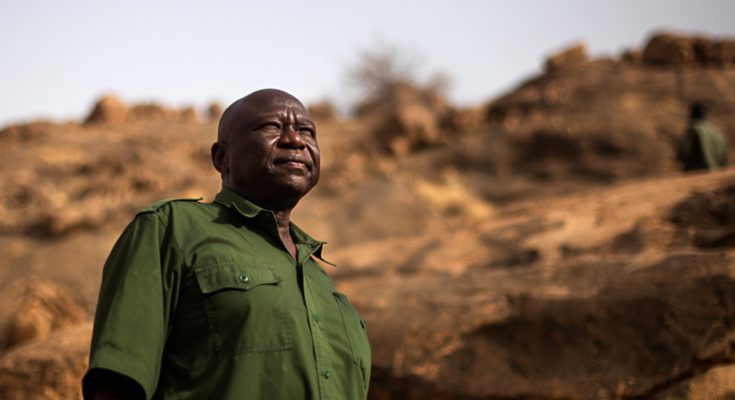
For nearly 13 years, Kauda and the surrounding villages remained far from airstrikes and battlefield fire under an agreement signed in 2012 between the Sudan People’s Liberation Movement-North (SPLM-N), led by Abdelaziz al-Hilu, and the government. The deal, which was automatically renewed, kept the region insulated from military operations—even after war erupted in Khartoum, Al-Jazira, White Nile, and the cities and villages of Darfur.
Even after Al-Hilu signed an agreement with Hemedti’s militia, Kauda remained outside the army’s line of fire—until fighting swept across Kordofan and Darfur, and Al-Hilu’s forces entered the battles alongside the militia. At that point everything changed: Al-Hilu effectively tore up the agreement and threw his forces into the war openly and decisively.
He attacked Kadugli, shelled it with artillery, sent large forces to participate in the siege of El Fasher, and danced with his fighters over the bodies of innocent civilians. Days ago, his soldiers attacked Kertala, north of Habila in South Kordofan—an area held by the army.
Local sources said Al-Hilu’s militia, supported by Rapid Support Forces (RSF) units, launched the attack at first light, infiltrating the vicinity of Kertala market under heavy fire. They clashed with army units, prompting the army to deploy forces from the 53rd Brigade, Special Operations, and Joint Forces. This counter-deployment forced the attackers to withdraw, shifting the momentum of a battle Al-Hilu and the RSF had believed was moving in their favor.
In response, the army sent its strategic drones to Kauda for the first time, striking a training camp as well as weapons and ammunition depots. The attack caused widespread panic in an area untouched by war for years, prompting some residents to flee to nearby villages fearing further airstrikes on Al-Hilu’s camps scattered across the town.
Sources added that Al-Hilu—who suffers from health issues—was evacuated after the strike, fearing he might be targeted from the air. Voices critical of the attack and of Al-Hilu’s pact with the RSF have begun to emerge, accusing him of ignoring repeated warnings that such an alliance would bring fire back to Kauda.
They also said Al-Hilu jailed several community leaders who opposed his pact with the Janjaweed, throwing them into detention. These detainees had warned him that allying with the Janjaweed would drag Kauda back into war. They refused to participate in the shelling of Kadugli and other cities, calling his actions a betrayal.
The region now lives under significant tension, especially after army drones penetrated deep into Kauda—a town without the technical capabilities to counter these attacks or shield targets from drone strikes.
Adel Rajōn, a former fighter in Al-Hilu’s forces, said:
“We have no air defenses, so these drones can do whatever they want in Kauda. We only have light weapons and a few DShKs. We cannot face the kind of weaponry being used in this war. Even if RSF supplies us with weapons, our fighters don’t know how to use them—they’re only trained on limited types of light arms.”
He added:
“The war has reached us now, and we’ve become part of its belt. Al-Hilu dismissed every opinion that urged him to stay out of it and not drag us into this inferno. Now he must find solutions to protect the region, otherwise he’ll find himself in a very difficult position—because the army will not stop targeting him or his areas.”
He continued:
“I don’t know whether Al-Hilu is facilitating the transfer of weapons from South Sudan to Darfur. I really have no information. But I believe we are now fighting an army very different from the one we fought in the past—and that’s what makes this battle so difficult.”
Retired Major General Salah Mohamed Khalid offered a different perspective. He does not see the drone strike on Kauda as retaliation for the Kertala attack, but rather as preparation for upcoming battles in Darfur.
“The army fears that Al-Hilu might maneuver behind its lines,” he said. “His repeated attacks are attempts to disrupt and pressure the army to prevent it from advancing from this axis. What the army discovered there confirms its strong ability to manage battles and coordinate forces on the ground.”
He added:
“I expect the army to continue striking Al-Hilu’s bases and troop concentrations. It will not stop, because Al-Hilu is mobilizing forces there—but the army’s presence, air power, and drones can neutralize his troops and inflict heavy losses he cannot replace.”
He concluded:
“Al-Hilu has opened camps and is now recruiting fighters from nearby villages and from South Sudan to send them into battle. It is entirely logical that army drones would target these camps.”