Engineering Chaos: How International Mediation Is Attempting to Reshape Sudan
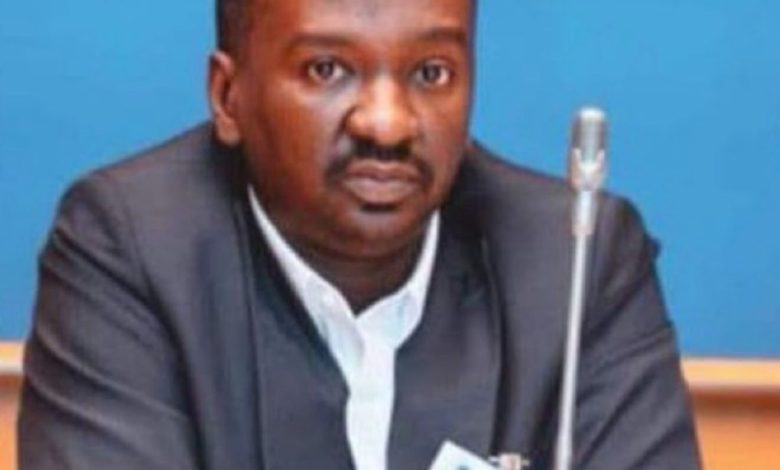
By Dr. Abdelnasser Salim Hamid
Anyone observing Sudan’s current landscape understands that what is unfolding goes far beyond the logic of conventional war or a “political dispute” that can be contained through external pressure or a superficial settlement. Since April 15—and especially after the fall of El Fasher—it has become clear that Sudan has become a terrain where the very center of the state is being redefined, not through institutions, but through force, and through international mediation that treats the destruction as a new reality to build upon, rather than to reject.
It is within this context that General Abdel Fattah al-Burhan delivered his latest address. It was not merely a political rebuttal to Washington’s envoy, Masad Boulos, but an unambiguous declaration that the Quartet’s proposal is not a “peace roadmap,” but a project to reconfigure the Sudanese state according to the balance of power imposed by war. When Burhan stated that “the paper presented by the Quartet abolishes the Armed Forces, dissolves the security agencies, and leaves the militia in place,” he was pointing directly to the essence of what is being imposed on Sudan: a state whose center is engineered from the outside, not built from within.
To grasp this shift, one must look to El Fasher. For years, the city served as the last foothold of state sovereignty in Darfur. It endured a siege lasting nearly a year and a half, according to UN reports and research organizations—a slow-motion dismantling of the city: blocked roads, cut-off supplies, and humanitarian corridors controlled by a single party. After its fall, documented testimonies—by survivors and human rights researchers—confirmed widespread violations, including killings, sexual violence, and systematic looting. Though no final toll is available due to limited access, the scale of the harm indicates that the takeover was not “military alone,” but a forced reshaping of the city.
According to available field indicators, El Fasher is now under the full control of the Rapid Support Forces (RSF), with no meaningful government presence inside the city. This development is more than a battlefield outcome—it represents a profound political shift. Analyses published by international institutions—including the Institute for Security Studies and other research centers—describe this as the collapse of the last sovereign line of the state in Darfur, marking a turning point in the nature of the war. It pushed some capitals to treat RSF’s territorial control as a reality that must be integrated into any future political settlement. In this reading, international mediation is no longer attempting to end the war, but to redraw the state along lines dictated by facts on the ground rather than by legitimacy.
This shift is starkly reflected in the Quartet proposal. A ceasefire that allows each side to remain in its areas of control amounts to political recognition of RSF authority over Darfur and large parts of Khartoum. The delivery of aid without clear security arrangements absolves the dominant armed group of responsibility while placing the burden solely on the government. And the call to immediately sideline the military—before the state regains control over its territory—empties the state’s center of power at its most perilous moment, paving the way for a civilian authority built on military fait accompli, not on national sovereignty.
More concerning still is the proposal to dissolve the General Intelligence Service and replace it with a new body. This is not administrative reform; it is the dismantling of one of the state’s most vital security pillars in the midst of war. Security institutions constitute the sovereign nerve of any state. Dismantling them means losing the capacity to track threats, monitor foreign funding, and protect what remains of institutional cohesion. Burhan’s description of the proposal as “a complete cancellation of state institutions” is precise from an institutional perspective.
The initiative also calls for a “civilian-to-civilian dialogue” under external supervision. This essentially means producing a new political authority on ground where the state no longer holds control. Dialogue then becomes a mechanism for recycling an externally curated elite—one that reflects not the balance of Sudanese society, but the balance of power imposed by the gun. This is why Burhan said: “We will not have Hemeti or Hamdok imposed on us… Sudan will not be ruled from abroad.” The issue is not about names—it is about sovereignty.
Behind these proposals lies a clear Western vision: Sudan is not viewed as a sovereign, centralized state, but as a geostrategic arena on the Red Sea—a point of friction among Washington, the Gulf, Russia, and China. In such arenas, some capitals prefer a “manageable state” over a strong, independent one. It is a model tested in Iraq, Libya, and Bosnia—with predictable results: weak states, fragmented authority, and unending cycles of violence.
But Sudan—with its historical and geographic depth—is not any of those models. When its center weakens, its peripheries fracture. When its security institutions collapse, the region collapses with them. Any settlement that does not restore the state’s monopoly over organized force is not peace, but a postponement of explosion. Any political transition that is not grounded in a stable state center will produce only a nominal authority atop a volatile landscape.
While the state may have committed mistakes in governance before the war, the responsibility for reform is one thing, and the responsibility for protecting the state is another. One cannot reform a state whose security organs are stripped away during war. One cannot build civilian authority atop a vacuum of sovereignty. And political dialogue cannot proceed while an armed group imposes its will on the ground.
Thus, the military’s stance—as expressed by Burhan—is not a defense of “power,” but a defense of the state’s right to exist. A state cannot be rebuilt under the threat of arms. Its constitution cannot be drafted while a rebellious force controls entire cities. Stability cannot be restored through international formulas that equate the state with a group that rose against it.
At the heart of today’s conflict lie two competing projects:
• An external project seeking a Sudan fragmented along lines of “managed influence,” with a weak center, eroded sovereignty, and policies shaped by regional and international power balances.
• An internal project seeking a unified state, with a single decision-making center, whose policies are not authored in negotiation halls outside Khartoum.
Between these two projects, Sudan’s future is being written.
States do not fall only when they lose battles—but when their centers are stripped away, recast from the outside, emptied of institutions, and governed through the logic of “manufactured stability.”
In Sudan today, the battle is not over a transitional government—it is over defining the state itself: Who owns it? Who shapes its center? And who writes its future?
Those who abandon the center… abandon the state.



