The Age of International Bullying
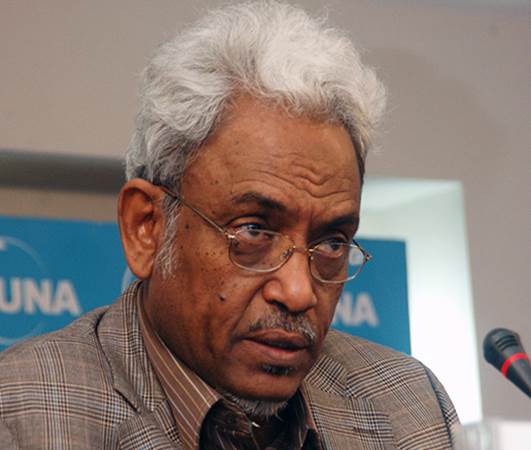
By Dr. Amin Hassan Omar
Is the warning issued by Donald Trump to the Venezuelan president a new and alarming development in international relations?
Perhaps U.S. behavior toward smaller states — often described as bullying — is neither new nor exceptional. But does Trump’s warning to Venezuelan President Nicolás Maduro — urging him to “save himself” by handing over power to the Washington-backed opposition — constitute a new precedent in international affairs? And what future implications might it carry?
Technically, the warning may not be entirely unprecedented in diplomatic history. Yet it undeniably represents a new benchmark in terms of the degree of bluntness and overt threat issued by a superpower’s head of state to another head of state during peacetime, absent any direct provocation, and in a personal tone targeting the leader of a sovereign nation.
Why is it not an absolute precedent?
Throughout history, the United States has exerted pressure — and at times engineered regime changes — but usually through indirect means, using political or economic tools.
For example:
President Ronald Reagan pressured Nicaragua’s government by supporting the Contras in an attempt to topple the regime, and the U.S. invasion of Grenada also took place under his watch. Yet he never issued a direct, personal threat ordering a foreign president to step down.
International calls were made for Libya’s Muammar Gaddafi to resign during the 2011 uprising, but these demands came through UN resolutions or official communications directed at the Libyan state — not via a direct personal threat from one world leader to another.
Saddam Hussein was asked to leave power before the 2003 invasion of Iraq to avoid war, but that demand came within the framework of a major military operation, not merely as an individual political ultimatum.
Where does the uniqueness of Trump’s warning lie?
This incident stands out for several unusual features:
1. The threat was issued directly to a head of state in his personal capacity, not to a government or political system.
2. It was made outside any international legal or institutional framework — no Security Council mechanisms, no multilateral negotiations.
3. There is no state of war between the two countries; it is simply a direct warning to overthrow a regime that Washington dislikes, making it more akin to a unilateral political ultimatum.
What are the potential implications?
1. Breaking diplomatic norms
Such threats establish a new and troubling threshold for acceptable diplomatic conduct.
2. Erosion of international discourse
This behavior could pave the way for:
Populist, confrontational rhetoric replacing professional diplomacy.
Encouraging other leaders to issue similar public threats against weaker states.
3. Deepening global polarization
This may lead to:
Russia and China bolstering support for Venezuela in response to U.S. interference.
Using Washington’s rhetoric as justification for rejecting U.S. hegemony and accusing it of violating state sovereignty.
4. Legal and political consequences
Trump’s warning may later serve to justify:
Broader economic sanctions.
Increased political and financial backing of Venezuela’s opposition.
Additional unilateral measures under the pretext of “protecting U.S. national security.”
5. Impact on the principle of state sovereignty
This could open the door to:
Further erosion of the principle of non-interference in domestic affairs.
Renewed legal debate on whether direct pressure on heads of state is permissible under international law.
But the greatest risk lies in:
Expanding direct political intervention.
Undermining pathways to peaceful settlements.
Normalizing retaliatory behavior in international relations.
Turning public threats into a personal tool of pressure rather than a legitimate institutional mechanism.
Conclusion
Is it an absolute precedent?
No.
Does it represent a new and more aggressive approach?
Yes.
Will it reshape the norms of dialogue and pressure between states?
Very likely.
Are its implications political or legal?
Primarily political, though they may later be cited as legal precedent if left unchallenged.
Isn’t political history built on precedents that are tolerated until they become an “implicit right”?