Unease in Juba as the Return of Its Nationals to the South Continues
Sudan Events – Agencies
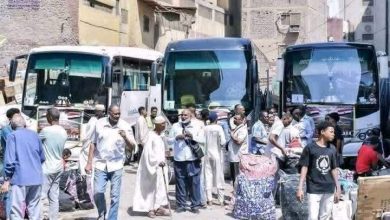
As joint forces — comprising the army, security, police, and supporting units — continue operations targeting foreign nationals and clearing informal settlements, several neighboring capitals have begun expressing discomfort over the steady return of their citizens who are being deported from Sudanese cities for residency violations. Given that South Sudanese nationals form the largest and most widespread foreign presence in Sudan — and that most of them lack any form of identification, residency permits, or passports — the daily deportations have become substantial. This initially sparked media criticism in Juba before matters calmed, only for the pressure to rise again, with renewed calls on South Sudan’s authorities to intervene, especially after the return of “old guard” figures to power such as James Wani Igga.
Most deported South Sudanese lack identity documents or passports because many were born and raised in northern Sudan, have little connection to South Sudan, and have never visited it. The irony here is that South Sudanese voted for secession by an overwhelming majority of more than 90%, yet millions remained in northern Sudan without identity papers or residency permits. They lived effectively as citizens, as authorities largely overlooked their status — until the war erupted, during which many South Sudanese joined and fought alongside the Rapid Support Forces (RSF). This turned the issue on its head, making it necessary to address the foreign residency file legally and remove all violators, particularly South Sudanese, Chadians, and Ethiopians, whose numbers collectively reach into the millions.
This process is now underway through the joint-force campaigns, most recently in Salha, southwest of Omdurman, where dozens of foreign nationals violating residency laws were arrested, along with seized weapons and narcotics — a recurring pattern in nearly all such operations.
As this file moves forward, Juba’s media began expressing agitation, urging South Sudan’s Ministry of Foreign Affairs and the presidency to adopt a stronger position. Some commentators even called for severing relations with northern Sudan over what they describe as the “arbitrary” deportation of millions of South Sudanese.
However, Major General (Ret.) Salah al-Din Doshka argues that such rhetoric is mere sensationalism by journalists, and that the Government of South Sudan will not be swayed by it.
He explains:
“Juba knows that what is happening is an internal Sudanese decision based on the law. Those being deported are, with the full knowledge of South Sudan’s embassy, in violation of residency regulations — let alone their participation in the war and in RSF operations, and their involvement in killing Sudanese civilians. Regardless of all that, they violated residency laws, so they were removed. The Government of South Sudan itself deports foreigners who violate its residency laws every day.”
He continues:
“South Sudan imposes strict residency rules on foreigners. How can it demand that Sudan continue to host massive numbers of South Sudanese without residency permits, identity documents, or any defined work? It is clear the Sudanese government will not reverse its decision; if it intended to, the ongoing campaigns would have stopped.”
He adds:
“Juba should thank Sudan for hosting millions of South Sudanese for years despite economic crises and war — and for deporting them without trials. In many countries, violators of residency laws are prosecuted before being expelled.”
Dr. Osama Hanfi, professor of political science at the University of Sudan, says the situation may stir existing sensitivities between Juba and Khartoum. However, since the decision applies to all foreign nationals, he does not expect its political repercussions to escalate:
“Juba understands the reasons behind Khartoum’s measures regarding foreign nationals and the removal of informal settlements. It is aware of the circumstances and recognizes Sudan’s legal and moral right to deport any foreigner violating its residency laws.”
He adds:
“There are communications between the two governments, but I do not think Sudan will back down.”
He clarifies:
“To be clear, most foreigners who entered the country with legal papers and residency permits left when the war began. Those who remain are individuals with no residency status and no identification. How can it be that Sudanese citizens flee the war while foreigners stay? This is highly unusual. Many of these foreigners became involved in the conflict, with some even taking up arms alongside the RSF. It is hard to believe South Sudanese intelligence is unaware of their citizens’ participation.”
He continues:
“What is happening now is simply that some South Sudanese activists and media figures are trying to escalate the issue to halt the deportation campaigns and pressure their government into taking a stance — one that ultimately will not serve them. The facts are clear: Sudan has every right to deport any foreigner violating its residency laws.”