After the “Awlad Qamri”… the Army Moves to Take Control of the “Awlad Shadhli” Forces in Al-Dabbah
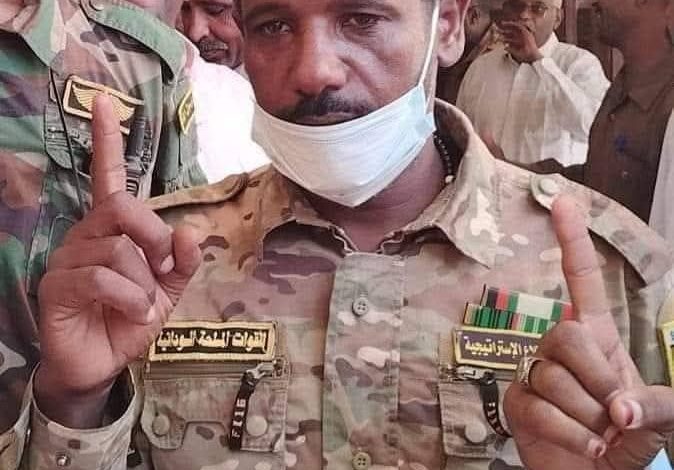
Sudan Events – Agencies
When the Awlad Qamri uprising erupted in Dongola and Altoum Qamri refused to hand over his weapons to the armed forces, many saw it as a preview of what might unfold with another armed threat to the local community—one no less dangerous than Awlad Qamri: the “Awlad Shadhli,” active in the town of Al-Dabbah.
Awlad Qamri—also known as the Reconnaissance Battalion in Dongola or the Free Lions in Al-Dabbah—emerged within a peaceful local community whose residents neither carry weapons nor wish to see arms spread through their neighborhoods. Yet the Awlad Qamri militia surfaced as a security menace, not only to the state government but also to the citizens themselves, who recount chilling stories of how militia members treat civilians and how minor disputes between two individuals can quickly escalate into clashes involving light and heavy weapons.
“Nothing changed before or after the war; they simply put on army uniforms and became even more arrogant and violent,” says Fath al-Rahman Hassouna, a trader in Dongola market who fled there from Khartoum. “When we arrived, we knew nothing about this. We thought we had left the war behind us. But suddenly we were confronted with weapons, military parades, and assaults—sometimes just because someone didn’t move out of the way for a military vehicle driven by these men.”
He adds: “People here are simple. They warned us to avoid them because their bullets are too close for comfort. Locals tell countless stories about smuggling, drugs, and more. I don’t think the army was surprised by their defiance when asked to hand over their vehicles and weapons; the army knew from the start that the expansion of these groups posed a danger—you never know when they might turn on you. They had huge influence here and deep into the Libyan desert, where goods flowed across the sands and their trade thrived.”
Local residents recount how Altoum Qamri once went to the military command demanding a senior military rank for himself and ranks for his lieutenants, before turning toward the Sudan Shield Forces and meeting with Keikel in an attempt to slip out of the army’s control and secure his position. But upon his return to Dongola, the army demanded he surrender all military vehicles in his possession and either integrate his fighters into the army or disband them. He refused, and armed clashes broke out between him and the military forces sent to retrieve the equipment.
Altoum Qamri was reportedly seriously wounded and taken to the hospital, while some of his guards were killed and other militia members were also hospitalized. The army imposed a cordon around parts of his areas of influence, seized heavy weapons and vehicles, and arrested several members. Attention then shifted to Al-Dabbah, where another militia known as “Awlad Shadhli”—led by Shadhli Al-Anwar Al-Idrissi—was based. The group had long been a source of concern for security agencies and local residents, especially since it had previously allied with Awlad Qamri before later splitting and clashing with them.
All eyes turned to Awlad Shadhli—also known as the Free Lions—and many expected a battle perhaps even larger than the one that erupted in Dongola. Military leadership summoned Shadhli Al-Anwar and ordered him to hand over his vehicles and weapons and give his men the choice of joining the army or demobilizing.
In a calm move that surprised many, Shadhli complied. He declared that his forces had come to support the army and that if the military leadership believed this decision served the country, then they were ready to join the armed forces and operate under its command. He did not stop at statements; he began dismantling defensive positions and collecting vehicles and equipment in preparation for handing them over to the army—indicating genuine compliance.
Although the decision aligns with the long-standing demands of locals—who had voiced their fears for years about militia abuses, alliances, and lawlessness—some warn that the move carries risks for the state. Awlad Shadhli’s forces had been manning defensive positions, and despite the security concerns surrounding them, their presence played a role in defending the region. Still, observers believe that most of these fighters will ultimately join the army, continuing to defend the state and the country—but now under a unified command and with better organization, far from the chaotic displays and lawless behavior that previously threatened to ignite conflict within the town, as happened during earlier armed clashes.