Sudan’s Army… Not The ‘Kizan Army’!
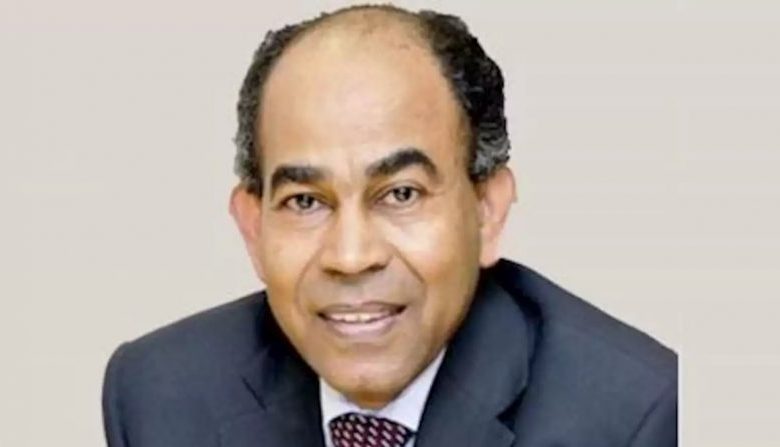
Osman Mirghani
Sudan is fighting two wars simultaneously. As it wages its war on the ground, it is fighting another equally grave war in the media. Misleading narratives slandering the army have been increasing. Their aim is to undermine its performance on the battlefield, casting doubt on its competence, trivializing its victories, and inflating its setbacks. In parallel, these campaigns seek to portray it as an ideological force, denying that it is a national institution that forms the backbone of the state.
These campaigns largely rely on saturation: repeating the same narratives until they begin to sound like unquestionable truths. At the forefront of this campaign is the narrative of a “Kizan Army” that has not admitted any officers who were not affiliated with the Islamists since 1989. The frame of “the two parties to the conflict” also serves to equate the army, as a state institution, to an armed militia. In turn, the talking point of “reforming the army” is used to justify insidious projects to facilitate schemes to re-engineer the military, going so far as to promote the idea of a “new army.” A similar discourse quietly emerged during the transitional period that followed the December 2018 revolution. It was later articulated more explicitly when the Rapid Support Forces’ commander, after seizing El-Fasher, declared that the army had been “ended,” creating the need for “a new army.”
The puzzle: why are the campaigns aimed at sowing doubt about the army escalating at this particular moment, as it pursues a war many view as an existential struggle to protect a country targeted from a broad conspiracy involving many actors?
A truth that cannot be ignored is that any state whose army collapsed or was dismantled—under any pretext—quickly slid into chaos. And in Sudan’s case, the army today remains the entity that defends the country, the last barrier preventing the completion of scenarios aimed at seizing its resources or fragmenting it.
Despite all the disinformation campaigns, the army includes Sudanese citizens of various ideological persuasions from all segments and components of society: unionists, independents, and certainly Islamists, soldiers from the west, east, center, north, and south. Like any large institution that reflects the country’s political and social diversity, the army cannot be associated with a particular political movement or reduced to a single ethnic, tribal, or regional component.
Another important fact to keep in mind: the December Revolution explicitly called for the dissolution of the Rapid Support Forces, repeating the slogan “Disband the Janjaweed.” However, it did not call for dissolving the army or re-engineering it. Rather, it demanded that the army return to the barracks and focus on its national duty: protecting Sudan and its borders, and defending its people. This is a logical demand for a state seeking to build strong institutions, not dismantle them.
Those behind the campaign have exposed their double standards and muddled criteria themselves. Indeed, some of the civil and political forces now leading the campaign against the army (accusing it of being the “Kizan Army”) had previously pushed back against the revolution’s demand that “the army return to the barracks.” They allied themselves with the army’s leadership and brought it into the coalition after the December Revolution to secure seats in the transitional government. This was a clear violation of the constitutional document that broke with their own commitments to refuse ministerial positions and to ensure that the transitional government would be a cabinet of independent, professional technocrats.
Today, as we hear some of these forces loudly attacking the army and branding it the “Kizan Army,” they say nothing about the dismantling of the Rapid Support Forces despite all the atrocities it has committed. It is not accused of being “a Kizan force” either, even though many well-known figures linked to the previous regime are among its ranks.
Attacking the army is aggravating the polarization fueled by the war. Foreign actors have entered this arena as well, each for its own considerations and interests. This discourse, however, remains far removed from the sentiments of the majority of the Sudanese population. They see the army as the only remaining safeguard they have, and they flee to areas under its control whenever the Rapid Support Forces overrun a town or village.
Some parties are hell bent on settling scores with the army and weakening it. They believe that this will push the army out of the political arena. However, this pursuit is detached from reality, because this behavior only keeps the army at the center of politics and its rivalries. The best thing political forces can do to keep the army out of politics is to refrain from interfering with the army, using it as leverage, or from using it to carry out military coups. All the political forces have, to varying degrees, pushed the army into the heart of their competitions, and everyone has paid the price.
Sudan does not need a “new” or “ideologized” army today. It needs a professional, national army that imposes a state monopoly on armament and stays out of politics, with political forces keeping an equal distance from the army. This path cannot be safeguarded without raising awareness in a manner that disrupts the disinformation and allows the public to understand that dismantling the military institution (whether through rhetoric or action) is, at this dangerous juncture, nothing less than dismantling the nation itself.