A Wide International Campaign Targets the UAE’s Economic Influence: Boycott, Divestment, and Sanctions to Curb the “Silent Hegemony”
Sudan Events – Agencies
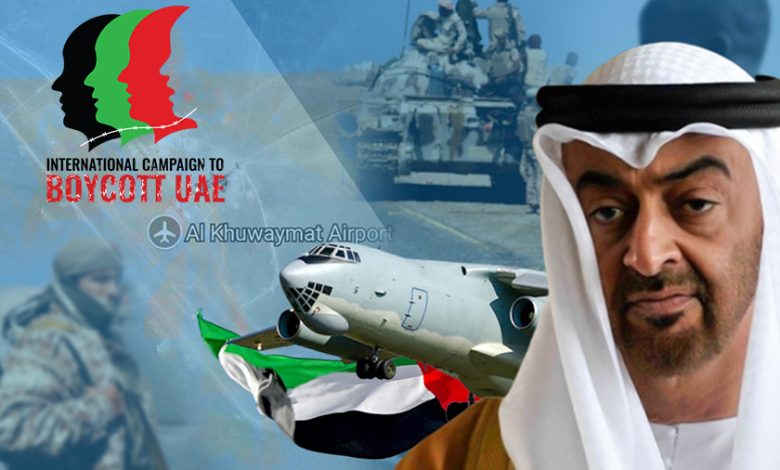
A coalition of global human rights and economic networks has launched a new initiative titled the International Campaign to Boycott the UAE (Boycott UAE), in what observers describe as one of the most extensive organized efforts in the past decade to scrutinize the UAE’s expanding financial power beyond its borders.
The campaign says it seeks to dismantle the growing system of Emirati influence in sensitive markets worldwide by focusing on corporate networks, investment funds, and holding groups linked to Abu Dhabi and Dubai. These entities, according to the campaign, have become increasingly influential in reshaping sectors such as energy, ports, cybersecurity, mining, artificial intelligence, and global logistics.
The campaign is grounded in the tools of boycott, divestment, and sanctions (BDS) as part of an effort to “correct the imbalances caused by the unchecked expansion of Emirati financial influence amid insufficient standards of transparency and accountability.”
Background: From Regional Player to Global Financial Power
Over the past two decades, the UAE has transformed from a Gulf economy built on trade and aviation into one of the world’s largest sovereign investors. The assets managed by Emirati sovereign funds—including Mubadala, ADIA, ADQ, and Dubai Holding—now exceed one trillion dollars.
The UAE has relied on a strategy of “acquisition-driven expansion” in key markets such as:
Ports and terminal management (DP World in Africa, Asia, and Europe)
Renewable and fossil energy (Masdar, ADNOC, and stakes in global fields)
Aviation and tourism (Emirates, Etihad Airways)
Technology and cybersecurity (companies linked to G42, Presight, and AIQ)
Mining, logistics, and major infrastructure sectors
The campaign warns that this expansion is “not merely economic, but carries political and security implications that go beyond traditional investment.”
Economic Analysis: Why Is the World Concerned About Emirati Influence?
Economists argue that international concern stems not only from the scale of Emirati investments, but from their nature and governance. Key points include:
1. Monopoly and control of strategic sectors
The UAE focuses on acquiring controlling stakes in:
Seaports
Energy transmission lines
Cybersecurity firms
Natural resources such as gold, copper, and lithium
This grants it significant leverage over global supply chains—one of the most vulnerable components of the modern economy.
2. Lack of transparency and disclosure
Several oversight institutions classify Emirati sovereign entities as lacking key governance standards:
Limited disclosure of investment portfolios
Complex ownership networks
Centralized state-driven auditing
These factors raise concerns about the political use of capital.
3. Impact on global competition
Analysts warn that the influx of Emirati capital into emerging markets could:
Drive out local competitors
Create long-term financial dependence on UAE funding
Shift entire markets into political–economic spheres of influence
Some economists describe this as a form of “soft yet sweeping hegemony.”
Political Analysis: Why Is the Campaign Escalating Now?
The initiative coincides with major geopolitical shifts that have reignited scrutiny of the UAE’s role in several contentious regional files:
1. Geopolitical influence in the Horn of Africa
Multiple rights groups have raised concerns about the UAE’s alleged involvement in:
The war in Sudan
Support for armed groups in Libya
Establishing logistical corridors across the Red Sea
Funding security networks in the Horn of Africa
These issues have increased calls for international accountability mechanisms.
2. The battle for influence inside the White House
With shifting U.S. policies under Trump’s second administration, Saudi–UAE competition in Washington has become intertwined with conflicts in Sudan, Yemen, and the Red Sea—prompting heightened scrutiny of Emirati-linked companies.
3. European concerns over the rise of “political capital”
In countries like France, Germany, the UK, and Italy, lawmakers and economists are increasingly examining:
The extent of UAE control over strategic assets
The nexus between investment and political influence
The impact of Gulf capital on European decision-making
This environment paved the way for the emergence of the Boycott UAE campaign.
Campaign Roadmap: What’s Next?
According to sources within the initiative, upcoming steps include:
Publishing quarterly investigative reports on UAE-linked companies
Launching an open-access database of ownership structures and investments
Pressuring universities and major institutions to divest from Emirati funds
Running awareness campaigns on “ethical sovereign investing”
Collaborating with Western parliaments on legislation to regulate foreign capital
In its initial phase, the campaign is expected to target:
AI and cybersecurity technology firms
Mining and natural resource companies
Sovereign investment funds
DP World and its projects across Africa and Asia
Future Outlook: Will the Campaign Succeed?
Analysts believe the initiative faces significant challenges due to:
Deep economic interdependence with Europe and the U.S.
The UAE’s substantial financial resources
Heavy reliance of many governments on Emirati investment
However, shifting global sentiment toward opaque financial influence may enable gradual breakthroughs—particularly within:
Western universities
Pension funds
Human rights organizations
Labor unions
Certain European parliaments
Experts predict the issue may evolve into a geopolitical and economic flashpoint among major powers in the coming years, especially amid intensifying competition over technology, ports, and energy.