The U.S. Knew — So Why Did It Allow Sudanese to Be Slaughtered?
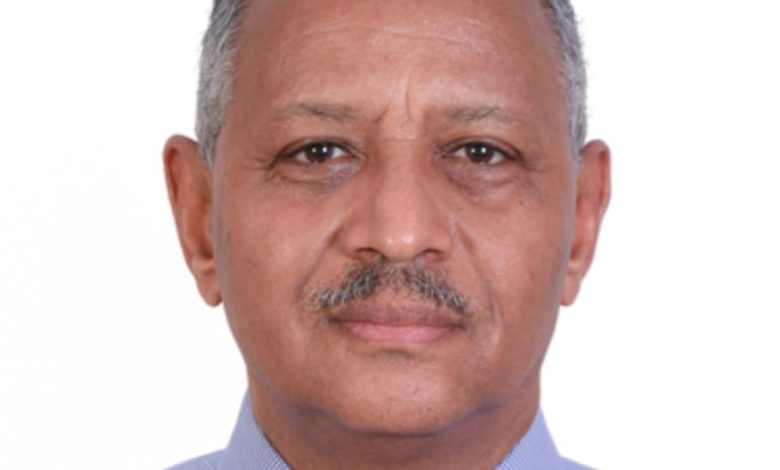
Al-Obeid Ahmed Murawih
On the ninth day of the current war in Sudan (April 24, 2023), then–U.S. Secretary of State Antony Blinken announced that both the Sudanese Armed Forces and the Rapid Support Forces (RSF) had agreed to a 72-hour “humanitarian ceasefire.” The pause was meant to allow civilians in Khartoum State to secure basic necessities and for foreign nationals and diplomatic missions to be evacuated. This announcement followed direct calls made by the commander of U.S. Central Command to the chairman of Sudan’s Sovereignty Council and his deputy to ensure the safety of Americans in Sudan, especially embassy staff. By the third day of the war, the United States had already drawn up a comprehensive evacuation plan and coordinated with “both sides” to secure routes for American military aircraft flying in from Djibouti to land at the U.S. Embassy compound in Soba.
By that time, Washington had realized that the coup plan—shared with it by its ally, the United Arab Emirates—to seize power in Sudan through the RSF had failed. Because the U.S. was aware of the extent of the military preparations behind the attempted coup, and knew that the RSF’s arsenal was large enough to reduce the capital to ashes, Blinken declared that “there is no military solution to the conflict.” This has remained the American and Western narrative to this day.
Before the first month of war had passed, the U.S. State Department announced the launch of an online portal for documenting “violations,” calling on Sudanese to report what they witnessed or experienced. Some citizens engaged with the platform, while others questioned American motives. But what matters here is that the United States expected violations to occur—because it knew the RSF’s criminal behavior and knew that the “party” backing it would not accept the failure of its “project,” even if it meant civil war and the partition of Sudan, as happened in Libya and Yemen.
Two months into the conflict, the RSF completed its siege of Geneina, capital of West Darfur, and killed the state governor, Khamis Abdullah Abakar, mutilating his body in a widely documented incident. At that point, Washington realized that Darfur’s massacres were returning—this time with even greater ferocity than in the early 2000s. The State Department then called in Yale University’s Humanitarian Research Lab, known for documenting violations in Ukraine, to turn its focus to Sudan. Dr. Nathaniel Raymond and his team deployed satellite-monitoring capabilities that had been positioned over Darfur since 2006, first to track human rights abuses, then to monitor the flow of weapons in violation of UN Security Council sanctions. Among the most publicly recognized tools was a satellite used by The Sentry—an investigative organization co-founded by actor George Clooney and human rights advocate John Prendergast. The organization says it aims to expose and disrupt illicit financial networks and war criminals fueling conflict in Africa. As a strategic partner to the Clooney Foundation for Justice, The Sentry released several detailed reports on the situation in Darfur, especially during the siege of El Fasher.
Monitoring of international humanitarian-law violations and UN arms-embargo breaches did not stop at satellite imagery. Major global media outlets—including The New York Times, The Wall Street Journal, France 24, The Guardian, and others—published investigative series tracking the flow of advanced weapons and ammunition to the RSF in Darfur: shipments from Bulgaria and Greece, deliveries directly from the UAE by air and sea, and Canadian, British, and Chinese-origin weapons re-manufactured in the Emirates before making their way into Darfur despite UN resolutions.
On the diplomatic front, Sudan’s permanent mission to the United Nations persistently filed complaint after complaint, presenting documents and evidence to the Security Council detailing the UAE’s role in fueling the conflict and supplying thousands of tons of weapons to Darfur—sometimes via Chad, other times through South Sudan. The mission repeatedly warned that the grave human-rights and humanitarian-law violations committed across central Sudan would be replicated in Darfur. But all these efforts remained locked away in drawers—except for one timid statement issued by the U.S. State Department early this year describing some RSF actions as amounting to “genocide.”
When the scandal of Colombian mercenaries broke—fighters deployed alongside the RSF in El Fasher and elsewhere—and survivors admitted they were recruited by Emirati security companies for work in the UAE only to find themselves in the deserts of Darfur, training RSF fighters and engaging in combat, the scale of Emirati involvement in Sudan’s war could no longer be concealed.
Some may ask: if the fifteen members of the UN Security Council knew the extent of the UAE’s military support to the RSF, and if many countries around the world were aware of the violations committed with these weapons, why single out the United States in this critique?
The answer lies partly in the facts outlined at the beginning of this article. To them we may add that the United States was not only the first to present itself as a mediator and call for negotiations between “the two parties”—as happened in Jeddah within weeks of the war—but also the last major power still calling today for a ceasefire and sponsoring mediation initiatives. Washington has long been a chief architect in efforts to reshape Sudan’s political landscape, even after the successful secession of the south. It was fully aware of what its Emirati partner intended to do. Indeed, former U.S. envoy Tom Perriello reportedly told the Sudanese army representative during the Jeddah talks—confidently and condescendingly—“It’s better for you to sign if you want to preserve what remains of your army,” to which the Sudanese army delegate replied, “You do not know the Sudanese army.”
Dr. Nathaniel Raymond’s testimony at Harvard last week, which reverberated around the world, offered the most credible and up-to-date evidence of U.S. complicity—specifically, its decision to allow its ally, the UAE, to continue supplying the RSF with advanced weaponry. These weapons enabled nearly every war crime and crime against humanity documented over the past three years. Without the UAE’s constant flow of support, the war would not have lasted this long, nor would such atrocities have multiplied. Had the U.S. truly cared about Sudanese lives—as much as it claims to care about “civilian rule”—it would have told its ally from the very first year: enough.
The question we Sudanese must now ask is this:
Why did the United States allow Sudanese to be slaughtered—when it knew early on that massacres were inevitable, and when it documented those crimes from the very beginning?