“The Wise Learn from the Fate of Others”
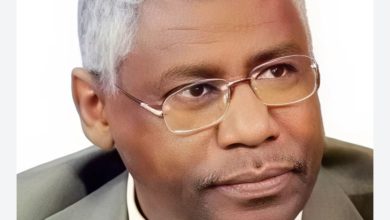
Dr. Al-Khidir Haroun
We begin with this adage—long regarded among people as a distillation of wisdom—prompted by a lecture delivered by Professor John Mearsheimer on why Europe and the United States have lost the war in Ukraine. Mearsheimer, a professor of international relations at the University of Chicago, is—much like the Arab saying “more famous than fire on a flag”—one of the most prominent and bold academic critics of U.S. foreign policy, alongside his counterpart Jeffrey Sachs.
In his lecture, Mearsheimer discusses the implications of Ukraine’s defeat and Europe’s failure in its wager to fully “win” Ukraine—an objective it had adopted as a central pillar of its security strategy against any perceived threat from Russia. He begins by stating that Europe has yet to grasp that it has already lost the war—not within its own borders, but in Ukraine. And not on the battlefield, he argues, but at the level of decision-making. For years, Europe declared that Ukraine was its red line: if Ukraine fell, Europe’s security would collapse. Today, the facts—however rarely they speak—indicate Europe has lost the bet. Faulty strategies, Mearsheimer says, are ultimately paid for by their architects.
He illustrates Ukraine’s defeat through its loss of Crimea, eastern Ukraine, and possibly other regions Russia may yet seize. By securing these gains, Russia has achieved its strategic goals: creating a buffer zone against the potential threat of NATO expansion. These fears are not new; they are linked to long-standing anxieties that have shaped Europe’s historical balance-of-power dynamics and ignited countless wars.
For decades, Russia demanded guarantees that NATO and the EU would not admit Ukraine—guarantees that would allow Russians to “sleep without nightmares.” In return, Russia would pledge to respect Ukraine’s sovereignty. President Bill Clinton made such an informal promise to President Boris Yeltsin in the 1990s. But unwritten promises, Mearsheimer notes, are like nighttime whispers sparked by fleeting whims—easily erased by daylight.
Anyone familiar with the deep cultural, historical, and ethnic ties between Russia and Ukraine can understand the ferocity with which Russia has fought to block Ukraine’s NATO accession. Much of Ukraine’s east is tied to Russia by language, religion, and blood. Nikita Khrushchev—one of the Soviet Union’s most famous leaders—was of Ukrainian origin; he is the one who restored Crimea to the Ukrainian republic after Stalin had taken it. Mikhail Gorbachev, whose policies ultimately dissolved the Soviet Union, had a Ukrainian mother. Even Alexander Solzhenitsyn, the Nobel laureate who exposed the horrors of Soviet labor camps in The Gulag Archipelago, had Ukrainian roots.
According to Mearsheimer, if the war ends with a peace agreement that reflects Ukraine’s current losses, Ukraine will not only forfeit territory but also its social cohesion. The war has fractured the country between an Orthodox, Russian-speaking east and a western region more aligned with the cultural identity of Western Europe. Ukraine risks becoming a permanent arena for geopolitical tug-of-war, a wounded nation with a weakened economy and enduring fears.
Meanwhile, U.S. strategic interest has shifted decisively toward the Indo-Pacific, where confrontation with China—military, economic, and technological—has become Washington’s top priority. As a result, Europe will be forced to shoulder enormous security burdens at the expense of economic growth and social welfare.
I recount all this to draw a parallel—and a warning. Ukraine became a battleground used by regional and global powers to pursue their own interests, not the interests of Ukrainians themselves. My fear is that Sudan could meet a similar fate: transformed into a war arena with no stake in the conflict beyond serving the strategic ambitions of others. Ukraine lies on a historic fault line between Eastern and Western Europe—its conflicts fueled by ethnic, religious, and ideological divisions. Sudan, however, is a resource-rich nation whose wealth invites the covetous gaze of many, much like the Democratic Republic of Congo, whose vast resources are plundered while its people endure poverty, war, and disease.
The lesson is clear: preserving the state itself is more urgent than any disagreement over how it should be governed.
The first task—urgent and sacred—is to end the war, by every means except those false, easy solutions packaged as “promises” from international officials who will leave their posts tomorrow while their agendas endure. Foreign intervention—enabled by the power vacuum that followed the fall of the previous regime—has been deep and deliberate. Regional actors and their global allies seized the opportunity to shape a political order that serves their interests.
Former U.S. Special Envoy Donald Booth said so explicitly: Sudan’s future must accommodate the interests of America’s regional allies, including Israel’s security. As though Sudan were land without people. This is reminiscent of Europe’s approach to Ukraine: willing to let the country burn if necessary to protect its own interests.
Thus came the “Quad,” the “Trilateral Mechanism,” the EU, the AU, IGAD, and the full diplomatic entourage—under the guise of helping Sudan transition to democracy. Yet Sudan had already succeeded in two democratic transitions—in 1964 and 1985—without the involvement of friend or foe. The real aim was the crafting of a “New Sudan” alien to its own people.
The so-called “Framework Agreement,” deceptively labeled an interim arrangement, was in fact the blueprint for a permanent constitution—and its signing was coercive, not voluntary. When some resisted, the alternative became war. The conflict of April 15, 2023, was not accidental—it was the enforcement mechanism of a foreign-made design.
Sudanese must now reflect deeply on the catastrophic consequences of this imposed “framework,” and guard against further intervention disguised as ceasefires and diplomatic maneuvers. Otherwise, Sudan risks becoming—like Ukraine—a permanent battleground for global and regional rivalries, its social fabric torn, its economy shattered, and its resources plundered.
The remedy begins with unity: maintaining a country whose citizens may disagree fiercely about its governance tomorrow, but today stand united in preserving its existence.
Sudan is a diverse nation—mostly conservative, with a minority who prefer Western modes of living. But the ballot box, not exclusion or foreign enforcement, is the place where visions must compete. Exclusion breeds destruction. Even in the United States, a small “progressive” faction within the Democratic Party pushed its agenda so aggressively that many voters turned to Donald Trump in backlash.
To preserve Sudan and its people, the responsibility lies with all—without exception.
Given Sudan’s immense resources, vigilance must be constant. This war has shown us the brutal meaning of ethnic cleansing, identity-based killing, and mass displacement—carried out by vehicles and weapons that strike like storms, leaving cities desolate and turning vibrant communities into ghost towns. The so-called “civilized world” sees only “collateral damage.”
Voices of conscience—like Mearsheimer, Sachs, and countless young people worldwide—have awakened to Sudan’s tragedy. But their sympathy cannot shield us from annihilation. Only we can do that.
The antidote is clear: universal mobilization of young men and women, a lean, well-equipped national army, and elected institutions guided by geopolitical understanding capable of navigating a world full of minefields. These are the conditions for survival.
I conclude with the cry of the brilliant African-American filmmaker Spike Lee, who titled one of his films Do the Right Thing:
If you do not do the right thing, others will do their worst to you.
And the tears shed for us will become nothing more than the mocking smile of those who would see us undone.