Government Relocation… The Return of Life
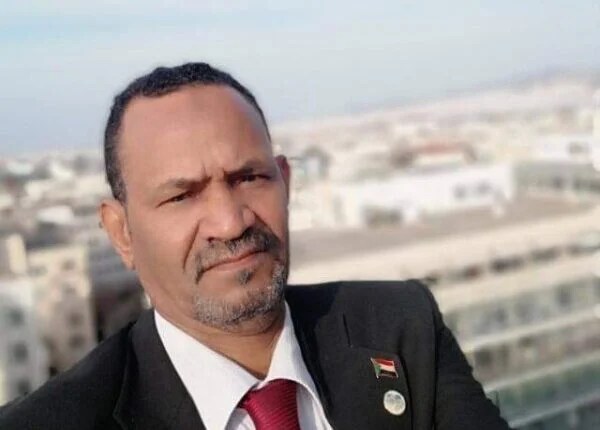
By Abdelmalik Al-Naeem Ahmed
The Council of Ministers has issued a directive to all ministries to begin the necessary arrangements for relocating to the nation’s capital and resuming their duties from Khartoum by the end of December. The circular also included explicit instructions to certain ministries—mentioned by name—to move to Khartoum as quickly as possible, and to vacate the administrative capital, Port Sudan, after spending thirty-two months there. Throughout that period, both the Sovereign Council and the executive branch operated from Port Sudan, to the extent that critics seeking to belittle the government mockingly referred to it as the “Port Sudan Government” rather than the Government of Sudan. Perhaps the relocation of the executive apparatus will remind them that this is indeed the government of Sudan, and that life will return in full to Khartoum—contrary to what some desire or attempt to prevent.
The relocation of entire ministries to Khartoum carries significant meaning—both for Sudanese citizens and for foreigners who still believe this goal difficult to achieve. The government has consistently urged citizens who have taken refuge abroad to return home, rebuild what they can, and contribute to restoring normal life with their physical presence. Yet many who hear this call—whether privately or openly—respond by saying: “Let the government return first before asking citizens to return.” They also demand that the government first provide the minimum basic services—water, electricity, healthcare, and education—before calling on people to come back. These are, of course, legitimate and necessary demands. Thus, the government’s own return signals that additional efforts will be made in this direction, and that there is indeed a plan and a vision to accelerate the restoration of life far beyond the current pace.
Another critical point is that the government in Port Sudan has been operating with a very limited workforce, not exceeding 40% at best. This has undermined the performance of the executive branch and left large numbers of employees idle, receiving meager salaries insufficient to cover their most basic needs—while no viable alternatives were offered, despite the well-known hardships across the country, especially in the capital, where more than 2,800 factories were destroyed and thousands of workers displaced, leaving their families struggling to meet even part of their living costs.
It is essential that the government—and each ministry individually—develop clear plans to reintegrate their employees and utilize their capacities in restoring normal life. This should not be limited to mere office attendance, but should actively contribute to driving production forward in every sector. The call to return to Khartoum—or the pressure on ministries to resume operations there—should not be a political gesture. It must be rooted in a coherent plan, a clear vision, and an actionable program that ensures security and stability for citizens who have endured years of hardship, while also enabling the government to advance production and repair Sudan’s collapsing economy, whose currency has plummeted at an alarming and almost unimaginable rate.
It is true that the leadership of some ministries—such as the Ministry of Interior—has continued operating from Khartoum, and that others—like the Ministry of Higher Education—have transferred certain departments there. However, the majority of ministries remain in Port Sudan, working with limited office space and minimal staff, creating widespread dissatisfaction among employees and weakening overall performance.
We do not wish to question the government’s arrangements for housing these ministries in Khartoum, even though central Khartoum—where most ministries were historically concentrated—is largely out of operation, with no apparent plans for rehabilitation. The government has undoubtedly made alternative arrangements in other areas of the capital. Yet one must ask: Why does the government not consider distributing ministries among several secure states, based on each ministry’s function and its relationship to specific cities or regions? Why insist on returning to the old centralized model—one that has long hindered balanced development and turned Khartoum into the singular destination for all Sudanese? The flaws of this approach were laid bare when Khartoum was overrun and destroyed during the current war, bringing life to a complete halt simply because everything was centralized there.
We hope that the government’s planned return to Khartoum is accompanied by a comprehensive set of visions and ideas—a return driven not by political symbolism, but by a genuine commitment to serving the interests of the citizen and the nation.