The SPLM–North and Heglig (2012): Is This How It Ends?
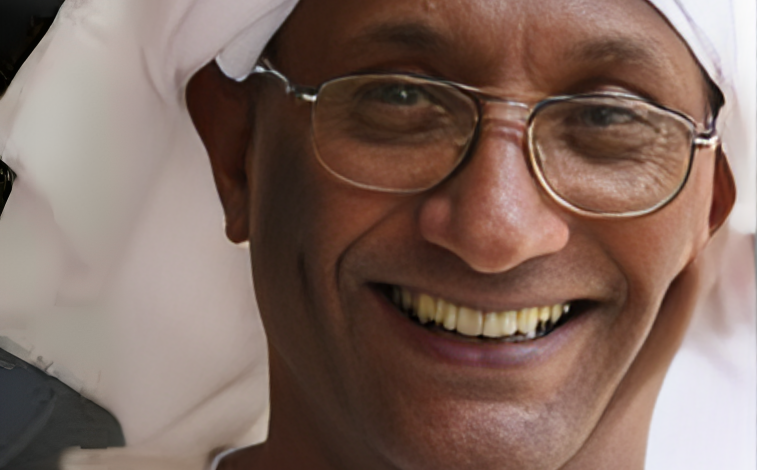
By Abdullah Ali Ibrahim
(My disagreements with the forces that recently coalesced into the Forces of Freedom and Change are longstanding. Despite their deep love for Sudan—deep enough for martyrdom in service of their cause—it is a love “compelled” by the belief that the country can only be rescued through a watertight grand project: socialism, the New Sudan, civility, modernity, enlightenment, and so on. This has made them first-class nationalists, yet they have missed, in their preoccupation with these lofty schemes for saving the nation, the simple, unconditional patriotism grounded in loving one’s country with no strings attached. “Patriotism” is, of course, Rifaa Rafi’ al-Tahtawi’s Arabization of the French term. And you can see, then as now, how their legitimate hostility toward the Islamists blinds and deafens them to the basic obligations of patriotism. Nationalism takes hold of them precisely because genuine patriotism is something they could still reclaim. In this article, written in 2012, I found that the SPLM–North had aligned itself with South Sudan when it occupied Heglig in March 2012—using arguments strikingly devoid of unconditional patriotism, as you will see.)
The SPLM–North issued a statement the day before yesterday, signed by Yasir Arman, on the events in Heglig. I regret to say the statement was “Karzai-esque”—in the sense of forfeited will. I first heard the term used among the Manasir people, where those who accepted government relocation were labeled “Karzais.” I had expected from the SPLM–North, which describes itself as a political movement within the state of Sudan, a more thoughtful and complex statement. Not a single opponent of the regime inside Sudan has written about Heglig without grappling deeply with the contradictions of extracting a homeland—dismembered as it was by the SPLM among others—from our grievances against the National Congress Party. But I could not detect in Yasir’s statement any such struggle with the competing pulls of homeland, democracy, historic Sudan, and change. The statement read more like a “briefing” from the South Sudanese People’s Army’s moral and political education department.
The statement claimed that what is happening in Heglig is merely another episode in the perpetual wars waged by the National Congress Party. Nothing new under the sun. This might have been acceptable before the Republic of South Sudan came into being—when the NCP was our collective national affliction. But now that the South is a foreign state, it should defend itself—if the NCP has indeed attacked it—within recognized international norms, the same norms the international community is currently asking it to observe. Perhaps Sudan is still one in Yasir Arman’s mind—even if, as the joke goes, it has already “flown away.” This ideological delusion puts him closer to Hizb ut-Tahrir, which still believes in an intact Islamic Caliphate. One would need a memory carved from stone to continue believing in the New Sudan after all that has happened. Sudan is now a new country, and this makes Yasir’s movement, at the very least, a local Sudanese one—obliged to stand with its people and its own country, no matter what.
Yasir’s statement drifted back into familiar waters: Heglig, he argued, is not the first piece of Sudan to be snatched away. Look at Halayeb and al-Fashaqa, he said. And he denounced the NCP (i.e., Sudan) for mourning Heglig in a way it never mourned those two territories. This is nonsense. The fact that the NCP did not mourn them does not mean we—as a people—did not. This nation grieves silently and folds away its mat, waiting for its moment. And we never heard a tear—or even a feigned tear—from the SPLM when it governed for five years about Halayeb or al-Fashaqa; nor did Yasir’s presidential platform address these grievances. By the same logic, we could ask why South Sudan wept over Heglig but never cried over the Ilemi Triangle on its border with Kenya. One is baffled by the extremities to which we will go if we accept the logic that Heglig is insignificant, and that we should focus instead on Halayeb and al-Fashaqa. Put simply: we would be declaring an open hunting season on Sudan. “Come, neighbors and non-neighbors—carve off pieces of Sudan until we can reclaim Halayeb and al-Fashaqa.” Indeed—brilliant logic!
The third calamity in Yasir’s reasoning is his call for the Sudanese people to rise up and topple the regime. The NCP, he argued, is not crying over Heglig itself, but over its oil—used for domestic consumption and as a source of foreign currency. He added that the Sudanese Revolutionary Front (the only time he mentions it) would destroy whatever oil remains so that the Sudanese people would rise up, topple the regime, repair relations with neighboring states, and begin by mending relations between northerners themselves, and then build a homeland that accommodates everyone. Is this really your conclusion, Yasir? Have you given up on our capacity to rise for freedom, justice, and dignity? Must we instead be “pressed to our knees,” rising only after humiliation, only after suffering at the fuel pump and in the bread line? Will your promised homeland truly accommodate us as citizens when we arrive as subjects emptied of meaning, with broken spirits? And how many times has Yasir broken his promise of that inclusive homeland? And since when did Lenin say that humiliation is a prerequisite for revolution?
Yasir: Do you want a government you hate, or a homeland you love? See how your hatred of the regime has led you to promote a revolution that resembles hard labor.