New Settlers: West African Populations Flow into Sudan
Sudan Events – Agencies
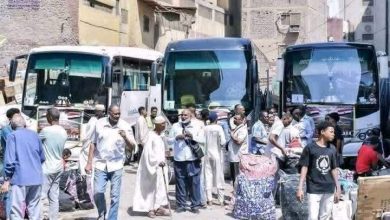
Eyewitnesses in areas controlled by the Rapid Support Forces (RSF) say they observe daily streams of people entering the country and moving deeper inside—not merely mercenary fighters, but families with women and children advancing further into Sudan under the militia’s armed protection. This raises a pressing question: Is there indeed a covert effort to resettle groups from West Africa who are said to share ethnic ties with the Janjaweed, or are these concerns exaggerated?
Khalid Mustafa Al-Siddiq Al-Fazzazi, an expert in strategy and knowledge-based economics, argues that developments in Sudan today go far beyond the definition of an armed rebellion, crossing instead into what he describes as a “war of influence” intertwined with regional power interests. “We are facing a multi-layered project built on military, security, economic, and demographic tools,” he said. “It exploits state fragmentation, institutional collapse, and the international community’s preoccupation with larger global disputes to push forward a strategic plan. Sudan has effectively become a back door for a project to reshape demographic borders in its western region.”
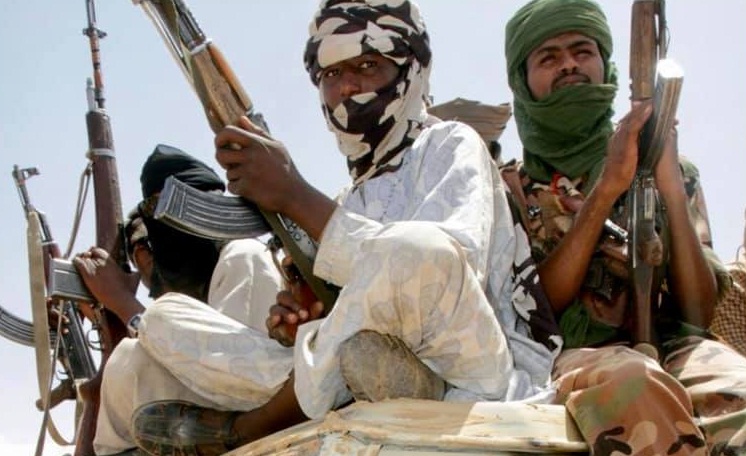
He explained that the rebellion was initially supported by fighters from Chad, Niger, the Central African Republic, and Mali, followed later by mercenaries. “The aim of the first phase was temporary involvement in combat in exchange for money—something not new to the region,” he added.
According to Al-Fazzazi, the subsequent phase saw certain states facilitating the transfer of military equipment, including modern drones, and the establishment of weapons depots in border areas, along with secure corridors for transporting arms and fighters. “This was the investment phase in the war before shifting to influencing its outcomes. That is when the phase of sending entire populations to settle in Sudan began.”
He continued: “Notice how the operation shifted from sending mercenaries and equipment—along with securing their routes—to sending civilians and permanently relocating them inside Sudan. This means the conflict is no longer a struggle for power, but an attempt to impose a new demographic reality in regions suffering population vacuums caused by war, mass killings, village burnings, sexual violence, forced displacement, widespread looting, and the pursuit and killing—or terrorizing—of those fleeing to prevent their return. These are not isolated incidents, but a systematic pattern.”
Al-Fazzazi stated that groups from Chad, the Central African Republic, Niger, and Mali have now been brought in and distributed across West and North Darfur. “We have documented testimonies confirming that they have been granted agricultural lands and looted livestock, and that their young men are fighting alongside the militia on the Al-Khuwei and Al-Nuhud fronts—two areas likely to witness the next major battle. They will fight fiercely in Kordofan because it is the region separating them from what they perceive as their primary threat. These battles will therefore be decisive and intense.”
He believes the influx of tens of thousands of newcomers will alter the structure of local communities, the balance of tribal power, agricultural production systems, resource distribution, and population ratios. “Over time, these groups will claim native residency and ownership, and Darfur and Kordofan will turn into cross-border zones of influence. Removing them later will be nearly impossible.”
Abdel Nabi Mousa, a researcher of conflict history in Sudan, describes information emerging from parts of Darfur as alarming. He warns that bringing in populations from Chad, the Central African Republic, Niger, and Mali and integrating them into existing communities will make it extremely difficult to reverse the situation. “They belong to the same ethnic groups, which makes this integration highly dangerous. These people are being settled in an organized—not random—manner, making the situation harder to uncover. There is a systematic effort to embed them within communities sympathetic to the Janjaweed.”
He added that Sudanese governments have historically mishandled this issue, often taking a “gray-zone” approach toward incoming West African populations, who have long been able to acquire Sudanese citizenship easily and settle without obstacles. “In the past, large groups moved into Sudan, established their own administrative structures, and even obtained official recognition.”
Mousa stressed that the government—and the media in particular—must give this issue the attention it deserves by exposing these plans. “The government must not continue its silence regarding the transfer of entire populations into the country from Chad, the Central African Republic, Niger, Mali, and others. These movements must be exposed and scrutinized. Silence in the past is what helped lead us to today’s war.”