New U.S. Sanctions… Why Did Washington Ignore the Emirati Trainer and Target Colombian Fighters Instead?
Report – Sudan Events
The United States has imposed financial sanctions on a network recruiting Colombian military personnel to fight alongside the Rapid Support Forces (RSF) in Sudan. The U.S. Treasury Department’s Office of Foreign Assets Control (OFAC) announced sanctions against four individuals and entities within this network, which exploits the expertise of former Colombian military members and trains fighters—including children—to join the conflict in Sudan.
John Hurley, Deputy Assistant Secretary for Terrorist Financing and Financial Intelligence, stated that the RSF follows brutal policies targeting civilians, including children, deepening the conflict and fostering conditions conducive to the growth of terrorist groups.
The Washington Post reported that one of the key figures in the Colombian network is Álvaro Andrés Quijano Becerra, a retired Colombian-Italian officer residing in the UAE. He is accused of playing a central role in recruiting Colombian fighters and coordinating their operations through his Bogotá-based company, the International Services Agency.
The exposure of the network followed a joint U.S. investigation involving agencies such as Customs and Border Protection and the National Targeting Center. This is not the first time reports have highlighted the significant involvement of Colombian fighters in Sudan’s war, nor their presence on the frontlines providing logistical support via drones, anti-aircraft systems, and even direct combat. The Sudanese army previously detained several of them and displayed their documents.
Sudan’s former prime minister had also addressed the Colombian public and government, urging them to halt the flow of Colombian mercenaries and outlining the destructive roles they are playing in the conflict.
Following the latest U.S. decision, many observers raised questions about the broader issue—specifically why the U.S. administration refrained from condemning the party financing the operation and hosting the network leader, Álvaro Andrés, and facilitating the recruitment of mercenaries. Why did Washington overlook the UAE and focus solely on the Colombian network? Why was the UAE, which brought Colombian mercenaries to Sudan, not held accountable?
Analysts argue that the RSF lacks the capacity, networks, and sophistication to recruit mercenaries through the UAE and transport them onward to Darfur.
Fateh Mohamed Elias, a U.S.-based Sudanese journalist who commented on the decision online, said the U.S. fully understands that without the Emirati role, the war would not have continued until now. This raises the question of whether the current U.S. administration truly wants to stop the fighting or seeks financial or strategic gains by sanctioning peripheral actors while leaving the main players untouched. Elias added that even if Colombian fighters stopped coming, the U.S. knows the UAE would simply seek mercenaries elsewhere and continue sending them to Sudan, meaning that halting the Colombians alone does not solve the problem.
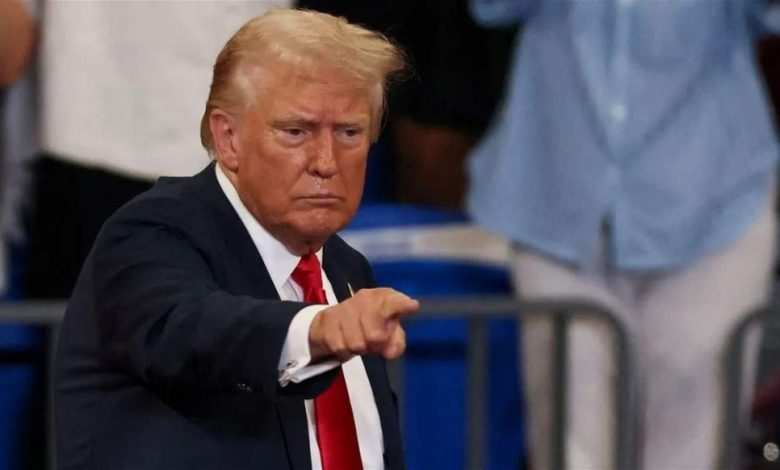
He added: “The sanctions are a message to the Abu Dhabi leadership to sweeten its deal before decisions extend to the militia and to the UAE itself—especially if it stops offering attractive deals to Trump.” He continued: “For Trump, everything revolves around deals. He is currently standing between Saudi Arabia and the UAE, watching to see which of them will offer the more appealing deal to win his favor—and he says this openly.”
Professor Fadl Al-Moula Al-Naeem, a political science scholar, believes the current moment is one of strategic silence. He argues that these U.S. sanctions are part of a set of political tools used to pressure conflicting parties. According to him, Trump—who has previously stated this view—will not present an initiative but rather impose a solution. Thus, while public diplomatic activity appears stagnant, the behind-the-scenes work continues in pursuit of what could become a U.S.–Saudi proposal to resolve the crisis.
He concludes: “I do not think these are mere maneuvers by Trump to secure deals. Rather, they are maneuvers aimed at positioning himself to announce the solution he envisions—one he will not allow to be amended or negotiated. He seeks a foreign policy victory, and Sudan’s war now appears to offer him that opportunity.”
Elias does not reject this assessment but adds that Trump does not necessarily care whether this external victory is fair to the Sudanese people. As long as the outcome aligns with his interests and preferences, it will be considered a suitable and acceptable solution for him and for the U.S. administration.