Sudan: Tracking the Supply Chain of Mysterious Combat Drones in the Civil War
Sudan Events – Agencies
Open-source imagery analyzed by Africa Intelligence reveals that advanced weapons have given the Rapid Support Forces (RSF) a decisive edge in recent months. Evidence suggests Serbia played a role in assembling, modifying or re-exporting Chinese-designed combat drones.
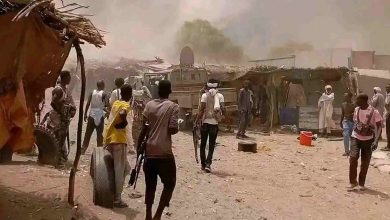
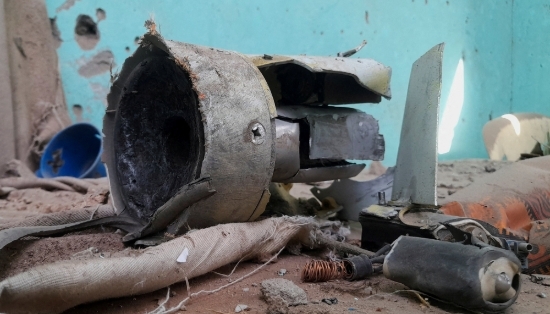
On 8 November, a group of Sudanese Armed Forces soldiers — wearing mismatched uniforms — celebrated around the wreckage of a combat drone they had just shot down in Kordofan. The aircraft likely belonged to their opponents, the RSF.
The drone closely resembles the Chinese-designed CH-95. In recent months the RSF has used these medium- to long-range reconnaissance drones, fitted with precision-guided munitions, to outmatch the Sudanese Armed Forces. In late October the RSF captured the city of El Fasher in Darfur after an 18-month siege.
The drone downed in November is at least the third of its kind observed in RSF hands: images from December 2024 and from October and December of this year show the RSF operating CH-95 or CH-92 drones. Africa Intelligence analyzed the imagery and identified several elements suggesting the systems were likely manufactured in Serbia. According to Serbian President Aleksandar Vučić, the Serbian military acquired CH-92 and CH-95 drones in 2020 — variants of the Chinese “Rainbow” models produced by the state-owned China Aerospace Science and Technology Corporation (CASC).
Serial numbers
Open-source evidence indicates the serial-number format matches that used by the Serbian military. Combined with munitions imported via state-owned Yugoimport-SDPR, these elements form a distinctive signature that indicates the drones cannot be attributed to China alone.
The first clue was that alphanumeric markings visible on three different photographed wrecks (see Documents 1 and 2) follow a format similar to that seen on Serbian Air Force assets. However, there are no official records confirming that Serbian production lines use this serial-number format.
The part number
J/DF24-23-01-042A
on the drone downed in Kordofan in November appears, in its first character block, to indicate the size of the hard-point used to mount payloads on the aircraft, followed by a manufacture date and then a batch/unit number.
Accordingly, the three drones observed in RSF possession were produced in 2023 — predating Jordan’s “Shaheen” drones manufactured in 2024, which bear a strong resemblance to CH-92 and CH-95 types. That timeline therefore rules out the hypothesis that the systems originated from Jordan.
The Sudanese Military Capabilities platform, which is close to Sudanese military intelligence, denied last month that the RSF used Shaheen drones, noting that the downed aircraft had a Satcom link that is mastered by only certain Asian countries and Serbia.
Equipment types
The wreckage observed in October (see Document 3), marked J/DF24-23-01-037A, also contained 90-mm laser-guided FT-8C bombs and FT-8D munitions. Serbia has these munitions in its inventory after acquiring the drones from China in 2020.
Yugoimport-SDPR — Serbia’s main state-owned arms exporter and the successor to the Yugoslav Ministry of Defence procurement division — has listed FT-8C bombs in its catalogue at least since 2024, though it has not specified whether they are exportable. As seen in multiple images reviewed by Africa Intelligence, these bombs were used by the RSF during the siege of El Fasher up to October.
Finally, photos dated 1 December 2024 of a third drone (see Document 4), which crashed near Nyala — the RSF’s de facto capital — show propellers produced by the Czech company Woodcomp, suggesting the type was modified or assembled by a third party outside China. While no known partnership exists between Woodcomp and CASC, this component points to the possibility that a third state developed its own capabilities to manufacture or assemble CH-92/CH-95-type drones. Chinese arms manufacturers do not typically source components from European countries.
When Serbia received the Chinese drones in 2020, its government announced plans to build an indigenous drone on Serbian soil. Although Yugoimport already produces various types of UAVs, CH-92 and CH-95 types do not appear in its public catalogue, leaving uncertainty about which Serbian entity might be producing these systems.
The joint forces reported shooting down a UCAV near Nyala; the airframe bore a part number indicating a 2023 production date.
Source: Joint Forces account on Twitter
The precise route by which these drones reached Sudan remains unclear. Shipping documents, leaks and UN Panel of Experts reports do not provide conclusive proof. However, organizations such as Amnesty International and outlets like France 24 have previously shown that the RSF supply lines already include ammunition of Serbian origin and UAE-made armoured personnel carriers.
The Abu Dhabi factor
Based on prior logistics movements tracked in open sources by international press, a plausible route would have taken the drones through the United Arab Emirates and then via Libya or Kenya — logistical hubs regularly used in the Sudan conflict. The UAE is frequently accused of providing financial and logistical support to the RSF, a claim it denies.
The Serbian government has repeatedly demonstrated close ties with the UAE. In April, Serbia intervened at the International Court of Justice on behalf of Abu Dhabi — accused by the Sudanese government of complicity in genocide — a case that was ultimately rejected.
The close relationship between the two countries extends to the military domain. In 2017 Yugoimport exhibited rifles, mortar shells and other ballistic systems at the IDEX arms fair in Abu Dhabi. Yugoimport’s website boasts of receiving distinguished guests at its pavilion, including the late UAE President Sheikh Khalifa bin Zayed Al Nahyan and former Sudanese Defence Minister Ahmed Awad Ibn Auf, who served under ousted President Omar al-Bashir.
Small Serbian arms
Relations between Belgrade and Sudan’s pro-government officials are, by contrast, cool. Before Serbia intervened at the ICJ, Sudan’s government under Abdelfattah al-Burhan recognized Kosovo’s independence — a red line for Serbia. Yugoimport has also had prior disputes with the Sudanese military: in 2005 the Serbian firm took legal action in the United States to recover $73 million for unpaid arms contracts from the late 1980s and early 1990s. Yugoimport won the case in 2006, but it is unclear whether it recovered the funds.
In 2019 a decree by al-Burhan granted the RSF greater autonomy in arms procurement. In 2021, when the SAF and RSF were sharing power, al-Burhan offered the RSF a 30% stake in the Sudanese military-industrial complex, giving the RSF access to supplier lists among other strategic resources.
Small Serbian arms were present in Sudan before the 2023 civil war. In 2019 the investigative site Bellingcat highlighted Serbian-origin small arms in the hands of both the SAF and the RSF, then unified in power; its investigation suggested Saudi Arabia was the likely supplier. Since then both sides appear to have obtained small arms from Serbia. Contacts were reported with a Serbian broker, “Valer,” Africa Intelligence previously reported (AI, 18/11/25).
Recent deliveries of large quantities of these weapons into Africa have intensified suspicions of indirect supplies to belligerents in Sudan who are subject to embargoes. Images posted on social media on 14 October show SAF personnel equipped with M05 E1 rifles — the same model produced by Serbian firm Zastava Arms, a Yugoimport partner — which broker Valer often proposes to African military leaders. The same models were also observed in RSF hands, documented by Amnesty International in July 2024. The militias also use other Soviet-origin systems marketed by Yugoimport, such as Strela-2M light air-defence systems and 120 mm M74 mortar rounds.
Neither the governments of the UAE, Serbia, China, nor Jordan responded to Africa Intelligence’s questions. Yugoimport and Woodcomp did not reply to our emails.
Methodology compliant with international standards
This assessment is based on open-source intelligence (OSINT) methods aligned with the UK Ministry of Defence’s Joint Doctrine Publication 2-00 and professional practices endorsed by the UK College of Policing (2025). The research design complied with evidentiary standards used by UN bodies and international courts. Probability assessments followed a structured evaluation framework to ensure clarity and consistency.
Limitations
· Serial numbers and markings were interpreted through comparative analysis; the absence of official records reduces certainty.
· User-shared online content carries risks of contextual manipulation and uncertainty.
· Some relevant documents were paywalled or partially removed from public access.
· The pattern-of-life analysis is constrained by a limited number of comparable cases in similar conflicts.
· To mitigate these limitations, we used systematic triangulation to validate findings.
Source: Africa Intelligence