An international journalistic investigation has revealed alarming indicators pointing to the widespread presence of mass graves in El Fasher, in one of the most serious humanitarian cases linked to the ongoing conflict in Sudan.
Media reports citing an extensive investigation by The Washington Post said the Sudanese city of El Fasher contains at least 140 sites suspected to be mass graves or body collection points, following the takeover of the city by the Rapid Support Forces militia, amid the absence of international oversight and severe access constraints.
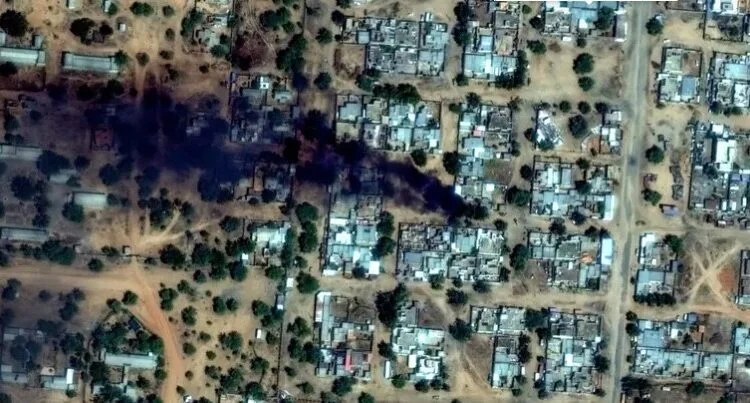
The investigation said the findings were based on testimonies from survivors, relatives of abductees, and local activists, alongside analysis of recent satellite imagery. These sources converged to paint a harrowing picture of the humanitarian situation in the city, suggesting that mass graves in El Fasher are not isolated incidents but part of a widespread pattern.
Witnesses reported that the RSF carried out mass abductions involving thousands of civilians, including women and children. According to survivor accounts, detainees were forced—under psychological and physical torture—to contact their families to demand ransom payments in exchange for their release, in practices described as systematic extortion.
The investigation noted that civilians whose families were unable to pay the ransom were subjected to systematic killings. Local sources confirmed that some mass grave sites in El Fasher were directly linked to these executions, raising serious concerns about crimes amounting to war crimes and crimes against humanity.
The report also documented growing indications of efforts to conceal evidence, with controlling forces believed to be removing or altering features of some suspected sites in a race against time ahead of any international investigative missions. Satellite imagery reinforced this hypothesis by detecting sudden changes in terrain characteristics after specific dates.
In this context, Nathaniel Raymond, Executive Director of the Humanitarian Research Lab at Yale University’s School of Public Health, announced that his team is preparing a detailed report documenting the locations of mass graves in El Fasher. He said the forthcoming report is based on rigorous scientific methodologies and will serve as an important reference for any future international legal proceedings.