As the Flames Reach the Mountains: Local Fears of a Full-Scale Slide into War
Report – Sudan Events
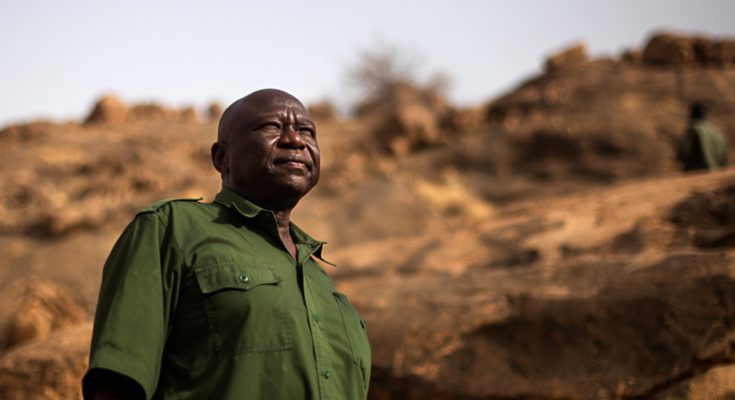
For more than twelve years, forces known as the Sudan People’s Liberation Movement–North (SPLM-N) have controlled and administered areas of the Nuba Mountains. Under the 2012 agreement signed between Abdelaziz al-Hilu and the then Bashir government, these forces remained largely outside active military operations. Al-Hilu and his troops were present in the region without engaging in fighting; their military structure and combat capabilities were not developed, and they continued to operate with a worn-out army and obsolete equipment, much of it inherited from the SPLM that later ruled South Sudan.
This situation persisted even after the outbreak of war in Khartoum and its subsequent spread to Al-Jazira State. Al-Hilu attempted to exploit the army’s preoccupation with multiple battlefronts to expand into certain areas, but developments over time took a different turn. Al-Hilu entered into negotiations with the United Arab Emirates—widely seen as a backer of the militia—through the government of South Sudan, eventually reaching understandings that culminated in an agreement mediated via the UAE and Abdullah Hamdok, a close associate of al-Hilu. Under this arrangement, al-Hilu aligned himself with the militia and entered the war, believing the Sudanese army to be exhausted and assuming he could provide support to the militia, which in turn made substantial promises. The UAE, for its part, reportedly offered incentives that encouraged al-Hilu to take the risk and join the conflict.
In doing so, however, he failed to account for the long-standing and traditional hostility harbored by the militia’s social base toward the ethnic groups represented by his forces. Nor did he consider that the war had introduced new forms of warfare unfamiliar to his army—such as advanced and suicide drones, as well as sophisticated, high-precision weapons now used by the Sudanese Armed Forces and their allied units. These are weapons al-Hilu and his fighters had never previously confronted. His soldiers remain equipped mainly with Kalashnikovs, G3 rifles, and other outdated light weapons.
Despite objections from some local community leaders and traditional authorities, who directly warned al-Hilu that his agreement with the militia could drag fighting into the Nuba Mountains, he pressed ahead. He reportedly ordered the detention of those who opposed the move, labeling them traitors. With strategic drones reaching Kauda and militia forces pushing deeper into the mountains, some supporters of the SPLM-N floated an initiative calling for the evacuation of the area by both warring sides, in order to prevent Kadugli, Dilling, and Kauda from being destroyed. The proposal suggested that the militia withdraw from the mountains, while the army vacate its positions and hand them over to al-Hilu’s forces to avert bloodshed.
This initiative was heavily promoted by figures affiliated with al-Hilu’s movement, but it encountered major obstacles. Chief among them was the fact that al-Hilu is no longer a neutral actor; he is now effectively part of the militia. Any handover of army garrisons under such a proposal would amount, in practice, to handing them directly to the militia. Political activist from the Nuba Mountains, Al-Alami Kinda, described the proposal as “naïve,” arguing that the problem lies not only in the assumption of transferring army positions to the Janjaweed through al-Hilu’s forces, but also in the fact that those promoting the initiative are themselves Janjaweed supporters. “No one will take such a proposal seriously,” he said, noting that many leaders of the militia’s founding core are present in the area and move back and forth through al-Hilu-controlled routes.
Kinda added that while there is widespread public anger over what is happening, people are unable to speak out openly. “Al-Hilu is quick to accuse anyone who disagrees with him, and some are currently in prison,” he said. He also noted that al-Hilu has largely disappeared from public view, with no clear information about who is actually running the movement amid reports of his deteriorating health. At the same time, army drones have intensified their activity over the region, striking sensitive locations and forcing residents to flee their homes. “People know that the SPLA-N has no solutions to counter the army’s air power, whether manned aircraft or drones,” Kinda said, adding that even the advanced systems brought in by the militia have been deployed in limited areas and are beyond the operational knowledge of both SPLM-N and militia fighters. “Foreign operators from Kenya, Ethiopia, and some European countries are reportedly running them.”
Military expert Yasser Saad El-Din argues that what makes al-Hilu’s position particularly difficult and complex is his lack of trust in any party and his awareness that he has become a legitimate target for all sides. “Even the SPLM-N’s own social base believes that al-Hilu brought the war to their areas and that he is benefiting personally from it, having received payment from the UAE through his friend Abdullah Hamdok and another ally, Salva Kiir,” he said.
According to voices within his traditional support base, al-Hilu has “sold out the region to the Janjaweed for money” and is now fighting on behalf of forces that care neither for him nor for the people of the Nuba Mountains. El-Din concluded: “Al-Hilu lacks the weaponry needed to confront either the army or the militia. He has placed himself in the middle of a battle he cannot fight with the primitive tools on which he relies.”