While Sudan Burns, the NBA’s Embrace of the UAE
Report – Sudan Events
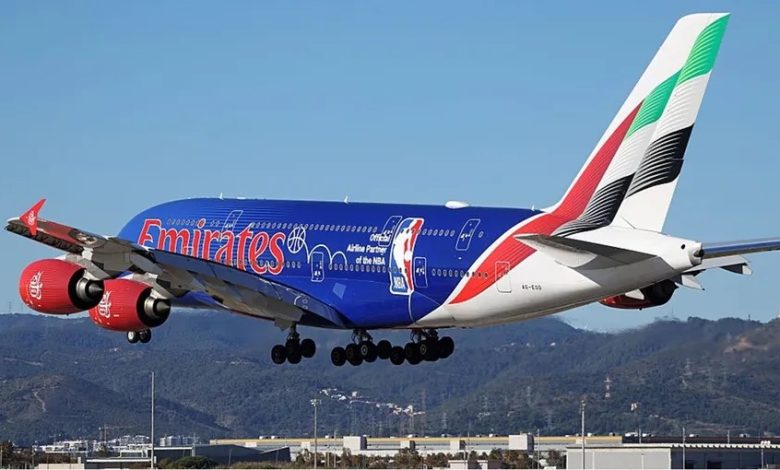
As Sudan’s largest city in the west was overrun by the brutal Rapid Support Forces—responsible for mass executions, rape, and ethnic cleansing with weapons supplied by the United Arab Emirates—the NBA’s annual in-season tournament, the NBA Emirates Cup, tipped off on Halloween night, carrying the honorary sponsorship of that same Gulf state.
The tournament is the most visible symbol of the expanding partnership between the NBA and the UAE—a relationship that includes annual preseason games in Abu Dhabi, a lucrative sponsorship deal with Emirates Airline, and plans to establish a new global NBA academy on the campus of New York University Abu Dhabi.
Even bigger deals may be on the horizon. The league is reportedly seeking Abu Dhabi investment in a new NBA-branded European league that could launch as early as 2027.
This flourishing partnership has already delivered benefits to both sides: the NBA has gained a wealthy investor, while the UAE has found a willing partner to help normalize its authoritarian system—particularly as it faces accusations of fueling genocide in Sudan.
For its part, the NBA says it follows guidance from the U.S. government in its dealings with the UAE.
“Basketball has a century-long history in the Middle East, and our activities in the UAE—including bringing live NBA games to fans in the region and teaching the fundamentals and values of the game to thousands of boys and girls each year—align with our efforts to engage fans and aspiring players in more than 200 countries and territories worldwide,” an NBA spokesperson told The Guardian. “We will continue to rely on guidance from the U.S. State Department wherever we operate.”
Beneath the veneer of luxury and modernity, the UAE enforces silence with an iron fist. Political dissidents and human rights activists languish in prison on arbitrary charges, punished for daring to challenge the state. Its economic prosperity rests on the backs of migrant workers, who make up 88% of the workforce and labor with few rights and limited avenues to seek redress for abuse.
The UAE’s influence extends far beyond its borders, into far bloodier terrain. A growing body of evidence links the Emirati government to Sudan’s Rapid Support Forces, the paramilitary faction responsible for many of the atrocities and crimes against humanity committed in the country.
Sudan’s civil war erupted in April 2023, when tensions exploded between the Sudanese Armed Forces, led by army chief Abdel Fattah al-Burhan, and the Rapid Support Forces, led by his former deputy Mohamed Hamdan Dagalo—known as Hemedti—plunging the country into full-scale war. Urban centers such as the capital, Khartoum, were transformed into battlefields, devastating vital infrastructure and creating the world’s largest displacement crisis.
As the conflict approaches its third year, estimates of the death toll vary widely. The United Nations and other aid agencies have recorded 20,000 confirmed deaths. A more recent report by the Sudan Research Group at the London School of Hygiene & Tropical Medicine claims that more than 61,000 people have died in Khartoum State alone, including 26,000 as a direct result of violence. Meanwhile, former U.S. special envoy for Sudan Tom Perriello said last year that as many as 150,000 people may have been killed.
The civil war has also been marked by horrific atrocities, including sexual violence, torture, mutilation, and ethnic cleansing. This was underscored most recently when the last Sudanese army stronghold in Darfur fell to the Rapid Support Forces. The militia launched a campaign of mass killing so severe that images of blood-soaked ground were reportedly visible from space.
Since the conflict began, the UAE has helped finance and arm the paramilitary group—effectively sponsoring its war crimes and atrocities. Sudan’s military government has even filed a case at the International Court of Justice accusing the UAE of complicity in genocide in West Darfur. Despite extensive evidence to the contrary, the UAE continues to deny any role in the conflict and proceeds as if business were continuing as usual.
In recent months, the UAE has hosted the Asia Cup in cricket, NBA preseason games, a Ultimate Fighting Championship (UFC) event, and the Formula 1 season finale, which featured a performance by Katy Perry. These were followed by the Abu Dhabi HSBC Golf Championship and a major padel tournament. With the exception of Grammy-winning rapper Macklemore—who canceled his Dubai concert in protest last year—few others have attempted to distance themselves from the controversial Gulf state.
The UAE has reaped enormous benefits from the global sports world’s indifference. Abu Dhabi’s investment in Manchester City was a masterstroke, recasting the ruling Al Nahyan family as savvy investors rather than harsh autocrats. Its stake in cricket carries diplomatic leverage, given the sport’s popularity in South and Southeast Asia—the same regions that supply much of the UAE’s migrant labor force. At the same time, investments in artificial wave pools, tennis, and motorsports have expanded its growing sports tourism strategy.
Still, the ongoing massacre in Darfur appears to have brought rare negative publicity for the UAE. Even some Manchester City supporters have condemned their owner for “their country’s role in the Sudan conflict, where civilians continue to suffer.”
The silence surrounding the NBA’s new partnership with the UAE is particularly troubling. One of the few organizations to criticize the league for normalizing the UAE’s role in Sudan is Refugees International, a nongovernmental organization advocating for displaced people’s rights. “The NBA Emirates Cup could bring out the best in everyone. Instead, it is being used to sportswash atrocities funded and fueled by the UAE in Sudan,” the group wrote in a post on X. “The NBA should not allow itself to be a tool in the UAE’s normalization of famine and genocide.”
Yet sports teams and organizations rarely sever lucrative partnerships without resistance. At Bayern Munich’s annual general meeting last week, lawyer and activist Michael Ott—who previously led a successful campaign to end Bayern’s sponsorship deal with Qatar Airways—was mocked by attendees after raising concerns about the club’s new agreement with Emirates Airline.
Ott accused Bayern of “supporting the image of questionable political systems that contradict our values” and warned that the deal with the UAE could cause “lasting damage to our club’s reputation.” For his remarks, he was publicly ridiculed by chairman and CEO Jan-Christian Dreesen.
Despite ending past sponsorship agreements with Qatar and Rwanda, Bayern Munich’s leadership’s refusal to reconsider its ties with the UAE further underscores the effectiveness of the Gulf state’s branding and public relations strategies.
Do not expect the NBA— which also maintains partnerships with other autocrats, such as Rwanda’s Paul Kagame—to speak out about the UAE’s human rights record. But imagine if it did. Imagine if genocide, war crimes, and entrenched authoritarianism were red lines for global sport.