Sudan… What Remains of the ‘December Revolution’?
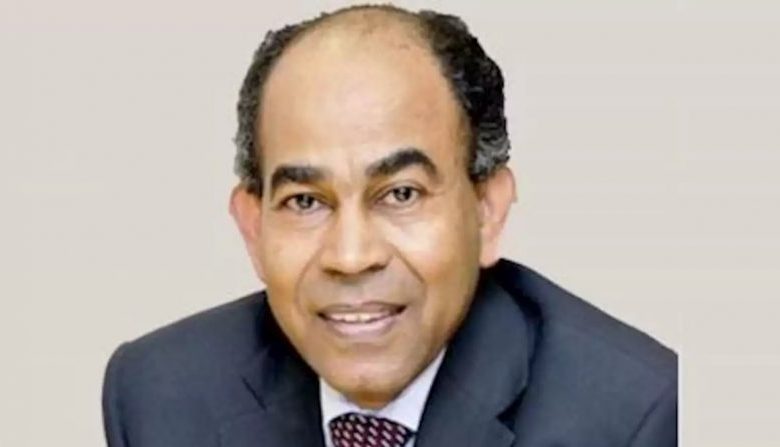
Osman Mirghani
The trajectories of every country that underwent what came to be known as the “Arab Spring,” deviated radically from initial aspirations. In most cases, the result was the nightmare of war and fragmentation, from Syria to Yemen, Libya and finally Sudan.
Sudan joined late but did not escape this cruel fate, and the flames of war replaced the promise of change.
Tomorrow is the seventh anniversary of Sudan’s “December Revolution.” People will mark the date, but not with the same idealism. With weary eyes, they see things from a different perspective. Daily survival has replaced politics, fear has replaced hope, and mere survival has replaced slogans.
The “December Revolution” succeeded in uniting people, or at least the majority, around opposition to what they did not want. However, it could not bring them together around a project for what they did want: the form of the state, its identity, the nature of governance, and how Sudan should be governed. With the absence of such unity, the doors to all forms of conflict was opened.
Sudan was not allowed to undertake its experiment under conditions that allow for a smooth transition. Many rode the wave of the revolution without having made sacrifices, while political disagreements, exclusionary rhetoric, power struggles, and the race for seats dissipated the momentum of this moment and created a climate conducive to war. In this fragile atmosphere, regional rivalries, political financing, and security interests also played a role in turning Sudan into a proxy battlefield.
Political and civil elites bear real responsibility for undermining the “December Revolution.” Large segments of the elite prioritized trivial ideological and partisan conflicts instead of seeking to build basic national consensus. Exclusionary rhetoric and accusations of treason prevailed. Rather than managing disagreement as a natural feature of a complex transition, their preoccupation with these power struggles prevented these elites from developing an inclusive national project that could balance the demands of revolutionary justice with the requisites of stability.
Worse still, some elites, either deliberately or out of political naivete, entered short-sighted alliances with armed factions, most dangerously the Rapid Support Forces, thinking they could use them to contain the army and shift the balance of power in their favor. In reality, however, they fueled the ambitions of the RSF commander, who sought to take power and replace the army. Instead of being a central part of the solution, these elites, at many junctures, became an integral part of the problem.
The painful paradox is that these actors, rather than reassessing their experience, have persisted in the same discourse: exclusion, political bickering, losing bets on the role of the armed forces, and entanglement in regional alignments. All of this comes after it had become clear that regional actors are playing a dangerous role in fueling the war and perpetuating it by supplying the Rapid Support Forces with arms in pursuit of their own agendas and interests.
With the advent of war, a new world has taken shape. New equations have been imposed, things have changed, and concerns and priorities have shifted. The forces of the revolution have themselves fragmented. Some have stood with the army, while other factions have allied with the Rapid Support Forces. Many of the revolution’s youths have been either displaced and taken refuge in, or overwhelmed by the struggle for daily sustenance and the burdens of conflict.
Those betting on turning back the clock are deluding themselves. The slogans of the revolution, most of which were never implemented, will not allow for reproducing the previous political landscape, nor returning these same figures, equations, and sources of legitimacy. The “December Revolution” has ended: its forces have disintegrated, it has lost much of its influence, and society has been changed by war, displacement, and the cruel conditions imposed upon it. Today, it will not see things through the prism of 2018.
Times of war are not times for rhetorical heroism. War is a testing moment for all. Today, we do not need to revive sloganeering but to adapt to a new state of affairs and take on a more realistic, less romantic, mindset. In other words (perhaps shocking but necessary) a shift from a “revolutionary project” to a “salvation project” is needed. We must work within the realm of current possibilities and acknowledge that we are in a different phase. The project that is needed is one that places the nation above all other considerations, operates on the principle of the state-first, and recognizes that there can be no democracy without a legitimate monopoly on violence and functional institutions that create bulwark against chaos.
There is an urgent need for an inclusive project, forged through comprehensive national dialogue that does not exclude anyone, to determine how Sudan is governed, not who governs. The decision of who rules should be left to the people. The old formulas have failed, and the Sudanese people are exhausted by this cycle of turbulent transitional periods, short-lived democratic experiments, and recurrent coups. More than ever, they dream of security and stability, of a safe homeland that can finally be free from the burdens of war, exclusionary struggles in politics and for seats of power, and the failures of elites.