As the Sudan War Evolves… Will Riyadh Shift from Mediator to Guarantor?
Report – Sudan Events
There is a firmly held belief within security, military, political, and even popular circles that what undermined the Jeddah Agreement was not only the militia’s failure to adhere to its outcomes, but also the fact that it was an agreement without guarantees, without a guarantor, and without enforcement and monitoring mechanisms. This made it easy to violate—because any agreement, no matter its nature, reached with a rebel militia like the Rapid Support Forces (RSF), whose composition is not purely military but also ethnic and regional, and whose members are largely not professionally trained soldiers, is inherently fragile. These elements were not properly trained or rehabilitated as a disciplined force; rather, they are groups of thieves, killers, looters, and bandits, as described by their own commander. It is therefore extremely difficult to impose military discipline or control over them.
As a result, violations, assassinations, home invasions, and attacks on civilians occurred during the ceasefires, which the militia exploited to expand its presence—particularly in the capital—while assaulting citizens, looting them, dragging them through the streets, and committing sexual violence. Consequently, ceasefires ostensibly signed to allow safe access for humanitarian aid have effectively turned into traps for civilians. This renders any talk of civilian protection through such ceasefires little more than an ugly attempt to whitewash the atrocities committed against unarmed civilians during these periods.
Many observers therefore believe that any humanitarian truce lacking on-the-ground monitoring mechanisms is, in effect, an attempt to support the militia, which fully benefited from the ceasefires agreed upon in Jeddah, transforming them into tools for territorial expansion, killing, and home invasions. Indeed, any accurate statistical assessment of that period would immediately reveal that the number of civilian casualties was higher than during periods of intense fighting, because on days when militia fighters were not engaged in combat operations, they turned directly to civilians’ homes, committing murder, looting, and rape.
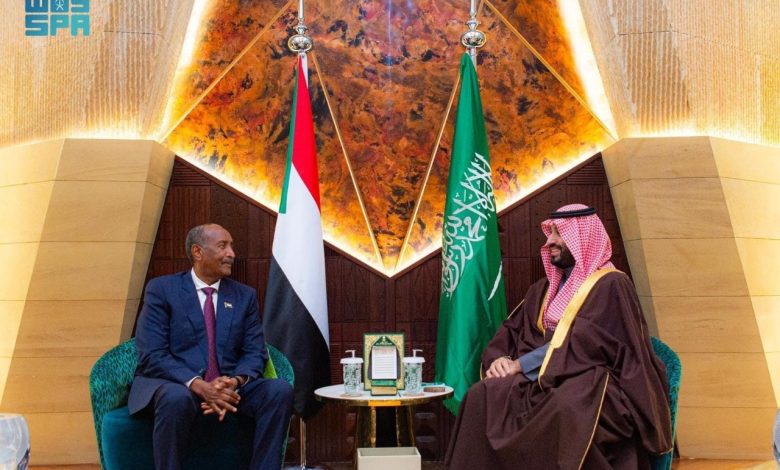
In this context, political analyst Dr. Salah al-Bandar noted in an article commenting on General al-Burhan’s visit to Riyadh that Saudi Arabia is now facing a real test of its influence. He asked whether the Kingdom would move “from mediator to guarantor,” adding that Riyadh possesses what many others do not: the ability to bring parties together, influence regional calculations, and align international tracks into a single, more disciplined process. However, he emphasized that possessing influence is one thing, and using it in the right direction is another. If Saudi Arabia confines itself to a purely ceremonial mediating role, the war will remain liable to reignite, and the region will pay the price. But if it assumes the role of a guarantor of an executive track, it will not only help save Sudan, but also safeguard its own regional security.
Dr. al-Bandar outlined five key elements that must be seen on the ground, not merely on paper: first, a verifiable humanitarian package implemented through clearly defined crossing points, publicly announced time-bound corridors, a weekly operational mechanism, and the removal of known obstacles hindering aid delivery. Second, the establishment of a transparent and public monitoring mechanism involving a Saudi–U.S.–UN follow-up team to document violations, publicly announce them, and identify those responsible—because silence is the primary fuel for breaching agreements. This must be accompanied by a punitive system for violations, a clearly timed political track rather than slogans, and explicit, unambiguous language on civilian protection, halting forced displacement, and ensuring access to humanitarian assistance.
Meanwhile, political researcher and director of the Nour Center for Strategic Studies, Elyas Mohamed Nour, argued that returning to the Saudi platform—specifically Jeddah—appears most appropriate at this stage, as the file there would be managed away from Western threat-based rhetoric that complicates issues rather than resolving them. He noted that the Kingdom fully understands the complexities on the ground and recognizes that the Sudanese file is directly linked to Red Sea security and its own national security. For this reason, Saudi Arabia’s role as a key regional actor—alongside Egypt—is crucial. However, he cautioned that reproducing the outcomes of the first Jeddah talks, namely ceasefires that enabled the militia to expand, occupy civilians’ homes, and kill residents, represents a major obstacle.
Nour added that without effective on-the-ground monitoring mechanisms and deterrent sanctions, the situation will descend into chaos, benefiting both the militia and the United Arab Emirates, which would increase arms shipments and attempts to open new, stable supply lines. He argued that Abu Dhabi closely monitors developments in several regional and international capitals and understands that time is now working against it; therefore, it will intensify its support for the militia and seek to create conditions that allow it to impose its vision at the negotiating table. He concluded that the militia will exploit ceasefires to launch attacks on new areas, expand its control, and reorganize its ranks—just as it did during previous ceasefires agreed upon by the army in Jeddah, which he described as a major mistake whose cost is still being paid.