CNN Investigation: When Favorable Eyes Turn Blind to Flaws
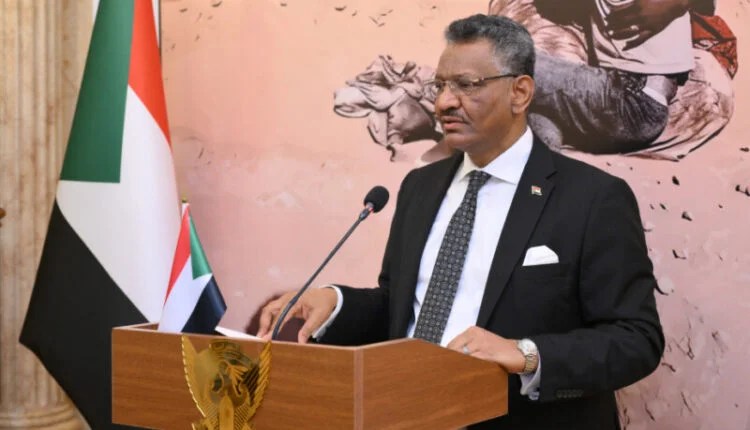
Anas Al-Tayeb Al-Jilani
The American network CNN, in collaboration with the investigative newsroom Lighthouse Reports, published a report alleging that the Sudanese Armed Forces carried out a horrific, ethnically motivated campaign in Al-Jazira State. Remarkably, the report cited images it described as “shocking,” claiming they depicted the killing of Rapid Support Forces (RSF) fighters by the Sudanese army.
There is no dispute that the report, widely circulated across media platforms, viewed the Sudanese Armed Forces with clear hostility, despite the fact that these forces have been carrying out their national duty of defending the country’s sovereignty and liberating cities and villages occupied by a foreign-backed militia and heavily armed ethnic group. This militia looted civilians, occupied their homes, and seized national institutions including schools, universities, and hospitals, spreading destruction, corruption, and theft of both public and private property.
Meanwhile, CNN conspicuously turned a blind eye to the crimes of the Janjaweed and the Dagalo militia, crimes extensively documented by the militia’s own cameras from Jelha to Abululu. The network made little effort, in what it described as an investigative report, to consult readily available sources such as satellite imagery published by Yale University, reports by the BBC, and investigations by major British and American newspapers including the Daily Mail, The Wall Street Journal, and The Washington Post.
It also ignored official statements and documents issued by the United Nations, including the report of the Sanctions Committee pursuant to UN Security Council Resolution 1591, as well as statements from the African Union, the International Conference on the Great Lakes Region, the Human Rights Commission, and other regional and international organizations. All of these bodies have condemned in the strongest terms the grave crimes and serious violations that shocked the global conscience, particularly the genocide witnessed in El-Fasher on October 27, preceded by mass killings of the Masalit tribe, mass graves in the village of Wad Al-Noura and Al-Hilaliya, indiscriminate shelling of civilians in Kalogi, Al-Dilling, and other cities, and deliberate attacks on civilian infrastructure, power stations, and hospitals—actions that constitute blatant violations of international law and international humanitarian law, which strictly prohibit targeting civilian facilities during armed conflict.
There is little surprise in CNN’s stance when one considers that its owner is the American businessman of Jewish origin Robert Edward Turner (Ted Turner), one of the most influential figures in U.S. media, who was previously married to the famous American actress Jane Fonda and also owns Universal Studios, the renowned film production company.
Former U.S. President Donald Trump was famously engaged in repeated confrontations with CNN. One of his most notable speeches was delivered before an Evangelical Christian gathering, during which he attacked what he described as “fake media.” Trump repeatedly attempted to silence CNN correspondents during press briefings, describing the network’s leadership as either “corrupt or incompetent.” It suffices here to recall Trump’s assessment of CNN’s credibility, which, in the author’s view, falls below the minimum standards of professionalism and reliability, amounting to a severe ethical failure and blatant bias in favor of the Dagalo militia. All available evidence points to the militia’s moral and legal responsibility for crimes committed against the Sudanese people.
Had CNN chosen to view the situation through a more balanced lens, it would have examined the ongoing voluntary return of Sudanese citizens from exile and displacement—a movement that, according to the International Organization for Migration (IOM), has exceeded two million returnees. When read alongside the mass flight of civilians escaping the atrocities of the Dagalo militia in Kordofan and Darfur toward the Northern State and other regions under the control of the Sudanese Armed Forces, the network might have grasped the true nature and roots of this conflict.
Instead, misleading narratives were woven after the failure of a carefully planned coup scenario and the exposure of its architects’ schemes. These narratives evolved from debates over who fired the first shot, to claims that the conflict was caused by the political framework agreement, to the “war of the two generals,” and finally to the most recent false narrative aimed at courting foreign audiences by alleging that Islamists control the Sudanese army. Such claims have now been exposed, their market has collapsed, and the truth has become clear: deceit ultimately recoils upon its perpetrators.
In closing, one recalls the famous lines of Imam Al-Shafi‘i from the Abbasid era:
“The eye of satisfaction is blind to every flaw,
But the eye of resentment reveals every defect.”