Kamel Idris in New York… A Winter of Missed Opportunities
Report – Sudan Events
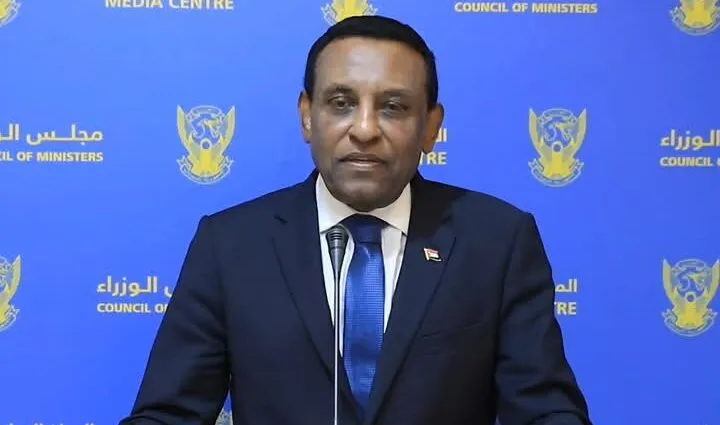
When he assumed the post of Prime Minister at such a difficult and complex juncture, the dominant narrative surrounding Kamel Idris was that he was a man of international institutions—someone capable of breaking Sudan’s isolation and opening political, economic, and investment channels, attracting major companies to help rebuild the country. Upon taking office, he was met with a measure of public welcome, at least from a street desperate for reassurance that a state facing an existential test was still standing, and that its Council of Ministers was led by a figure who had once headed a major international organization.
Over time, however, confidence in Idris began to erode. His presence, both domestically and internationally, appeared faint and without clear impact. He failed to persuade the domestic audience, just as he failed to win the trust of external actors. Numerous opportunities presented themselves, yet he is criticized for not exploiting them in a manner commensurate with the gravity of a nation living through exceptionally harsh and complex conditions.
Now, another opportunity has emerged. Idris finds himself once again boarding a plane—this time to the United States—to participate in the United Nations General Assembly meetings in New York. He is expected to deliver Sudan’s address before the General Assembly and to hold bilateral meetings on the sidelines with heads of state and government, as well as leaders of international and regional organizations. He is also scheduled to take part in the annual ministerial meeting of the Least Developed Countries group, the Group of 77 and China, and other meetings held alongside the General Assembly.
This is a critical chance for Idris to explain to the world what has transpired in Sudan: the violations that have engulfed entire cities, the massacres that have claimed the lives of thousands of Sudanese, and to call on governments and human rights organizations to pay attention to the tragedy unfolding as a result of weapons flowing across the borders—particularly Emirati arms—fueling violence that has devastated millions.
The question, as Idris travels accompanied by several advisers, the Minister of Information and Culture, and the Minister of Foreign Affairs, is whether he can return this time with tangible gains, as the Sudanese proverb goes, “with a bundle in hand.” Can he deliver a coherent and persuasive speech at the General Assembly, leverage his meetings with officials from states and organizations, and lead a diplomatic effort that opens pathways between Sudan and the outside world, adding real value to the country’s position?
Further questions also loom: Are there indeed negotiations expected between Sudan and the United Arab Emirates under U.S. sponsorship regarding Emirati support for the militia? And if so, does Idris possess the capacity to negotiate effectively and withstand the pressures such talks would inevitably entail?
Dr. Ezzeldin Al-Jamri, a political analyst, argues that Idris has been treated unfairly, noting that he came to power at a time marked by gunfire, the cries of bereaved mothers, and the suffering of the dispossessed—when the very foundations of the state had collapsed, and the state itself had effectively become displaced to Port Sudan. “At such a moment,” Al-Jamri says, “everything is extraordinarily difficult and complex, and achieving what people aspire to is equally hard, blocked by numerous barriers rooted within the state itself.”
He adds that Idris does have the ability to communicate with the international community and engage with its institutions, suggesting that people could yet see changes in how Sudan handles its issues and interacts with the world—provided Idris distances himself from rigid, polarized advice and adopts a more open-minded perspective, one that thinks beyond the confines of the state and engages constructively with others’ ideas. “This does not mean abandoning national principles or appeasement,” Al-Jamri stresses. “But dealing with institutions and the international community through slogans alone will not change how they see you. The key is to present your vision while taking into account others’ concerns and interests—understanding that this is not surrender or the giving of free gifts, but the creation of a common language and ground for dialogue that ultimately serves your core objectives.”
This view, however, is sharply contested by Dr. Osama Hanfi, Professor of Political Science at the University of Sudan. He believes that Idris’s participation itself represents a lost opportunity for Sudan to be represented by someone capable of carrying the heavy burden and articulating its contents clearly. “Believe me,” Hanfi says, “this man has been given many chances, all of which he squandered without adding anything meaningful to the Sudanese scene. I do not think he is capable of making a difference now, when the situation is even more complex and brutal, and requires decisiveness—even in diplomatic discourse.”
Hanfi concludes that Sudan no longer has the luxury of time. “We need a strong, clear Sudanese voice that reaches institutions and states, redefines the Sudanese war for many circles around the world, and puts a finger directly on the wound. That will not happen through Kamel Idris. Therefore, the opportunity to address the world from the platform of the United Nations General Assembly is, in my view, yet another missed opportunity.”