Kufra Airport: How a Hidden Logistic Lifeline Reshaped the Balance of War in Sudan
Report – Sudan Events
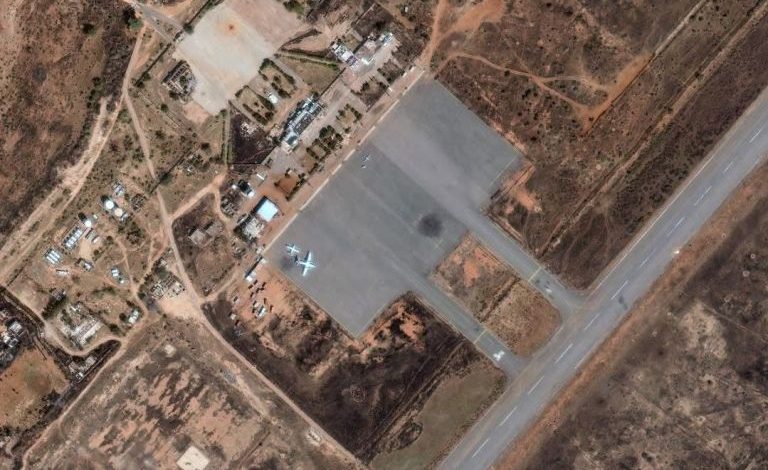
The war in Sudan is no longer merely an internal conflict between the Sudanese Armed Forces and the Rapid Support Forces (RSF). It has evolved into a textbook example of a regional proxy war, managed through cross-border logistical networks. An investigative report published by Reuters exposes one of the most dangerous of these networks: Kufra Airport in southeastern Libya, which has been transformed from an abandoned airstrip into a strategic hub that has altered the course of the war.
First: Kufra — From Geographic Periphery to Military Center of Gravity
Kufra Airport is located in a remote area approximately 300 kilometers from the Sudanese border, giving it two critical advantages:
1. Geographic isolation, which significantly reduces the likelihood of direct international surveillance.
2. Operational proximity to Darfur, enabling rapid and flexible movement of supplies.
According to satellite imagery and flight-tracking data analyzed by Reuters, the airport underwent extensive rehabilitation throughout 2025 after having been largely dormant. This transformation cannot be explained by civilian or commercial needs; rather, it reflects a strategic decision to activate Kufra as a military supply line.
Second: Direct Military Impact on the Course of the War
Testimonies from more than 12 military, intelligence, and diplomatic officials indicate that:
The RSF had been in retreat after the Sudanese army regained control of Khartoum in March.
The influx of supplies through Kufra restored the group’s operational momentum within a matter of months.
This renewed momentum translated on the ground into:
The fall of El Fasher in October, a pivotal development that shattered the last major civilian–military stronghold in Darfur.
Consolidation of control over the region, opening the way for a series of subsequent advances toward southern Sudan.
One UN official described the use of Kufra as having “completely changed the rules of the game,” a characterization that underscores the scale of the shift—strategic rather than merely tactical.
Third: The Numbers Don’t Lie — 105 Cargo Flights
An analysis by Justin Lynch, Executive Director of the Conflict Insights Group, adds a crucial quantitative dimension:
105 cargo aircraft landings at Kufra Airport between April 1 and November 1.
A clear alignment between aircraft types, flight routes, and operational timing consistent with an organized military support pattern.
Such air traffic density is incompatible with routine civilian activity and instead points to a sustained air bridge, confirming that the support was not temporary or ad hoc, but part of a long-term plan.
Fourth: Regional and International Dimensions — The UAE at the Center
The investigation concludes that flight patterns and cross-referenced data are consistent with Emirati support for the RSF via southern Libya, aligning with:
Statements by U.S. officials in October regarding intensified arms shipments through Libya and Somalia.
Previous reports documenting the use of unconventional routes to circumvent international restrictions.
By contrast, the denial issued by a Libyan military official in Kufra—who claimed the flights were “civilian and internal security operations”—reflects a familiar paradox in regional conflicts, where official denials serve as cover for proxy operations.
Fifth: Broader Implications — A War Managed Beyond Sudan’s Borders
The Kufra file reveals a central truth:
The future of the war in Sudan is no longer decided solely within its borders, but in airports and back corridors across neighboring states.
This reality carries three major strategic implications:
1. Militarization of the region: Southern Libya has effectively become an extension of the Sudanese battlefield.
2. Erosion of political pathways: Any negotiations that fail to address external supply networks are doomed to irrelevance.
3. Deferred international responsibility: Continued neglect of these networks amounts to indirect complicity in prolonging the war.
Conclusion
What Reuters has uncovered about Kufra Airport is more than a journalistic scoop; it is a political and security indictment that illustrates how modern conflicts are reshaped through hidden infrastructure. In Sudan’s case, ending the war will not come only through negotiation tables, but through dismantling the air bridges and logistical lifelines that have kept the machinery of violence running.