One Week Before Year’s End… America Faces a Tight Deadline
Report – Sudan Events
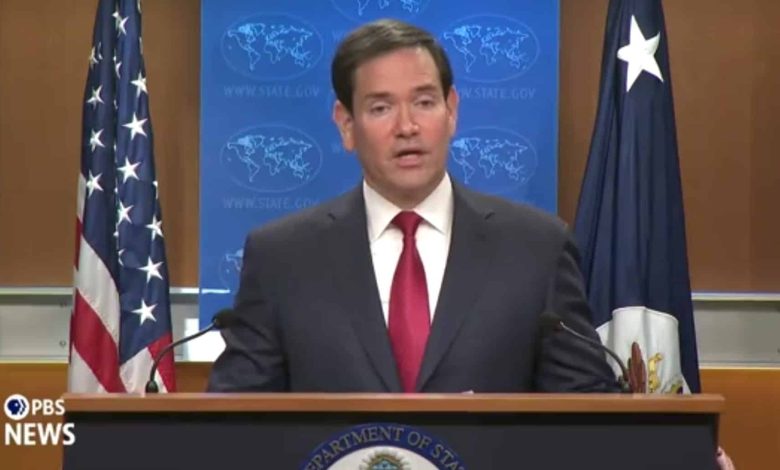
U.S. Secretary of State Marco Rubio said, in his most recent press conference addressing Washington’s efforts to halt the war in Sudan, that the immediate and short-term American objective is to stop hostilities and reach an immediate humanitarian truce before the new year—now just one week away. This comes as fighting continues unabated in Kordofan.
Rubio’s vision, put simply, is that such a truce could pave the way toward a permanent cessation of hostilities, with regional actors transforming into pressure-wielding stakeholders, similar to what occurred in Gaza. He added that all arms shipments into Sudan should be halted during this period. Rubio noted that he is in continuous contact with Egypt, Saudi Arabia, and the United Arab Emirates, and that he signed a joint document with them in September on the sidelines of the United Nations General Assembly, following earlier meetings.
He stressed that the United States is engaged in daily talks aimed at finding a solution to the Sudanese crisis, emphasizing that Washington’s involvement is not new, but that the file has now been elevated, with higher political and executive-level actors in the U.S. administration becoming directly involved. Rubio pointed out that Washington is aware that neither of the warring parties possesses modern weapons factories, meaning that arms must originate elsewhere and transit through countries that allow such shipments to reach Sudan. He said the United States has held “appropriate discussions” with those countries.
Despite the rapidly approaching deadline—now just a week away—the situation on the ground remains unchanged. The joint U.S.-Saudi initiative has made no tangible progress, nor has the Quartet advanced its efforts. Uncertainty continues to surround the file, with scattered reports about behind-the-scenes work toward announcing an agreement rather than a new initiative. This appears to be a gamble favored by Donald Trump, according to some American sources, which say he does not want to launch a new initiative at this stage but is keen to appear on television announcing that he has untangled the Sudan war and reached an agreement to stop the fighting. He may even intervene directly, should an agreement be reached, to oversee the implementation of a political roadmap currently under discussion.
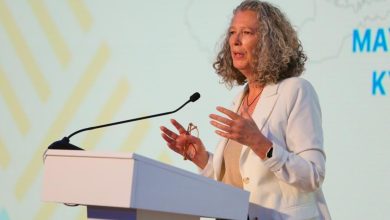
With only one week remaining before the end of the year, a major breakthrough seems unlikely. Nevertheless, anticipation remains over what the remaining days may bring. This assessment is echoed by Dr. Saeed Salama, Director of the Vision Center for Strategic Studies, who considers a breakthrough improbable. He argues that the U.S. administration itself remains divided between pursuing a bilateral or trilateral initiative with Egypt and Saudi Arabia and reviving the Quartet framework. This internal debate has yet to be resolved, making it difficult to present a coherent vision capable of delivering a breakthrough, despite Rubio’s efforts with some regional actors. Overall, the outlook remains “gray,” with no unified, internationally agreed pathway out of the current impasse.
Meanwhile, Professor Fadl Al-Mawla Al-Naeem, a political science professor, believes the matter is not overly complex, as it is currently limited to securing a truce and halting the fighting, without delving into a broader political settlement or peripheral battles linked to the war. He says the Americans are focused at this stage on achieving a ceasefire and a U.S.-backed truce, while working to cut off external support so that the warring parties find themselves isolated from any backing that enables them to continue fighting. This, he argues, is crucial not only to push them toward a ceasefire but also toward a comprehensive settlement, as sustaining the war without external support becomes increasingly difficult amid daily financial and human losses.
He added that the presence of Kamil Idris in New York, accompanied by a negotiating delegation, could make progress possible, especially amid leaks suggesting direct talks between the Sudanese government and the main backer of the militia, the United Arab Emirates. Such developments, he said, could make the final days of the year full of both surprises and challenges.
Professor Al-Naeem concluded by saying he does not believe the U.S. government would have set a firm deadline unless it was confident and had received a green light from the relevant parties, as failure would place Washington in an embarrassing position. He believes immense pressure is currently being exerted behind the scenes on the warring parties, and that the United States, having thrown its full weight behind the issue, will not relent in pressuring all sides. However, he cautioned that reliance cannot be placed on external actors alone, stressing that domestic public opinion plays an indispensable role in any agreement or settlement, and that the success of such agreements ultimately depends on internal dynamics, not just external mediation.