Al-Digeir: The Art of Managing Political Conflicts through “Political Maneuvering”

Report – Sudan Events
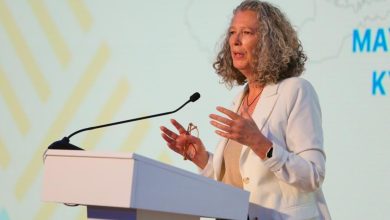
Have positions shifted as Sudan enters its third year of war? Are some political actors reshuffling their cards and reconsidering their options following statements by Omar Al-Digeir, head of the Sudanese Congress Party, in which he said the party is ready to sit with the Islamic Movement and engage in dialogue if it declares its desire for a peaceful political solution to the Sudanese crisis and calls for the formation of a single professional national army? Or is this merely another maneuver by political forces that have oscillated at times toward neutrality and, more often, toward siding with the militia—maneuvers that have repeatedly landed them in direct confrontation with the Sudanese people?
The Sudanese people have suffered grievously at the hands of the militia, paying a heavy price in civilian martyrs killed due to its appetite for murder, torture, looting, and rape. As a result, these political forces are now under intense public scrutiny, widely viewed as having betrayed the people and aligned themselves with the enemy. Against this backdrop, Al-Digeir’s remarks appear strange, especially given his party’s persistent stance in support of the militia, its backing of it, and its harsh criticism of the army.
This position is also puzzling in light of the militia’s long-standing narrative, which frames everything happening in Sudan as the work of the “Kizan” and the Islamic Movement. Current realities suggest that these forces involved in the “Sumoud” coalition have lost public trust and have increasingly become a platform onto which Sudanese citizens daily pour their anger, seeing them as allies of the militia. Even after their split between the “Founding Government” and Hamdok’s “Sumoud,” their positions remain closer to the militia than to the army.
Despite the grave crimes committed by the militia against Sudanese civilians, these forces rarely direct explicit accusations at it. Instead, they consistently level direct accusations against the army and the forces fighting alongside it, repeating such charges day and night. They show little hesitation in pursuing any path that could lead to the army’s defeat and the militia’s takeover of the country—despite the widespread understanding that, should the militia seize power, it would embark on mass killings and forced displacement, and bring in settlers from Chad, Niger, the Central African Republic, and Mali, as is currently happening in Darfur. Some even fear it could change the country’s name.
How could Sudanese citizens accept such an equation? Is it reasonable to consider anyone who supported such actions a full-fledged Sudanese patriot? Can such a stance be counted merely as a political position without accountability, when those who backed the militia have effectively contributed to prolonging the war and stained their hands with the blood of innocent civilians killed by it?
Dr. Osama Hanfi, Professor of Political Science at the University of Sudan, asks: “Why do they hate the army? Because it stood up to the militia and fought it. What if the army had not fought? If it had handed the country over to the Janjaweed, who would liberate the cities? Or would we simply leave them to the militia?” He adds: “These people consider any party that fights the Janjaweed an enemy—a stance fully aligned with the Janjaweed and their objectives. Their goals are the same as the Janjaweed’s, which is why they allied with them in the hope that the militia’s gun would return them to power.”
He continues: “Are these truly civilian democratic forces? Look at their current governance experience in El-Fasher, led by members of Sumoud. Is this the democracy and civilian rule they promise the Sudanese people?” He further asks: “If this is their view of militias, why did they ally with the Rapid Support Forces, glorify them, and also ally with Abdelaziz Al-Hilu—are these not militias as well?”
Hanfi concludes: “What Al-Digeir or his associates say cannot be read as part of any genuine transformation, but rather as maneuvers that have lost their meaning over time. Their method of political management has become outdated, and I do not believe the Islamic Movement or Sudanese politicians will pay much attention to what Al-Digeir or others say. The train has already passed them by, as the late Ali Abdullah صالح used to say.”
Similarly, academic and political science lecturer Dr. Bakri Mohamed Al-Sir believes that the narrative underpinning these positions is rooted in hostility toward the Islamic Movement. “Therefore,” he says, “I do not expect them to abandon it anytime soon, especially given the changes produced by the war, which have pushed their positions closer to the militia than to the broadly shared national stance of the Sudanese people. It has now become difficult for them to retreat or back away from their project.”
He adds: “Their options are either to continue alongside the militia and suffer the same fate, or to exit political life altogether, allowing for an internal shake-up—essentially a managed internal coup—bringing in new figures with positions different from and more consistent with the national consensus. This is likely what many parties whose positions have drifted away from the national line will resort to. They have increasingly come to be seen as accused at times and guilty of wrongdoing against the people more often. A narrative will be promoted suggesting that pro-militia positions were merely the views of certain leaders who hijacked the party. This will happen—wait and see how Sudanese political conflicts are managed within parties through sheer political maneuvering.”
Former Prime Minister Abdalla Hamdok has stated: “We do not claim to represent the Sudanese people. We are the largest civilian coalition, comprising political parties, trade unions, resistance committees, and civil society organizations. We made difficult choices during the transitional period, choices that went against my personal popularity. I do not care about my popularity; I care about the interests of the people.”