Beneath the Surface…!!
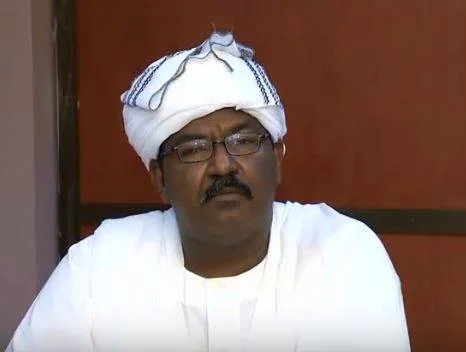
Al-Tahir Satti
The briefing delivered by Prime Minister Kamil Idris to the UN Security Council—or let us call it his “initiative”—reminded me of a graduation research recommendation by students blessed with an overactive imagination. They had conducted fieldwork in remote villages, uncovered critical cases, examined random samples, and then submitted their paper to their university supervisor—only to conclude with the recommendation: “The research has proven that women most vulnerable to childbirth are pregnant women.”
There was nothing new in the prime minister’s briefing or initiative, despite prior promises of presenting an “important initiative.” Advisers had described it as complementary to the roadmap the government had submitted nearly a year ago to the United Nations, the African Union, the Arab League, and the Jeddah Platform mediators. Yet the prime minister’s address failed to add a single new sentence to that roadmap.
A ceasefire; the withdrawal of the Rapid Support Forces from areas they occupy; facilitating the return of displaced persons; disarming the RSF; reintegration and rehabilitation of former fighters into society; a Sudanese–Sudanese dialogue to agree on democracy; and the pursuit of justice and comprehensive reconciliation—this is essentially the summary of the briefing (the “initiative”), wrapped in extensive rhetoric and verbosity. So what, exactly, is new?
Unless Sudan’s battered people—and Security Council members as well—are suffering from collective amnesia, what the prime minister and his advisers called an “important initiative” is identical to the provisions agreed upon in Jeddah in May 2023, just weeks after the Dagalo family betrayed the people and the country. It is also identical to the roadmap the government itself presented to those same bodies in February.
The only novelty in the prime minister’s briefing and initiative lies in the language—a rephrasing of the Jeddah Agreement and the roadmap. For instance, he spoke of “providing job opportunities for former fighters,” meaning the Janjaweed. What the roadmap and the Jeddah Agreement termed integration—absorbing the fit into the army and the unfit into civilian life—despite the fact that they are, to a man and backed by their sponsor, unfit altogether.
The key point is this: unless there was another, unstated objective—beneath the surface—to this visit, it would have been more appropriate to say that the prime minister went to New York to reaffirm Sudan’s steadfast position on the peace track, rather than playing on public emotions by claiming to present an “important initiative” as if it were something new. Yes, what the prime minister told the Council was important, but it was neither surprising nor new.
Notably, the prime minister’s briefing made no mention of the UAE, despite the reality that the war is, in essence, being driven by the Emirates, with the Janjaweed and mercenaries merely acting as the claws of the cat. More troubling still was his response when asked about the UAE’s role in Sudan’s war—it resembled the evasive replies of Sumoud activists when confronted by satellite channels with the same question, followed by “And what about Dagalo?” The answer was confused, weak, and lacking candor.
By contrast, Cameron Hudson’s briefing was forceful and explicit. He stated plainly: “Over the past two years, the UAE has used its political influence across the Horn of Africa to establish a vast military air bridge transporting weapons to the militia through Chad, Libya, the Central African Republic, South Sudan, and the Puntland region of Somalia. These weapons enhanced the militia’s capabilities and enabled it to commit atrocities.”
Had the prime minister’s briefing matched Hudson’s in clarity and strength, one could have said this trip had value—in addition to the five benefits enumerated by Al-Shafi‘i. Unfortunately, it was a courtesy briefing toward the UAE, carefully avoiding it. Worse still, Sudan did not even request the right of reply to the accusations made by the UAE’s representative. Instead, it listened and departed in silence—as if even that silence had been prearranged.