The Quartet: When an Initiative Turns into a “Juha’s Nail”
Report – Sudan Events
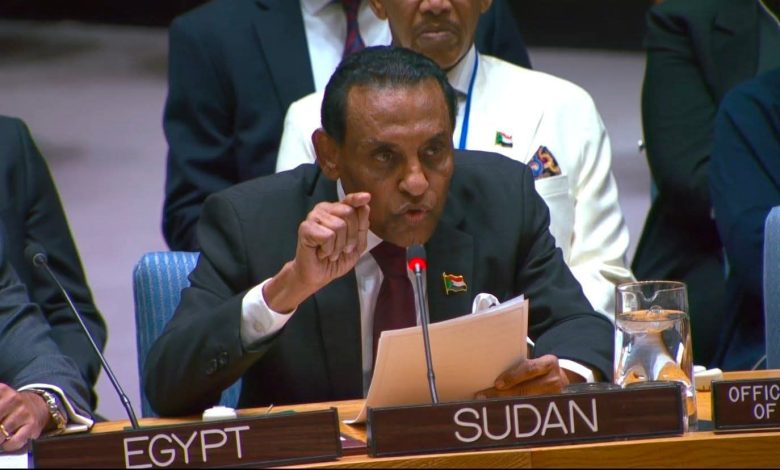
The speech delivered by Sudanese Prime Minister Dr. Kamil Idris triggered wide-ranging reactions and sparked visible agitation among influential figures within the Sumoud coalition and circles in Abu Dhabi. While the Civil Forces Alliance (Sumoud) viewed the prime minister’s initiative as an attempt to evade the Quartet framework, UAE presidential diplomatic adviser Anwar Gargash dismissed accusations that his country is involved in what is happening in Sudan, describing them as unfounded.
Gargash said the UAE is facing fierce campaigns, stressing that his country does not seek leadership or influence but works with its partners to achieve a stable and prosperous region free of extremism. He added that “these campaigns have largely ignored the internal circumstances of the cases they addressed, in an effort to justify their own shortcomings, and ultimately produced no results.”
But have they really produced no results? Is there any horizon for dealing with a state that claims it does not seek influence, while simultaneously asserting that it fights extremism—yet supports a militia seeking to seize control of a country and supplies it with weapons, money, and mercenaries? Can such a state be trusted when it relies on procrastination, fabricated narratives, and pressure on others to secure its gains, even if that pressure entails sacrificing millions of citizens, destroying states, and sowing discord within their social fabric?
Professor Fadl Al-Mawla Al-Na‘im, a political science academic, argues that for many Emiratis, what is happening resembles a film watched on television or social media—detached from its violence, death, and devastation. “Those who profit financially from spreading death and destabilizing states, without suffering any harm themselves, will not stop,” he said. “Nothing matters to them—neither states, nor capacities, nor human beings. They did it in Yemen, repeated it in Libya, and now they are doing it in Sudan, sponsoring and sustaining death while appearing before the world as men of peace and goodwill, claiming their country spreads stability.”
He added that what the UAE has done in Sudan, Yemen, and Libya shows that, in pursuit of gains and control over ports and resources, it is willing to do anything without red lines—as long as the world watches, observes, and even helps it achieve its desires.
Al-Na‘im continued: “Their current discourse itself confirms that the so-called ‘fierce campaigns’ have affected them; otherwise they would not have responded or been preoccupied with them. Nor would they have tried to silence the Sudanese prime minister’s voice in New York if these campaigns were truly ineffective. They fear them now and calculate their impact, knowing that repeated Sudanese exposure of their role—laying it bare before the world—will have an effect. This is something they did not face in Yemen or Libya. True, there were attempts to expose their falsehoods and some voices spoke out against their crimes, but in the Sudanese case they are confronting an entire people that has begun to speak openly about what the UAE is doing in their country. Even if it does not have an impact today, it will tomorrow.”
Earlier, American diplomat and expert Cameron Hudson stated clearly in his briefing to the UN Security Council that the UAE had established an air bridge to transport weapons to the rebel militia via Chad, Libya, the Central African Republic, South Sudan, Somalia, and the Puntland region. He said the militia had obtained advanced drones and modern technology, enabling it to enhance its capabilities and commit massacres against civilians.
Hudson accused the militia of carrying out ethnic cleansing crimes in El Fasher, confirming that it had killed tens of thousands and burned bodies to conceal evidence. He also expressed regret that some parties supporting the war are present inside the Security Council itself—as member states—thereby obstructing accountability.
Meanwhile, political researcher and director of the Noor Center for Strategic Studies, Al-Yasa‘ Mohamed Nour, said the current agitation in the UAE and among its allies is linked to Sudan’s desire to exit the international Quartet initiative, which delivers substantial benefits to them. He added that any Sudanese attempt to abandon the Quartet and embrace alternative initiatives is unacceptable to the UAE, the Sumoud Coordination, and the Rapid Support Forces militia.
According to Nour, the Quartet’s tracks include elements that matter greatly to these actors—chief among them entrenching the militia’s presence and arranging its status to ensure it becomes part of any future power structure, alongside Sumoud. “This is critically important to the Emiratis,” he said, “because the presence of their agents in power enables them to achieve their objectives naturally.”
He continued: “There is no doubt that Abu Dhabi is unsettled by the interventions affecting the file and fears that these interventions could lead to a settlement that sidelines it and is not necessarily decided by it.”
Nour concluded with an analogy: “To me, the Quartet is like Juha’s nail—the nail Juha hammered into a house he rented out, telling the tenants that the lease did not include the nail. He then visited them daily to check on the nail, which became his pretext to enter the house every day. That is exactly what is happening with the Quartet: it has become a Juha’s nail that these actors do not want to lose, because it allows them to remain inside the house—and continue destroying it.”