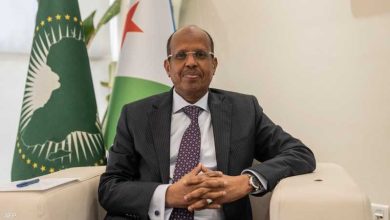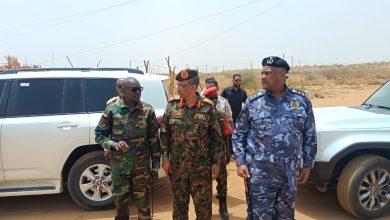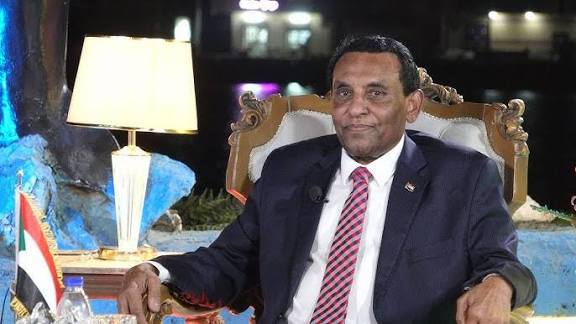
Prime Minister Dr. Kamel Idris stressed that any ceasefire not synchronized with the disarmament of militias and their placement in designated camps will inevitably lead to renewed conflict. He emphasized, during discussions at the United Nations, that Sudanese are advocates of peace, not war, rejecting the prevailing perception that Sudan opposes peace, and affirming that peace is a firmly held principle among the Sudanese people.
Idris outlined the results of his participation in UN meetings during a press conference at Port Sudan Airport following his return from New York, describing the visit as a historic milestone in Sudan’s engagement with the international community.
The Prime Minister extended his gratitude to Sovereignty Council Chair General Abdel Fattah al-Burhan and Egyptian President Abdel Fattah al-Sisi for their close oversight of the peace initiative from its early stages, also appreciating the support of Saudi Crown Prince Mohammed bin Salman and former U.S. President Donald Trump. He recognized the backing of council and cabinet members, the armed forces, police, and all contributors—intellectually, financially, or verbally—in what he termed Sudan’s “existential battle.”
Idris explained that the visit began with a traditional “media briefing” at the UN, aimed at presenting the state’s vision in accordance with established UN norms. Sudan subsequently participated in an open session of the Security Council with concerned countries, where the Sudanese vision for peace was presented and received positive engagement from several international actors. He noted that open sessions differ from closed ones in terms of transparency and wider participation.
The Prime Minister also held productive meetings with the UN Secretary-General, the Security Council President, and the African Group within the council, whose term ends this year, expressing strong and explicit support for Sudan and promoting the Sudanese initiative within the Security Council. Additional meetings included African member states, other countries, as well as delegations from Egypt and Turkey, and the Sudanese community in New York, which he described as pivotal in supporting the national initiative, alongside interactions with global media.
Idris reaffirmed that the “Sudanese Government Peace Initiative” is a purely national endeavor owned by the Sudanese people in all their diversity. Sudan highlighted during the UN briefing that its efforts complement existing international peace initiatives rather than replace them.
He underscored that Sudan made clear at the UN that its citizens advocate peace, not war, emphasizing that peace is a deeply rooted value among the Sudanese. He added that this marked the first time since the outbreak of war that Sudan transitioned from a reactive to a proactive stance in the international arena by presenting a wholly Sudanese initiative, signaling full recognition of the civilian government.
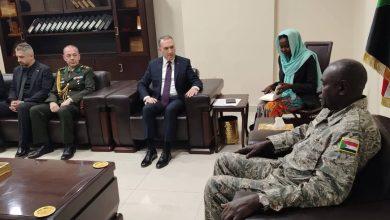
Meetings with the UN Secretary-General, the African Group, friendly nations, as well as Turkey, Egypt, Russia, China, Pakistan, Qatar, and Eritrea, reinforced international support for Sudan and paved the way for adopting a comprehensive vision to achieve urgent and sustainable peace.
Idris stated that the Security Council’s response to the Sudanese peace initiative was highly positive, with agreement on supporting Sudan, condemning crimes, and focusing on the humanitarian situation, affirming the initiative’s potential to achieve peace.
He emphasized that political and community actors will be briefed on the initiative, whose ownership lies with Sudanese citizens and which aligns with the Sudanese roadmap, Security Council frameworks, the Jeddah Declaration, and Sovereignty Council Chair General al-Burhan’s visits. The initiative calls for the disarmament and regrouping of militias in camps under a tripartite plan with international monitoring.
The Prime Minister stressed the necessity of adopting the initiative across all state institutions and media outlets to ensure its success, enabling peace implementation and Sudan’s reintegration into the international community. He concluded by asserting that the visit was historic, establishing a new phase in which Sudan emerges as a proactive and leading nation in peace efforts.