After the Bombing of His Soldiers: Déby and Narrowing Options
Report – Sudan Events
The Sudanese army offered condolences to the Republic of Chad following the killing of two Chadian soldiers in a drone strike launched by the Rapid Support Forces (RSF), which targeted a Chadian army camp in the town of Tiné.
Chad’s military command accused the RSF of targeting Tiné with drones, describing the attack as “unjustified,” and stressed that it was unprecedented since the outbreak of the war in Sudan. The statement quoted a Chadian army officer as saying this was the first time the army had suffered fatalities as a result of spillover from the Sudan conflict. He warned that recent developments raise serious concerns about border security. Chadian forces emphasized that they reserve the right to respond to such attacks in accordance with the UN Charter, specifically Article 51, should similar incidents recur.
The escalation comes amid growing security tensions along the Sudan–Chad border, following complaints by residents of border areas about RSF attacks on civilians and markets. The ruling authorities also fear the spillover of ethnic conflict between Arab tribes and the “Zarqa” (non-Arab) communities from Darfur into Chad, where the same ethnic groups are present and where latent tensions exist—inevitably influenced by events in Sudan, including the targeting of Zarqa communities by Arab militias.
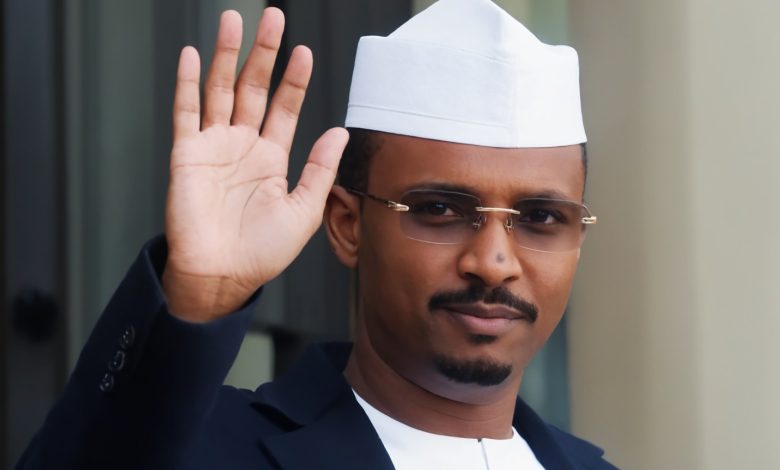
Chadian media sources have reported mounting fears of a coup against President Mahamat Idriss Déby by senior army generals, prompting the president to restrict the movements of top generals and ban their foreign travel. Reports and leaks suggest that coup plans are allegedly complete, with Gulf backing.
According to these sources, some officers previously met with Gulf figures accused of conspiring against the Déby regime, seeking to remove him from power and enable Chadian Arabs to take control of the country under the leadership of Chadian Security Minister Ali Ahmed Aghabash, who is linked to Janjaweed support bases. Tensions reportedly became overt after the Janjaweed entered El Fasher and carried out massacres against the Zaghawa—acts that army generals reportedly viewed as the killing and displacement of their own people. This was reflected directly within military camps that include both Zarqa and Arab officers, after personnel linked to Janjaweed support bases celebrated the militia’s entry into El Fasher and the killing of its residents.
Zaghawa officers, who dominate the army, reportedly interpreted these celebrations as a direct message to them—especially as colleagues boasted of advanced weaponry allegedly supplied to the militia by the United Arab Emirates, weapons they claimed could change power in Chad by removing Mahamat Idriss Déby, a member of the Zaghawa ethnic group, and installing a ruler drawn from Janjaweed support bases.
As events unfolded, a visibly uneasy Déby dispatched army units to reinforce border guards along the Sudan frontier, fearing the infiltration of fighters and the flow of weapons, and seeking to reassure the Zaghawa community, which has grown increasingly restless and, in some quarters, angry with Déby for backing a militia accused of killing members of their ethnicity in Sudan. These groups warn that Chad’s involvement in the war would be disastrous, noting that the ethnic groups currently fighting in Darfur are present in Chad and constitute no less than 90 percent of the composition of the government and the army.
Political activist Hamed Al-Chadi, a supporter of the “Transformers” movement led by opposition figure Succès Masra, said what is happening now to the Chadian regime mirrors what has historically happened to rulers who ignored reality and lived in illusions—most recently Idriss Déby and his brother Saleh. He argued that Mahamat Déby is repeating the same mistakes. While there may have been quick economic gains from the war in Sudan and from backing a rebel faction against the Sudanese state, he warned, “the fire will reach you and consume you, and you will find no one to support you—because you first betrayed your own ethnicity, stood with their killers, and transferred weapons that will return to kill you.”
He dismissed talk of retaliating against the Janjaweed as “a joke,” saying Déby lacks the weapons and capabilities to respond. “If these drones reach the Chadian opposition—and there is talk that some possess modern drones—the presidential palace in N’Djamena will not be safe, nor will Déby himself,” he said.
Al-Chadi added that Déby’s alliance with the UAE was a strategic mistake for which he is now paying the price, predicting that over time the UAE could back a coup to hand power to the Janjaweed and sideline Déby’s Zaghawa ethnicity. “I believe his options have become extremely narrow,” he said, “as he is trapped between Zaghawa anger and Janjaweed ambitions, which are closer than ever to seizing control of Chad—due to Mahamat Idriss Déby’s poor choices and his handing of power to figures who are effectively working for the UAE’s project in the Sahel, a project whose enabling tool has been clearly on display in the war in Sudan.”