Khartoum: Decisive Hours in the Final Stretch of 2025
Report — Sudan Events
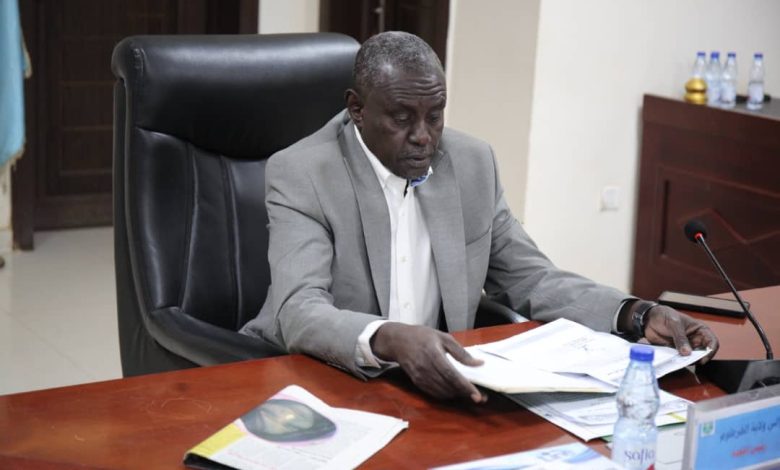
The Khartoum State government has issued a decision banning celebrations and protest demonstrations and ordering firm action against any violations. The Khartoum State Security Committee said it decided, at a meeting yesterday, to prohibit New Year celebrations in halls, clubs, and resorts, and to ban protest marches and withhold permits for them, directing the authorities to deal decisively with any attempts to proceed. The committee also praised recent security seizures.
Khartoum State and its security committee had faced sharp criticism after allowing demonstrators to take to the streets and celebrate the “December Revolution” at a time when the country is facing what officials describe as an existential war—while fighting forces are suffering daily casualties and injuries, weapons are widespread, and enemy elements and collaborators are active behind the scenes.
Police had previously dispersed a celebration organized by the Communist Party in River Nile State as part of efforts to curb disorderly gatherings seen as exploiting public assemblies to stir social unrest, at a moment when the country is engaged in a decisive battle.
Earlier this week, authorities arrested a member of the Rapid Support Forces (RSF) militia in Khartoum. During questioning, the man—who holds Chadian nationality—argued that he had “rights” granted to him by the militia during its presence in the capital, claiming that the RSF had allocated him houses in the area and that these properties now belonged to him. The case is one of several manifestations of the fragile security situation in Khartoum, where authorities have seized combat vehicles and suicide drones months after the city’s liberation—underscoring that stability has yet to be fully restored.
In the city of Wad Madani, authorities also arrested two young women who were found to be linked to the RSF, maintaining communication with the group and relaying information about the movements of security agencies and army deployments in the state.
The proliferation of weapons and military uniforms has provided cover for criminals and rogue elements who have carried out widespread crimes using motorcycles and firearms, including home invasions, street robberies, and looting of houses abandoned by their residents. This created a prolonged climate of disorder before the state announced measures including a ban on motorcycles, prohibitions on carrying or roaming with weapons, restrictions on celebratory gunfire, the deportation of foreigners, and the removal of informal settlements—files that are being addressed but remain incomplete.
As a result, residents have begun avoiding wedding venues and social events for fear of celebratory gunfire, and refrain from going out at night due to robberies that often end with the victim being killed. In such an atmosphere, officials argue, it is difficult to hold political rallies or even New Year celebrations, as opening that door would almost certainly lead to new casualties. Allowing demonstrations, they add, would also invite social chaos and turn the demonstrations themselves into targets for gunfire by hostile parties or those opposed to them—whether political or otherwise.
Major (Police) M. Abdelnabi Al-Jabouri said the country is at war and that the current security conditions do not permit what he described as such “luxuries.” “We are living through complex circumstances, and the enemy is still lying in wait. How can we allow demonstrations and celebrations?” he asked, adding that the decision came late and should have been taken immediately after Khartoum’s liberation by declaring a state of emergency, given that cells collaborating with the militia remain present and active.
He warned that finding combat vehicles among civilians, along with drones and heavy weapons, is extremely dangerous and confirms the presence of militia cells ready to exploit any state of chaos to further destabilize the situation—and possibly to pounce on events and attempt to overrun the city. “No one currently has complete answers about the presence of combat vehicles, drones, and networks that are still communicating with the militia and supplying it with news, images, and troop movements,” he said. “But one of those recently arrested confessed and led investigators to others, who in turn pointed to additional individuals, forming networks that still exist.”
On the viability of political activity at this stage, Dr. Bakri Mohamed Al-Sirr, a lecturer at Sudanese universities, said that current political practices amount to attempts at self-assertion—or competition among political forces chasing illusions—at a time when the country is facing an existential war that demands unity more than ever. He added that the recent government decisions are important and that gatherings, celebrations, and marches should be suspended until the war ends. “Political forces must exercise the awareness needed to avoid spreading chaos,” he said, “because it serves no one’s interest.”